Pompholyx
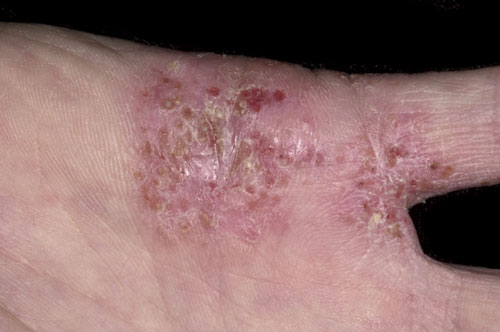
Pompholyx is a very common type of eczema in which vesicles form on the palms of the hands or sides of the fingers, and on the soles of the feet. The vesicles are usually small but very itchy and have the appearance of tapioca pudding. Although the condition is also called dyshidrotic eczema it is not related to sweating. The cause is unknown, but heat and stress can make the condition worse. In patients with a known allergy to nickel, ingestion of small quantities in food can trigger pompholyx. Occasionally, tinea infections can mimic pompholyx so where there is diagnostic doubt scrapings of the skin can be sent for mycology. The treatment is the same as for acute eczema i.e. emollients and topical steroids.
Primary herpes simplex
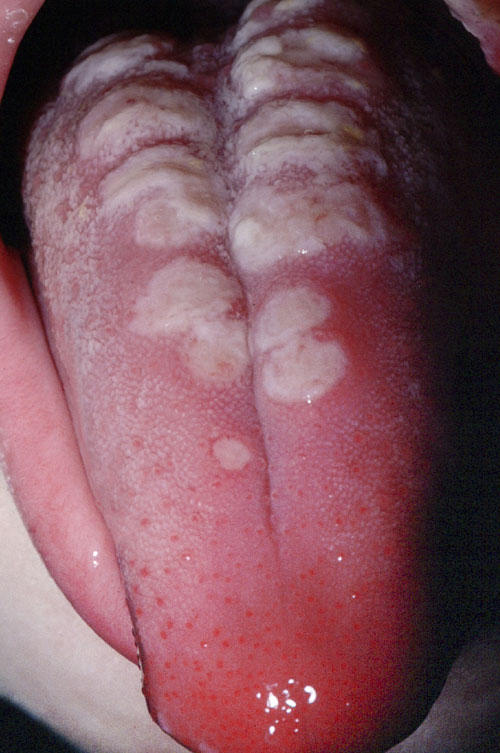
The most common presentation of primary herpes simplex in children is an acute gingivostomatitis associated with fever, headache, malaise and cervical lymphadenopathy. The primary vesicles rupture resulting in ulcers which can be seen over the lips, tongue and mucous membranes. The lesions persist for around 14 days. Primary herpes simplex is usually caused by infection with herpes simplex virus type 1. Rare complications include herpes encephalitis or meningitis. The treatment of choice is aciclovir which will shorten the attack. In patients who are prone to frequent recurrent attacks aciclovir can be given prophylactically.
Epidermolysis bullosa simplex
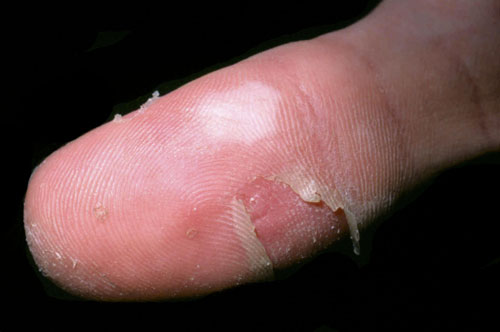
Epidermolysis bullosa is an inherited predisposition to develop blisters. In the simple form, which is an autosomal dominant condition, there is an abnormality in the genes responsible for keratin production. The blisters form just above, or within, the basal layer and so tend to heal without scarring. Nails and other mucosae are not affected but the condition can be exacerbated by sweating and trauma from poorly fitting footwear. Large blisters can be incised with a sterile needle, and the fluid drained, but they should not be de-roofed. Secondary infections may occur which should be treated with antibiotics.
Varicella zoster
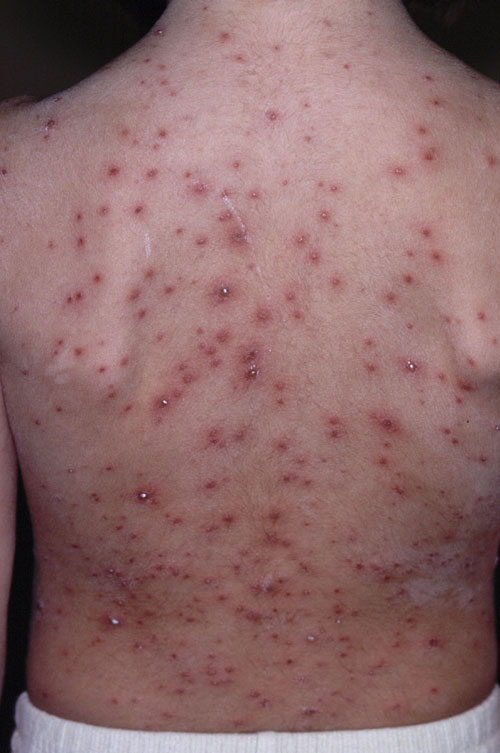
Varicella zoster, chickenpox, is a common condition of childhood which is spread by the oro-respiratory route. It has an incubation period of around 14 days and may start with systemic symptoms of malaise and a temperature followed by a widespread vesicular rash which occurs in a centripetal distribution. Mucous membranes can also be affected, and the rash is usually intensely itchy. Complications include pneumonitis, secondary bacterial infection and scarring. In very severe attacks, or in immunocompromised patients, aciclovir can be helpful but this is not usually required in most cases. Second attacks are rare but the virus may re-emerge on the skin in a dermatomal distribution as herpes zoster.
Cellulitis
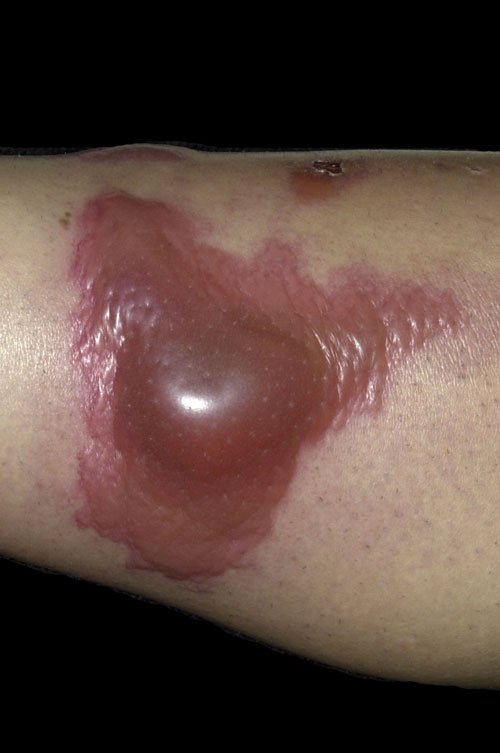
Superficial bacterial skin infections can cause erysipelas. When this spreads to affect deeper levels cellulitis can develop. Localised trauma such as a simple laceration can create a portal of entry through which the infection can enter the skin. Common causes are streptococcal or staphylococcal infection. The condition is usually unilateral and in more severe cases can cause large blisters to develop with systemic symptoms of fever and malaise. In this case intravenous antibiotics were required, with rest and elevation of the affected limb. The condition healed without scarring.
Herpes labialis
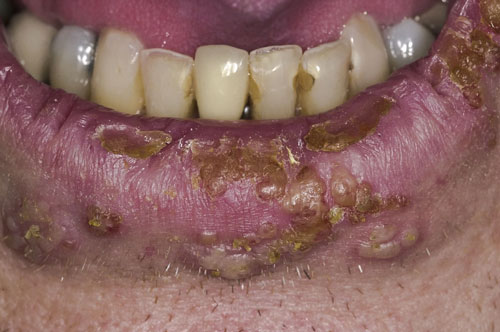
Herpes labialis is the most common type of herpes infection and causes recurrent vesicular eruptions on the lips and peri-oral regions. The same areas are usually affected each time. Triggers include UV light, stress, menstruation and respiratory tract infections. The development of the vesicles is usually preceded by a tingling or burning sensation in the affected area. The rash generally lasts for around 12 days. Rarely, herpes labialis can trigger episodes of erythema multiforme with typical target lesions, where this happens oral aciclovir can be given prophylactically.
 Download this article in PDF format