Hallux valgus
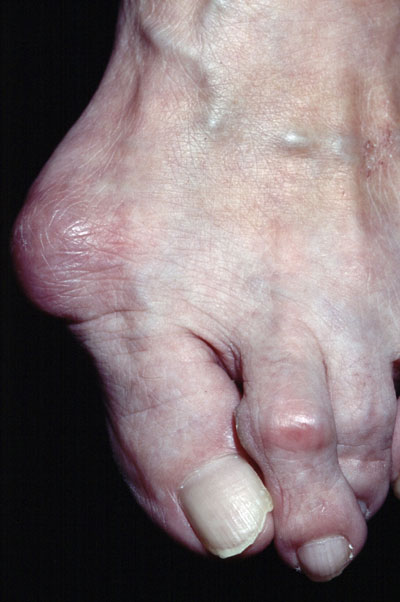
Hallux valgus deformities, or bunions as they are more commonly known, occur when the great toe laterally deviates causing subluxation of the first metatarsophalangeal joint and prominence of the metatarsal head. The latter becomes inflamed and painful as it rubs against footwear. Hallux valgus is more common in women and there is often a significant family history. Diagnosis can usually be made on clinical findings alone but if there is any doubt an X-ray can be taken for confirmation. Options for treatment include analgesia, steroid injections, alterations to footwear, and in more severe cases corrective surgery.
Chronic venous insufficiency
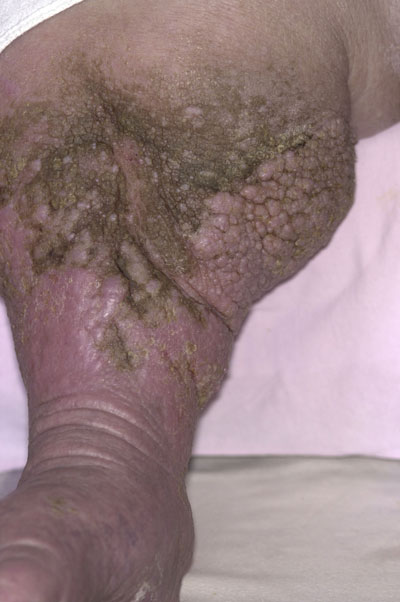
Chronic venous insufficiency usually affects the lower legs as a result of poor venous return. Women are more commonly affected than men. The condition is seen more frequently in patients with varicose veins or deep venous thrombosis and those who have poor mobility. The chronic oedema causes the skin to become thickened, discoloured and itchy often with the development of varicose eczema. Treatment consists of elevation of the legs, compression hosiery and the regular application of emollients. In cases where eczema has developed topical steroids can also be helpful. In the patient shown here, the changes have become extreme and irreversible.
Onychogryphosis
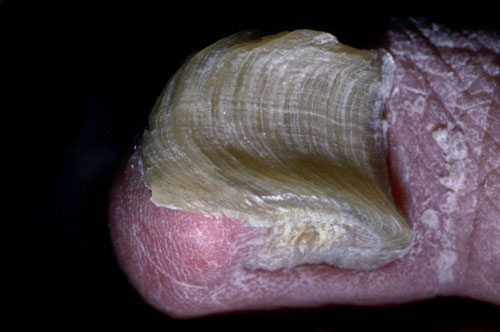
Onychogryphosis, also known as ram’s horn nails, is hypertrophy of the nails. It is commonly caused by neglect. Toe nails are most likely to be affected. Elderly people may struggle to cut their nails because of reduced mobility, memory problems or general lack of care. If left uncut, nails may become curved, discoloured and excessively thickened which can make them even more difficult to cut. In severe cases, the curved nails may cause laceration and ulceration of surrounding skin. Patients with peripheral neuropathy such as diabetes sufferers may not be aware of this problem. Treatment should be carried out by podiatrists to prevent the condition recurring.
Pressure sores
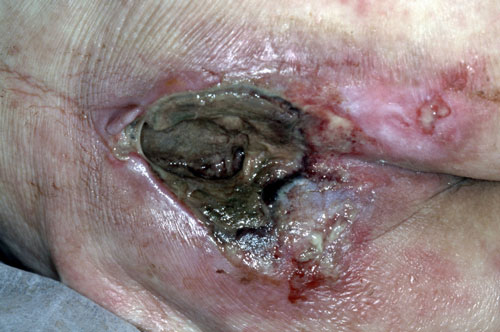
Also known as decubitus ulcers or bed sores, pressure sores occur as a result of damage to the skin and/or underlying tissue by prolonged pressure which affects the blood flow to the area. Affected areas more commonly overlie bony prominences such as the sacrum, coccyx, hips and heels. The condition is more likely to occur where the patient is immobile, incontinent, undernourished or has an underlying neuropathy. It is also more common in patients with diabetes and in smokers. Primary prevention should be the goal with early identification of those most at risk using risk assessment tools such as the Braden Scale. Regular turning, appropriate mattresses and seating support especially in wheelchairs can be used in high-risk patients.
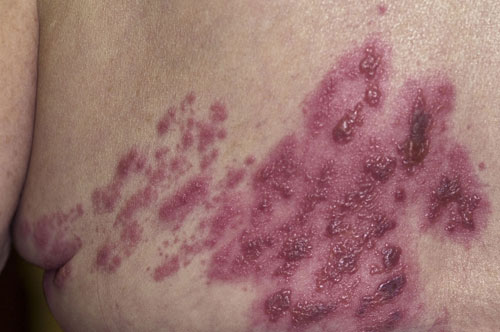
Shingles
Shingles is caused by the herpes zoster virus which after lying dormant in the dorsal root ganglion becomes reactivated leading to the development of a painful vesicular rash in the affected dermatome. It is more common in those who are immunosuppressed and can result in significant morbidity if chronic post-herpetic neuralgia develops, especially when the area affected is the head. Not all cases require treatment. However, antivirals such as aciclovir can be helpful especially in those over the age of fifty, patients who are immunocompromised and cases where the face is affected. Antiviral treatment can reduce the severity of post-herpetic neuralgia. Treatment needs to be started at the onset of the condition to be most effective.
 Download this article in PDF format