Pityriasis rosea
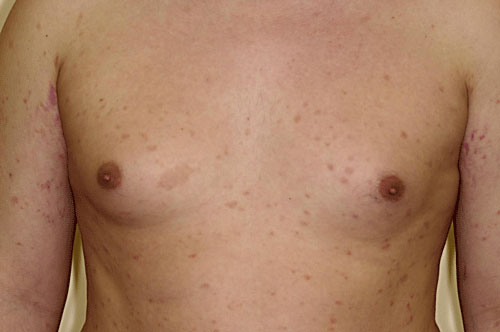
Pityriasis rosea is a benign self-limiting papulosquamous eruption which is more common in children and young adults. It typically starts with a single annular lesion called a herald patch on the trunk (see below). This is followed a few days later by the appearance of multiple similar lesions which follow the lines of cleavage of the skin giving a Christmas tree distribution. The cause of pityriasis rosea is unknown, but it occurs more commonly in the autumn and winter suggesting it may be related to seasonal viruses. No treatment is required and the rash usually settles after 6-8 weeks, and rarely recurs.
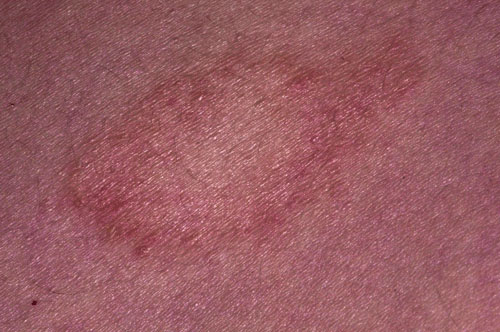
Herald patch
The herald patch seen in pityriasis rosea is so-called because it heralds the arrival of the rest of the rash. This single annular lesion on the trunk is quite commonly misdiagnosed initially as a fungal (ringworm) infection and treated with antifungal creams. Unlike ringworm, the herald patch is not usually itchy and does not increase in size with time. The diagnosis becomes easier with the appearance of further lesions.
Pityriasis versicolor
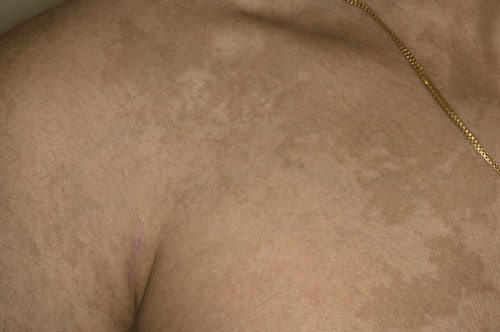
This is a common benign condition which usually affects the trunk producing macules of varying colour depending on how tanned the adjacent normal skin is. Pityriasis versicolor is caused by an overgrowth of commensal yeasts from the Malassezia group. Why these produce macules on some people and not others is not entirely understood. On those affected, they inhibit melanocytes reducing the production of melanin in response to UV light. In skin that is not tanned the macules have a fawn or brown colour and superficial scale. The condition is more common in people with a genetic predisposition and those who live in warm humid environments. It can also be associated with malnutrition, immunosuppression and corticosteroid use. Pityriasis versicolor is not contagious and does not result in permanent scarring. Antifungal shampoos applied directly to the skin or oral antifungal medications can be used to treat this condition after which the pigment will return over several months. Successful treatment can be measured by the absence of scale on the affected areas. Recurrence is common.
Pityriasis alba
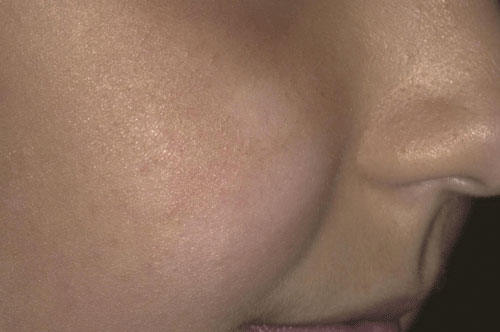
Presenting as pale macules, mainly on the faces of children, pityriasis alba may be misdiagnosed as vitiligo. There is often no discernible cause. However, it is more common in children with eczema who have been treated with topical steroids. Unlike vitiligo, where there is a complete absence of melanocytes, the macules of pityriasis alba are less well demarcated and still have melanocytes present. The condition is self-limiting and parents can be reassured that it will resolve as the child gets older. Emollients can be helpful, along with treatment of any underlying eczema.
Pityriasis capitis
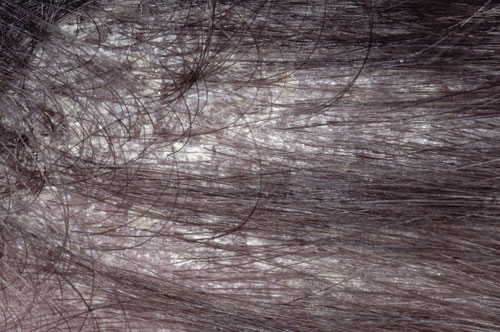
Mild pityriasis capitis, also known as dandruff, is so common that it could almost be classified as normal. Approximately 50% of Caucasian 20 year olds have some degree of dandruff. The incidence decreases after the age of 50. Underlying the condition is an increased rate of turnover of epidermal cells followed by a shortened stratum corneum transit time. Groups of cells then aggregate together and are shed as macroscopic scales. The presence of the yeast Pityrosporum ovale is commonly detected in patients with pityriasis capitis. However, it is still unclear whether the yeast plays a pathogenic role in the causation of the condition or whether it simply flourishes because of the abundance of nutritional skin cells. Treatment includes regular shampooing to reduce the scale and intermittent treatment with antifungal shampoos such as ketoconazole. In more severe cases shampoos containing tar may also be helpful.
Pityriasis amiantacea
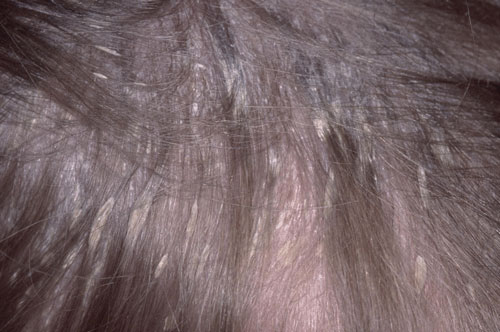
Pityriasis amiantacea either occurs as the idiopathic form with no underlying disease or as the secondary form occurring in association with conditions such as psoriasis, atopic dermatitis, tinea capitis and seborrhoeic dermatitis. Thick scales form, around the hair shafts, which are silver in colour and look like asbestos. Amiante is the French word for asbestos. The condition is more common in young females and children. In more severe cases it may lead to temporary hair loss in affected areas. Treatment can be a challenge and requires a combination of emollients such as olive oil to soften the scale, with tar/salicylic acid-based shampoos to remove the scale, followed by topical steroid scalp applications to prevent thick scales from developing. Secondary bacterial and fungal infections can occur and require treatment with antibiotics or antifungal medications. Recurrence is common in cases of secondary pityriasis amiantacea. The idiopathic form usually responds well to treatment and tends not to recur.
 Download this article in PDF format