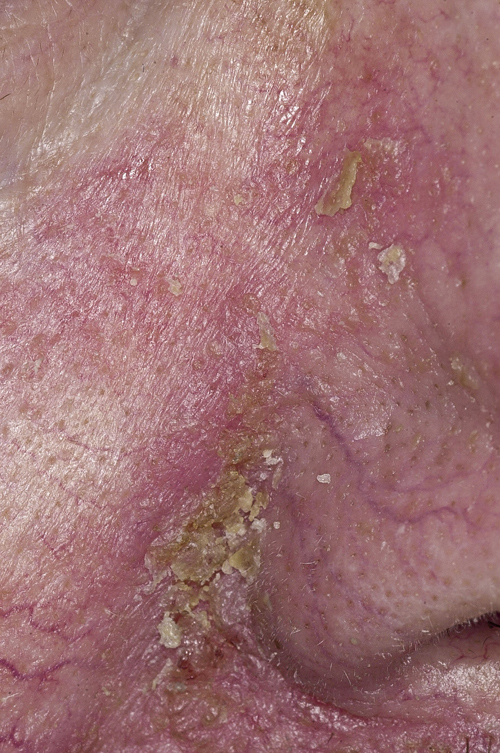
Seborrhoeic dermatitis
Seborrhoeic dermatitis affects the sebum-rich areas of the scalp, face and trunk and varies from a mild dandruff-like condition to full-blown exfoliative dermatitis. It is common, especially in men, with recurrent flares which occur more often in the winter. Symptoms include scaling, burning and itching of affected areas. Early treatment of recurrences is advised to reduce excoriation. The mainstays of treatment are topical antifungals such as ketoconazole with topical steroids to reduce inflammation, although steroids should only be used in short bursts. In persistent or severe cases an oral antifungal such as fluconazole can be effective.
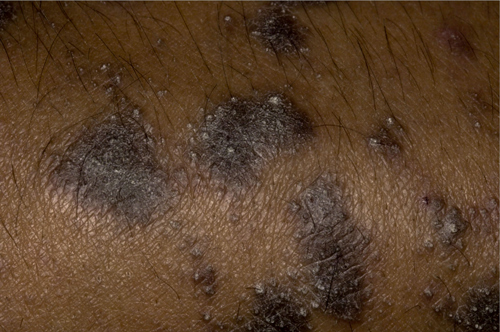
Lichen planus
Lichen planus consists of an itchy papular rash and is more common in the over 40 age group. In Caucasian skin violaceous papules are typical but in darker skin types increased pigmentation is seen producing darker papules. The mouth, nails and scalp may also be affected. Lichen planus on the scalp can produce a scarring alopecia. The condition is not contagious. In some cases it may be related to medications such as gold, used to treat arthritis, and antimalarial therapy. In moderate cases topical steroids will reduce the pruritus. In more severe and persistent cases acitretin or ciclosporin may be useful.
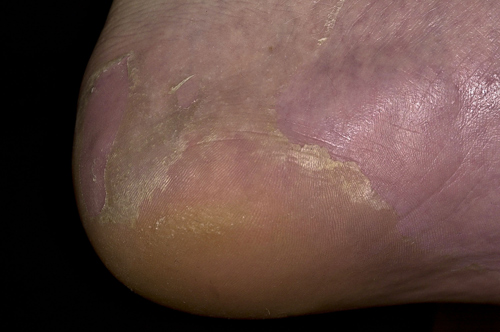
Lamellar dyshidrosis
Also known as keratolysis exfoliativa this condition causes repeated exfoliation of the skin on the hands and feet. Following the formation of air-filled blisters a very thin layer of skin is shed. The differential diagnosis includes psoriasis and contact dermatitis. It is more common in warm weather and may be associated with sweating. Treatment is not normally required but the application of emollients can be helpful. Avoiding irritants such as detergents and friction to the skin should also be advised.
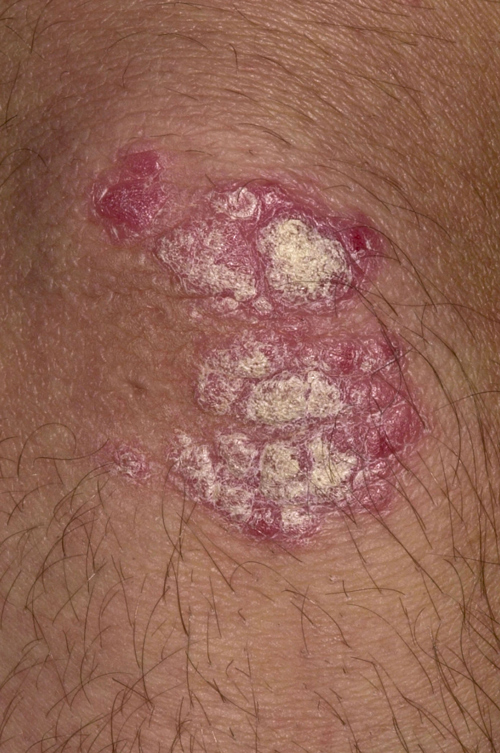
Psoriasis
Psoriasis is a very common, chronic multifactorial disease which affects up to 2% of the population at any one time. It varies in severity but for most patients it is a lifelong condition with, as yet, no cure. This chronicity means it is often associated with depression and can have a marked effect on quality of life. The most commonly affected areas are the extensor surfaces of the knees and elbows, but the scalp, flexures and genitals can also be affected. Patients may be reluctant to mention genital psoriasis, through fear that it may be sexually transmitted, especially as the scale is often absent. It can be useful to ask specifically about these areas as treatment with a mild topical steroid may be all that is required. For plaques in other areas treatments such as vitamin D analogues, both alone and in combination with topical steroids, can be very helpful. In more severe cases the new biologics can have a life-changing effect.
Parapsoriasis en plaque
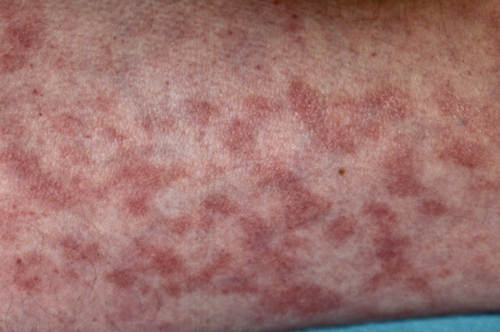
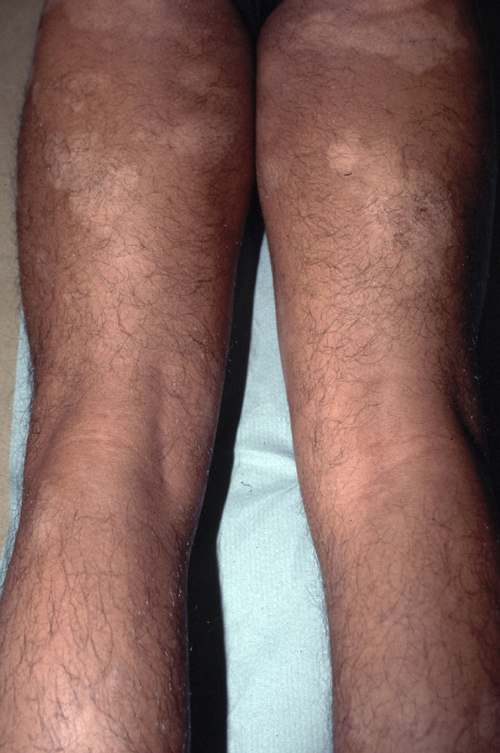
Parapsoriasis en plaque is a chronic skin condition the cause of which is unknown. It produces multiple slightly scaly patches on the limbs and trunk, and is rarely seen on the face, palms or soles. Itching may occur, but is uncommon, and the condition is seen more in the winter than the summer. Treatment can be difficult as emollients and topical steroids provide only limited benefit. However, as the condition is usually mild and asymptomatic treatment is not usually necessary.
Mycosis fungoides
Also known as Alibert-Bazin syndrome, mycosis fungoides is the most common form of cutaneous T-cell lymphoma. The cause is unknown and although it can occur at any age it is rare before the age of 20. The presenting rash can look exactly like eczema or psoriasis with pruritus being common and may progress slowly from the time it is first noticed. The plaques will thicken with time and large areas of skin may be affected causing erythroderma. It often takes a number of years before a diagnosis is reached. This is usually confirmed by a small incisional biopsy. Treatment includes topical steroids and emollients in the early stages followed by phototherapy, radiotherapy, methotrexate or retinoids for more advanced disease.
 Download this article in PDF format