Hidradenitis suppurativa
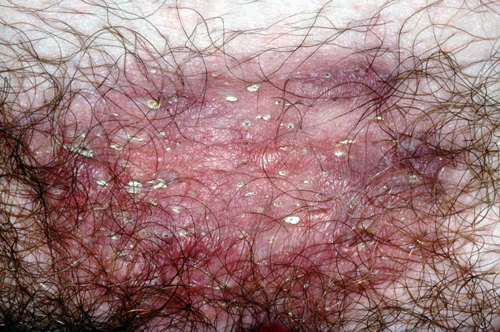
Also known as acne inversa, hidradenitis suppurativa is a painful chronic condition in which abscesses and scarring occur in the groin, axillae, under the breasts and around the buttocks. The underlying cause is unknown, but sufferers have inflamed apocrine sweat glands and plugged hair follicles. The condition varies in severity and affects an estimated 1% of the population, although this may be an underestimate as many sufferers are too embarrassed to seek a medical opinion. The large boils and cysts lead to scarring and tracking of pus which makes the condition very painful. The chronicity of the condition and common failure of treatment results in considerable morbidity for those affected. Treatment approaches include antibiotics, steroids, ciclosporin and surgery. In more severe cases infliximab and adalimumab have been found to be effective. As yet there is no known cure for this condition.
Steatocystoma multiplex
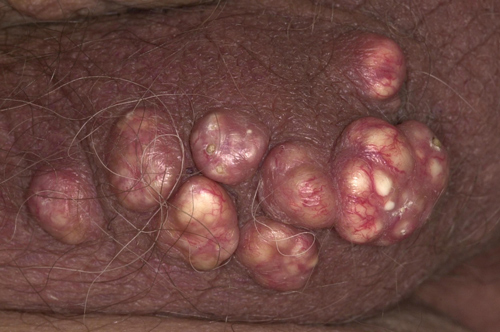
Although the term sebaceous cyst is commonly used to describe pilar and epidermoid cysts neither of these actually involve sebaceous glands. True sebaceous cysts are relatively rare and are termed steatocystomas. When multiple steatocystomas occur the condition is known as steatocystoma multiplex. This is an autosomal dominant disorder although sporadic mutations can occur with no family history. Steatocystoma multiplex is associated with the development of the sebaceous glands hence it most commonly occurs during puberty. As the cysts are benign treatment is not required in every case, but excision or deroofing can be undertaken under local anaesthetic. Any intervention may be associated with scarring and the development of new cysts is common.
Acne vulgaris
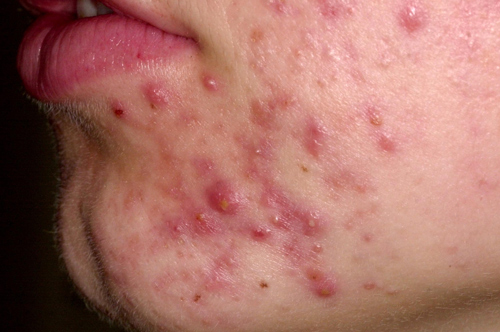
Acne is very common affecting up to 80% of people at some time during their lifetime, of whom 20% will have the more severe form. Treatment is not always necessary but without it the risk of permanent scarring is increased. For some, the disease will cause significant morbidity and rarely may lead to suicide. The psychological impact of the disease is not always related to severity. No one treatment suits all and it is important to take a careful history before deciding which to choose. Often patients will have tried over the counter remedies and have been misled by erroneous advice regarding diet and bad habits. Some treatments can be very irritating because of their drying effect on the skin and lead to significant side effects. Lack of compliance with acne therapies may lead to failure of treatment. Hence it is always worth taking the time to discuss the importance of compliance, how long it will take treatments to work, potential side effects and to explain the role of lifestyle factors. In women with cyclical variation the combined oral contraceptive pill can be very helpful.
Rosacea
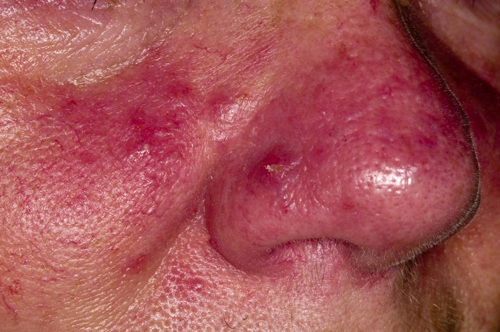
Rosacea is a common condition which affects more women than men and has a peak incidence in people in their thirties and forties. The cause remains unknown. Rosacea may co-exist with acne. When differentiating between the two conditions the absence or presence of comedones can be a helpful sign. In rosacea, comedones will be absent. Rosacea is characterised by facial flushes and a spectrum of signs including telangiectasia, erythema and inflammatory papulopustular eruptions. Some patients may have associated ophthalmic conditions such as blepharitis. Depending on the symptoms the condition can be divided
into four subtypes: papulopustular; phymatous; ocular or erythematotelangiectatic. The diagnosis is usually made clinically without the need for biopsy. Before starting treatment it is important to consider triggers and avoid these if possible. Triggers will be unique to an individual and may include heat, spicy foods, caffeine, exercise, topical products and alcohol. As sunlight will commonly exacerbate the condition the use of a sunscreen which protects against UVA and UVB should be recommended. Other management approaches include antibiotics, topical immunosuppressants, retinoids, and physical treatments such as laser therapy.
Conglobate acne
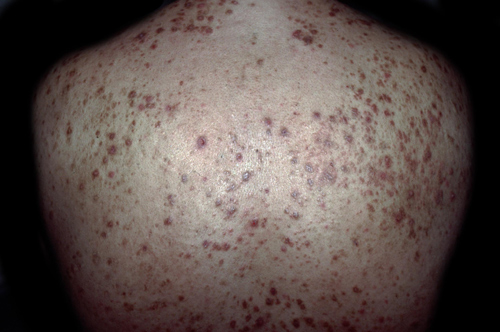
Conglobate means gathered into balls. The term refers to the cysts which form as part of this rare but severe form of acne. The condition is mostly seen in adult males in the second or third decade of life but may extend into the sixth decade. It is characterised by multiple grouped comedones, tender inflamed papules and large abscesses which commonly join together via interconnecting sinuses. Lesions tend to occur on the trunk and upper limbs and frequently extend onto the buttocks with facial lesions being less common. Scarring is very common with this form of acne which may leave deep pits or prominent hypertrophic/keloid scars. Management usually involves systemic isotretinoin with surgical treatment of the cysts and scars.
Local hyperhidrosis
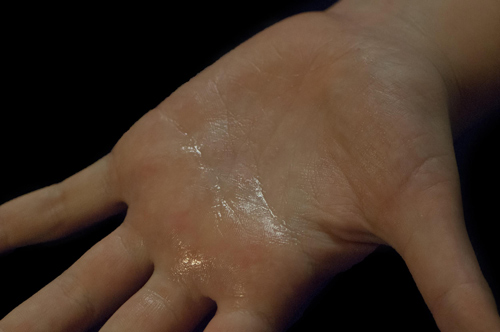
Localised hyperhidrosis most commonly affects the palms, soles or axillae and is mainly seen in young adults who present with excessive sweating in these areas. It rarely has an underlying cause but can be associated with other conditions such as thyrotoxicosis, acromegaly and Hodgkin’s disease. Anxiety, although rarely the cause, can exacerbate the condition which in turn can lead to anxiety and a worsening of symptoms. For axillary hyperhidrosis topical aluminium hydrochloride hexahydrate can be very helpful and needs to be applied each night. It is important that this is only applied to very dry skin otherwise irritation can occur. If necessary, a hairdryer can be used to dry the skin before applying the treatment. For hands and feet, iontophoresis two or three times a week can be very helpful. Some hospital dermatology departments provide this and machines can also be purchased for home use.
 Download this article in PDF format