Hand, foot and mouth disease
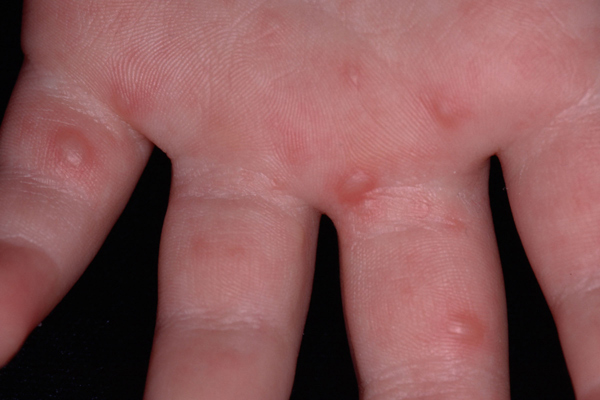
Most cases of hand, foot and mouth disease are caused by the Coxsackie A type 16 virus. Other causes include Coxsackie A5, A7, A9, A10, B2, B5 and enterovirus 71. The condition presents as an acute vesicular eruption of the mouth, which can also affect the hands, feet, buttocks and genitalia. The majority of hand, foot and mouth infections occur in children. The disease is generally milder in adults. The differential diagnosis includes: herpes simplex; herpes zoster; herpangina; erythema multiforme and Kawasaki disease. Diagnosis is usually made clinically without the need for laboratory tests. The condition is generally self-limiting and supportive treatment with fluids and analgesia is all that is required. In rare cases, CNS complications such as encephalitis and aseptic meningitis may develop.
Juvenile plantar dermatosis
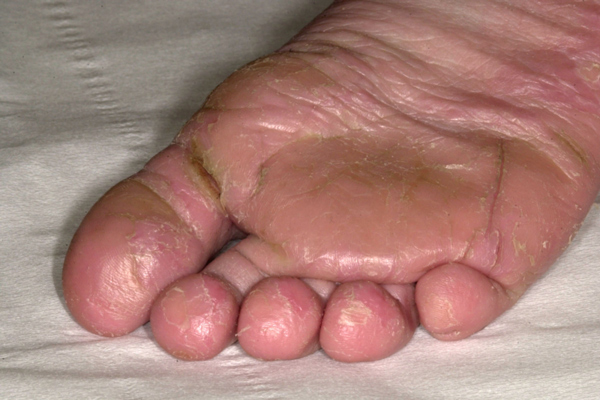
Juvenile plantar dermatosis most commonly presents with shiny, dry fissured soles in boys between the age of four and eight. The toe webs are usually spared but other areas of the feet, and rarely the hands, may be affected. It is more common in atopic children and is associated with friction in otherwise moist sweaty feet. The differential diagnosis includes: psoriasis, atopic dermatitis, and fungal infections. Where the diagnosis is in doubt, fungal scrapings and patch testing should be considered. Education is very important in the management of this condition. The aetiology needs to be explained and instructions given to reduce friction and sweating and increase lubrication with emollients. Application of topical steroid ointments and covering fissures with plasters can also help.
Keratolysis exfoliativa
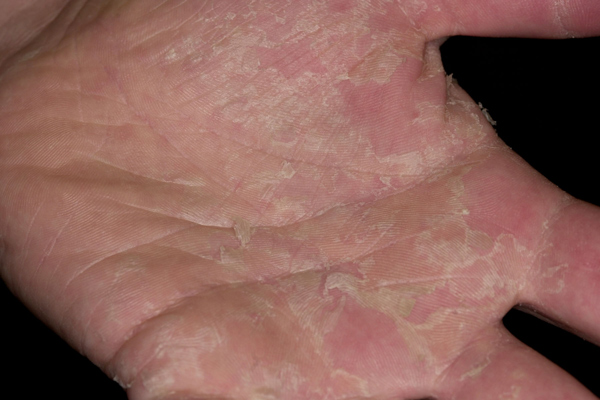
This is a common condition which results in recurrent peeling of the palms and soles. It occurs more often in the summer months and usually affects young adults. Keratolysis exfoliativa presents with superficial air-filled blisters which rupture leaving a collarette of scale. The skin is generally not itchy but may look red and dry with localised cracking. The condition is aggravated by irritants such as soap, detergents and solvents. In some cases, it may progress to pompholyx but it is more common for the condition to resolve over a few weeks. Unlike hand eczema, it does not respond to topical steroids. Treatment consists of protecting the skin from irritants and regular application of an emollient containing urea and lactic acid.
Pompholyx
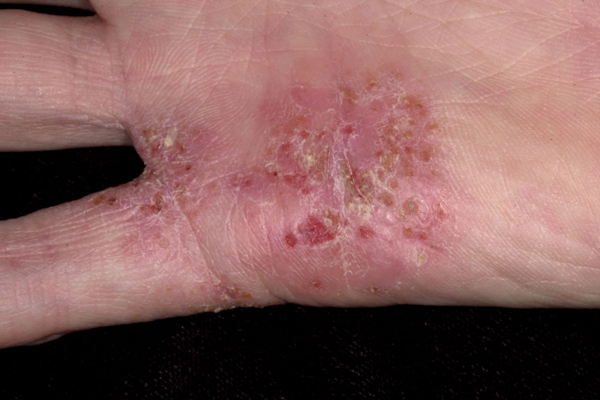
Also known as dyshidrotic eczema, pompholyx is characterised by a pruritic vesicular eruption of the fingers, palms and soles. It affects teenagers and adults, and may be acute, recurrent or chronic. The aetiology is unclear and is thought to be multifactorial. Diagnosis is usually made clinically, but if secondary infection is suspected a swab can be taken. If allergic contact dermatitis is suspected patch testing can be carried out. The mainstay of treatment is topical steroids. Calcineurin inhibitors can also be used. In severe refractory pompholyx immunosuppressive agents such as azathioprine, methotrexate and etanercept can be considered.
Tinea pedis
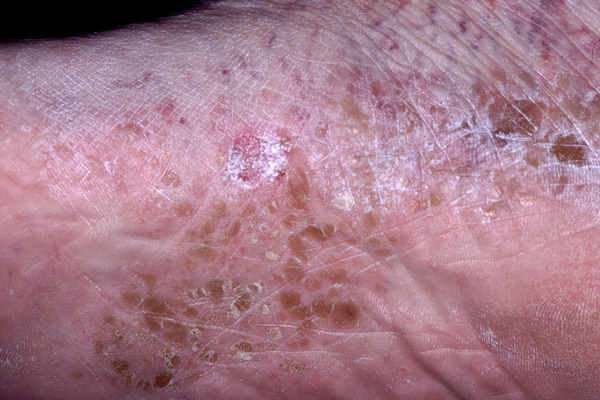
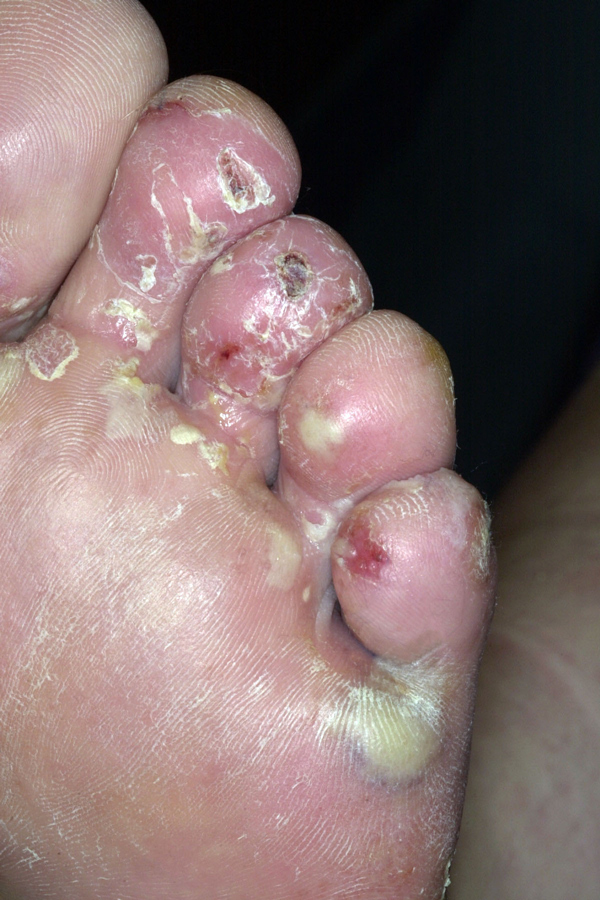
Tinea pedis or athlete’s foot is a dermatophyte infection which is most commonly caused by the fungus Trichophyton rubrum. Prevalence increases with age and males are more commonly affected than females. Affected skin is very pruritic, with scale and in the worst cases painful fissures. Rarely ulceration and vesicles can occur, which may contain purulent or clear fluid. This can progress to cellulitis and lymphangitis especially in immunocompromised patients. In general, a topical antifungal will be adequate. In more severe cases oral antifungal treatment may be required.
Verruca
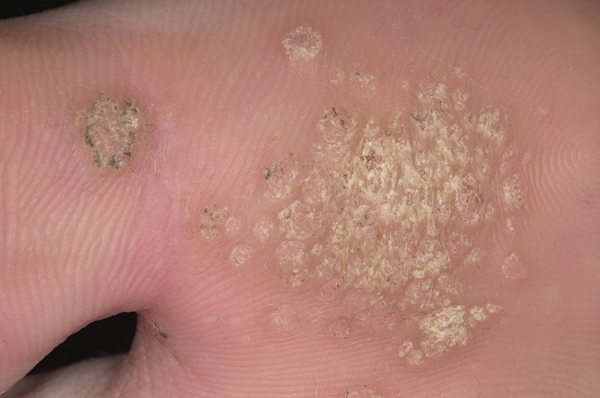
Verrucas occur after infection with the human papilloma virus. They are most common in schoolchildren with 10-20% being infected at any point in time. Sixty five per cent of verrucas will regress spontaneously over a two-year period, so treatment is not necessarily required. Treatment is recommended for extensive, spreading or symptomatic warts that have been present for more than two years. Common treatments include cryotherapy, duct tape and topical applications such as salicylic acid which have success rates of 70-80%, but may take two to three months to work.
 Download this article in PDF format