Erysipelas
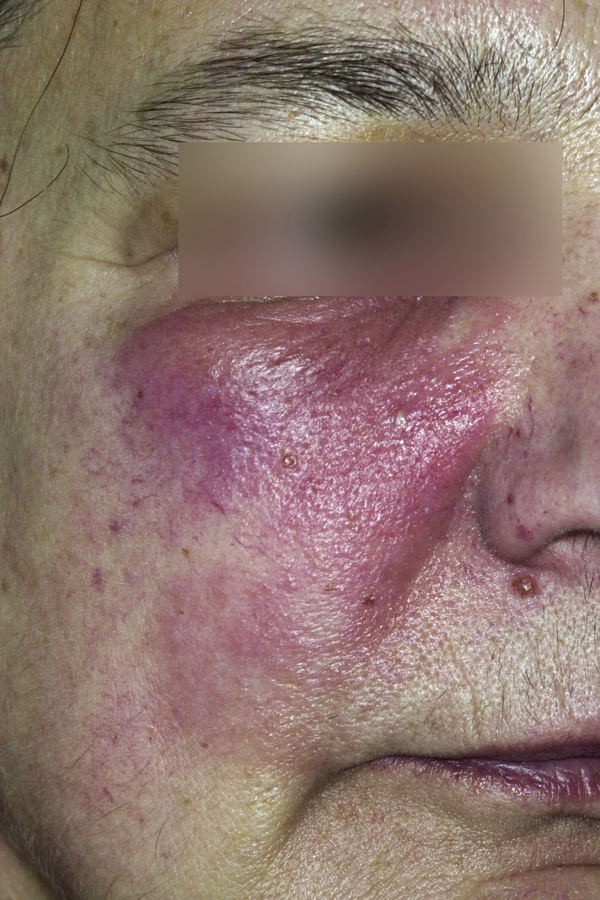
Erysipelas is caused by streptococcal infection of the skin. It can be difficult to differentiate between erysipelas and cellulitis. Erysipelas more commonly affects the head and neck and is usually superficial, whereas cellulitis penetrates deeper affecting the subcutaneous tissue and is more common on the legs. The patient is often systemically unwell with erysipelas and may present with fever, rigors and vomiting, which may develop over a short period. The area affected is usually well delineated, red and tender. Treatment is with oral antibiotics. If there are recurrent episodes a daily prophylactic dose of penicillin or erythromycin should be considered.
Impetigo
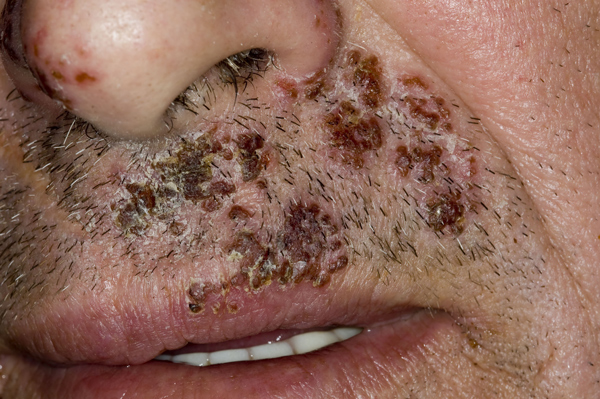
Impetigo is a bacterial infection of the epidermis caused by either staphylococcus or streptococcus. It is highly infectious. There are two forms of the condition, bullous and non bullous (shown here).
The bullous form, which accounts for 30% of cases, is characterised by large blisters which are similar to cigarette burns in appearance (unless diagnosed correctly this may increase suspicion of non-accidental injury in children). The bullous form can arise in normal skin unlike the non-bullous form which usually develops following trauma to the skin such as a graze or insect bite. The blistering is caused by a toxin produced by Staphylococcus aureus which is almost exclusively the causative organism. Treatment with an oral antibiotic such as flucloxacillin or erythromycin is usually required.
Infected sebaceous cyst
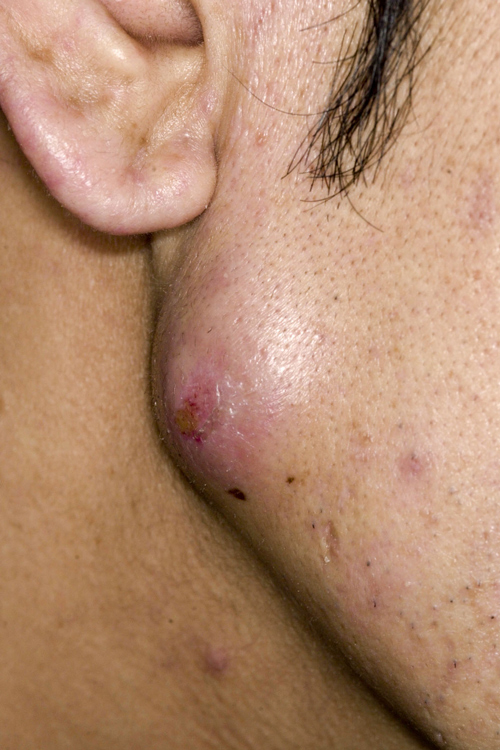
Sebaceous cysts occur more commonly on sebum-rich, hair-bearing areas of the body such as the scalp and face. Unless they are large and symptomatic no treatment is usually required. One common complication of the larger cysts is secondary bacterial infection which causes the adjacent and overlying skin to become hot and inflamed. The swelling will also become painful. When this occurs, incision and drainage can be very helpful followed by a course of an oral antibiotic such as flucloxacillin or erythromycin. Damage to the cyst wall by the infection will often destroy the cyst and may be curative. Where there are recurrent secondary infections underlying diabetes should be considered and tested for.
Keratolysis plantare sulcatum
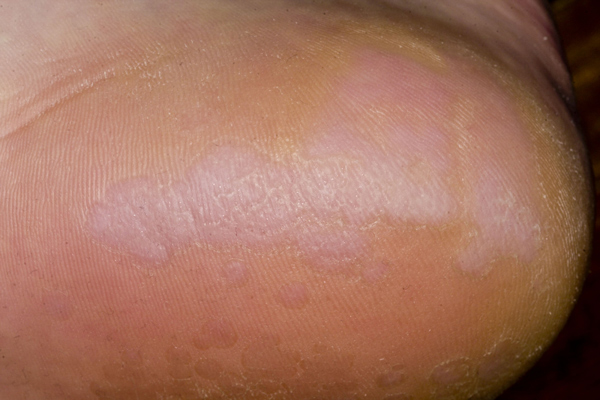
This condition, also called pitted keratolysis, occurs predominantly in people who have hyperhidrosis of the feet or spend long periods wearing trainers and damp socks. An accumulation of sweat causes the feet to become macerated after which secondary infection with corynebacterium or streptomyces occurs. Superficial erosions then follow which have a punched out appearance and are more visible when the feet are wet. Management should include treatment of the infection with topical fucidin or, if necessary, an oral antibiotic. Patients should also be encouraged to keep their feet cool and dry and not wear synthetic footwear. Regular formalin soaks can also be helpful.
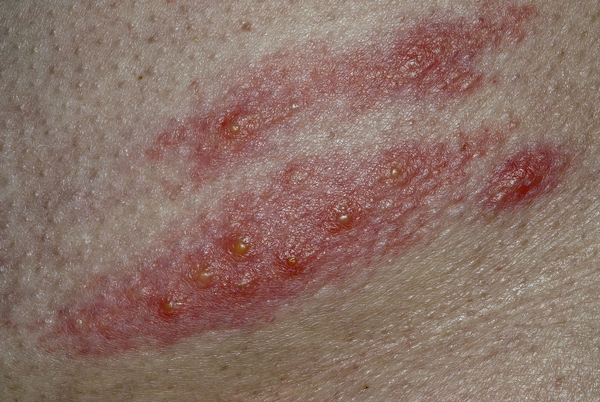
Shingles
Shingles is caused by a reactivation of the varicella zoster virus which lies dormant in the dorsal root ganglion after an initial chickenpox infection. It may be many years before the virus migrates along the cutaneous nerves and causes the typical vesicular rash which usually affects a single dermatome. Shingles is not contagious but the vesicles do contain active virus so chickenpox can be caught from someone with shingles. The rash is usually preceded by acute pain in the affected dermatome, and develops as vesicles on an erythematous background. The rash usually lasts for 2-3 weeks. However, the areas may remain painful for many months or years, a condition called postherpetic neuralgia which can be treated with amitriptyline or gabapentin.
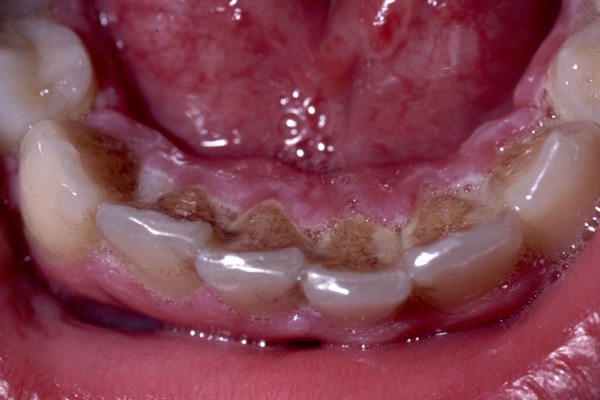
Gingivitis
Gingivitis is an inflammation of the mucosal epithelial tissue surrounding the cervical portion of the teeth. There are various forms including haemorrhagic, ulcerative, purulent and necrotising gingivitis. The most common cause, as in this case, is plaque. In other cases, the cause may be infective, hormonal, nutritional or drug induced. Affected gums appear swollen, inflamed and may bleed especially when teeth are brushed. Where infection is present oral metronidazole is the treatment of choice. Attention to oral hygiene including removal of plaque, regular brushing of teeth and gums and use of a mouthwash are also important.
 Download this article in PDF format