Guttate psoriasis
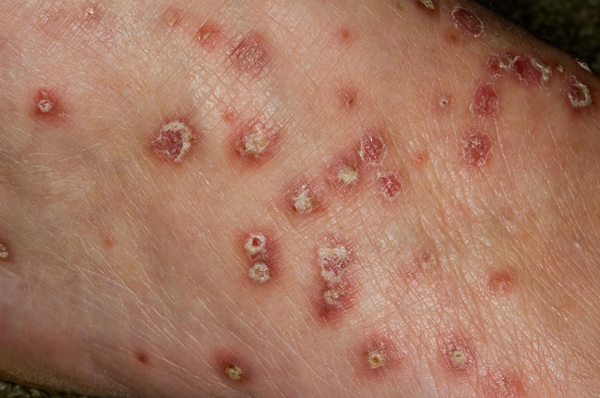
Guttate psoriasis is an acute condition which presents with multiple small drop-like, salmon-coloured papules with a fine scale on the trunk and proximal limbs. It is more common in the under 30s and typically follows 2-3 weeks after a streptococcal upper respiratory tract infection. The rash usually develops over the first month, stays the same for the second month and then over the third month will start to resolve. Recurrent episodes can occur especially where there is nasal carriage of the bacteria. The differential diagnosis include pityriasis lichenoides, syphilis, pityriasis rosea, tinea, cutaneous T-cell lymphoma and nummular dermatitis.
Scalp psoriasis
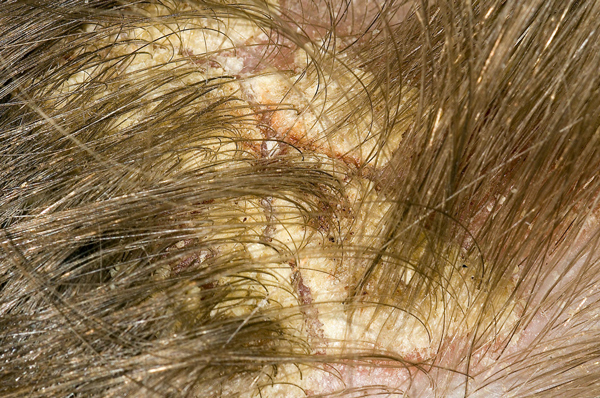
Scalp psoriasis is a common skin condition which produces well demarcated plaques affecting any area of the scalp but more commonly the occiput. Affected areas have thick scale with erythema and scale is shed on clothing. The plaques vary from producing no itch at all to severe irritation. Although the condition usually co-exists with psoriasis elsewhere on the body it may occur in isolation. In severe cases, alopecia may develop in affected areas, especially where the scale adheres to the hair a condition called pityriasis amiantacea.
Topical treatments massaged into the scalp are the mainstay of treatment for this condition and include: emollients; coal tar; topical steroids and vitamin D analogues. Steroids are available as a shampoo which makes treatment easier. The shampoo is applied to dry hair and then washed out after 15 minutes. In more severe cases, acitretin, methotrexate, ciclosporin and biologics can be helpful.
Nail psoriasis
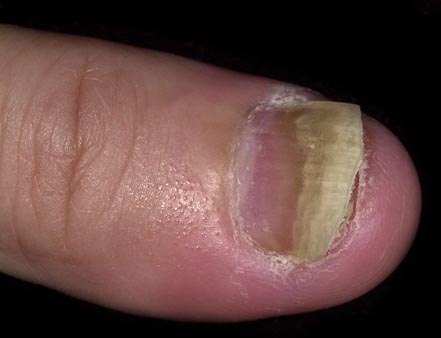
Around 95% of patients with nail psoriasis have psoriasis affecting other areas, and up to 55% of patients with psoriasis will have affected nails. Although the pathogenesis of nail psoriasis is not fully understood it is thought to be a combination of genetic, environmental and immune factors. For many nail psoriasis may simply consist of nail pitting, for others the nails may be severely dystrophic leading to impairment of function. Men and women are equally affected and incidence increases with age. Treatment can be difficult. Topical steroids applied, under occlusion, for short periods (< 2 weeks) can be helpful. Twice daily application of 5-fluorouracil to the matrix area for 6 months can help pitting and subungual hyperkeratosis. In more severe disease PUVA may be used. In resistant cases, systemic medications such as methotrexate, retinoids and ciclosporin can be prescribed but as these have the potential for serious adverse reactions their use is confined to secondary care.
Plaque psoriasis
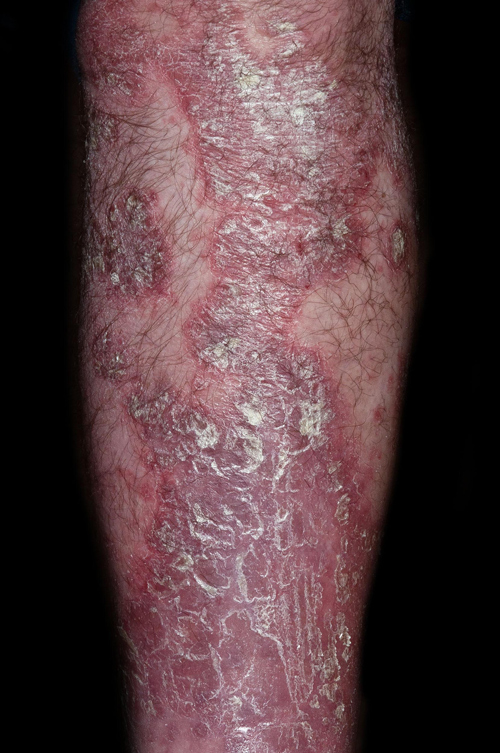
While studies suggest an underlying genetic role in the development of psoriasis, the absence of 100% concordance among monozygotic siblings indicates that environmental factors must also play a part. When managing psoriasis it is important to make patients aware of modifiable risk factors and how lifestyle changes can help the condition. Smoking and alcohol should be considered as risk factors, especially in young to middle-aged males with psoriasis who should be advised to keep the amount of alcohol consumed at a low level. All types of physical trauma can exacerbate psoriasis, as can certain medications including lithium, beta blockers, antimalarials and NSAIDs. Sunlight will generally help psoriasis but in some cases it will make the condition worse.
Superficial basal cell carcinoma
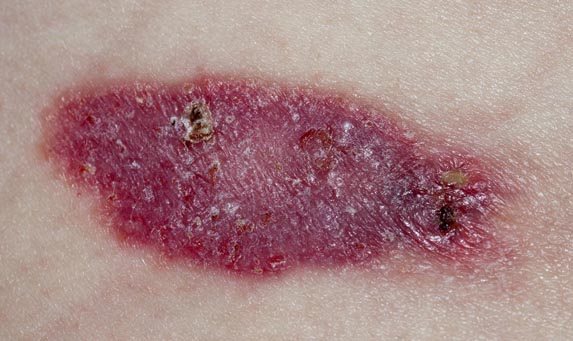
Psoriasis usually presents in a symmetrical distribution and affects more than one area. If a patient presents with a single scaly plaque then it is important to consider that, despite its appearance, this may not be psoriasis especially if normal psoriasis treatments are ineffective. One of the most common differential diagnoses of such a plaque is superficial basal cell carcinoma. These lesions usually look like psoriatic plaques but only a single plaque is present and they do not itch. Patients will also have tried emollients and topical steroids which will not have helped. If there is diagnostic doubt then a small punch biopsy can be helpful. Superficial basal cell carcinomas can be treated with topical agents such as 5-fluorouracil or imiquimod.
Palmoplantar pustulosis
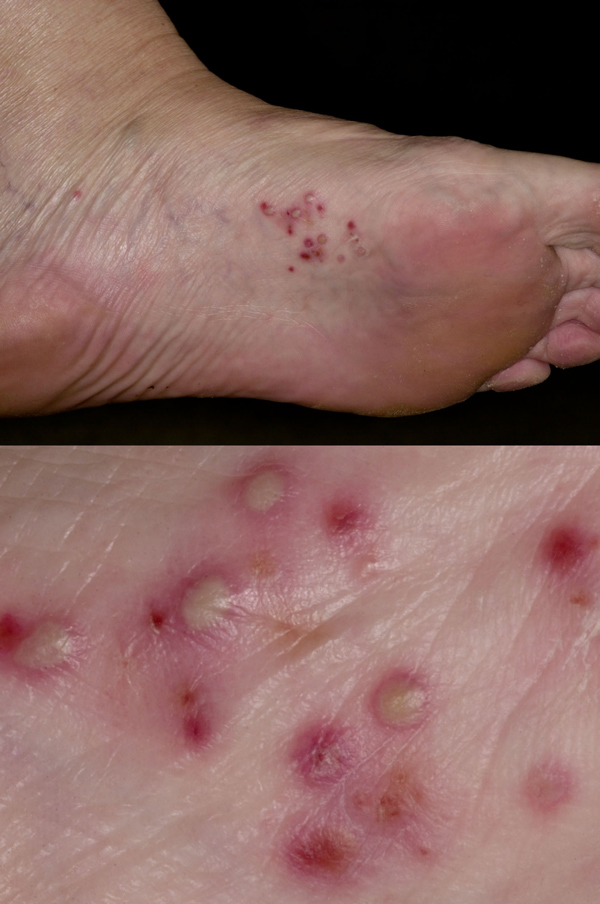
Palmoplantar pustulosis is a chronic pustular condition which affects the skin of the palms and soles. It was previously called plantar pustular psoriasis as it was thought to be a variant of pustular psoriasis. It is now considered to be a completely separate entity with a different genetic background. Between 10 and 20% of those affected have plaque psoriasis as well. The condition is probably autoimmune in origin. It is more common in women and is rarely seen in children. It is also more common in current and ex-smokers. Smoking causes activation of nicotine receptors in sweat glands leading to an inflammatory reaction and the formation of sterile pustules. Activation of these receptors is not reversed by stopping smoking. Treatment options include emollients, topical steroids, acitretin and PUVA. Although the biologics may help in severe palmoplantar pustulosis, the condition can also occur as a side effect of treatment with biologics such as infliximab, etanercept and adalimumab.
 Download this article in PDF format