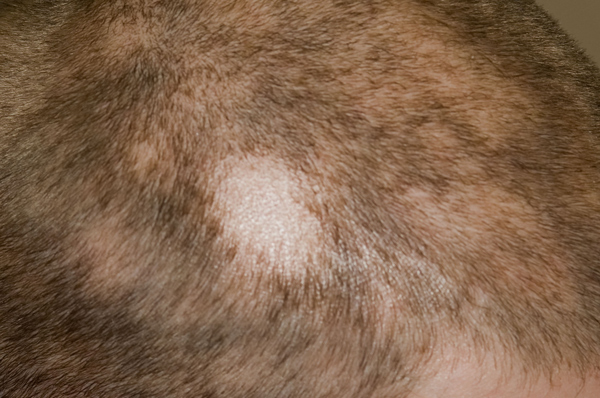
Alopecia mucinosa
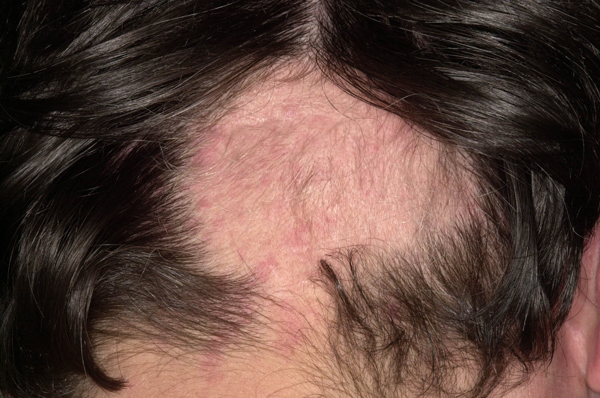
Also known as follicular mucinosis this condition presents as follicular papules and indurated plaques which, along with deposition of mucin in the hair follicles and sebaceous glands, leads to inflammation and hair loss. Any hair-bearing areas may be affected but alopecia mucinosa most commonly occurs on the scalp, neck and face. There are three distinct clinical types: primary acute which affects young people; primary chronic which affects older people; and a secondary disorder associated with benign or malignant disease. The condition can be associated with lymphoma so multiple skin biopsies should be taken to exclude this. No one therapy is universally effective. Treatments used routinely include: topical, oral and intralesional steroids, PUVA, topical nitrogen mustard and radiotherapy.
Discoid lupus erythematosus
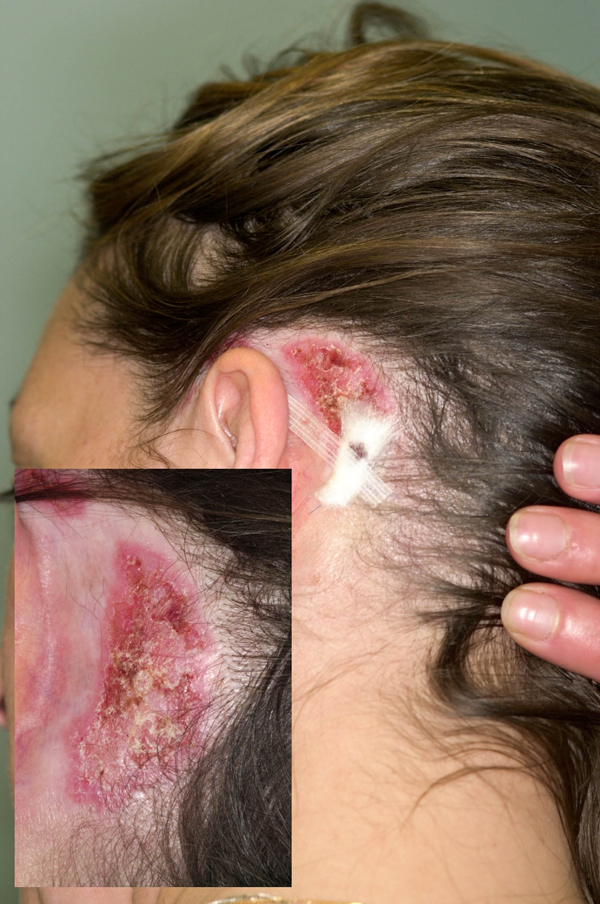
Discoid lupus erythematosus (DLE) is a chronic photosensitive dermatosis that causes skin atrophy and scarring. When it affects the skin of the scalp, the scarring can lead to alopecia which, if untreated, can be permanent. The aetiology is not well understood, but the condition is thought to occur in individuals who have a genetic predisposition. Diagnosis is usually confirmed by biopsy after which treatment needs to be started as soon as possible to prevent permanent scarring alopecia. Treatment includes sun protection measures and both topical and intralesional corticosteroids. Topical calcineurin inhibitors and topical retinoids can also be helpful.
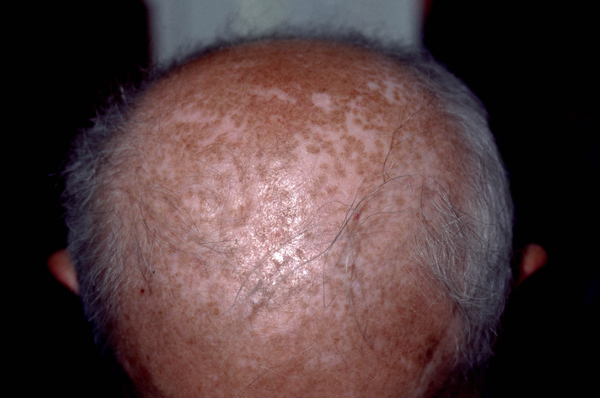
Brocq pseudopelade
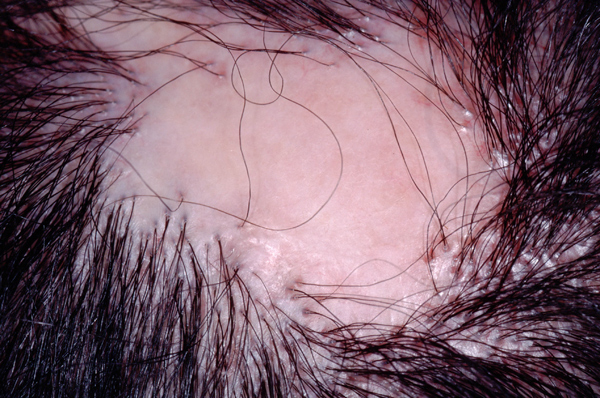
Brocq pseudopelade, a form of cicatricial alopecia, was originally described as a distinct clinical entity but many now feel it is the end stage of other forms of alopecia such as DLE or lichen planopilaris. The condition presents as discrete irregular, asymptomatic areas of alopecia which most commonly affect the vertex. They have a porcelain-like appearance with localised atrophy. Brocq pseudopelade remits and relapses with an overall steady progression. There are no specific tests for this condition which is a diagnosis of exclusion in most cases. In burnt-out cases there will be no treatment and the scarring will be permanent. Where inflammation is present, topical or intralesional steroids can help. Hydroxychloroquine, with or without prednisolone, is an alternative choice. Overall, the condition can be difficult to treat and response is often poor leading to permanent alopecia.
Lichen planopilaris
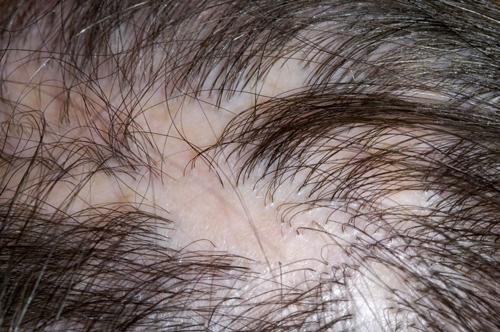
Lichen planus is most commonly found on the flexor surfaces of the upper limbs, genitalia and mucous membranes. Less commonly, it may affect the scalp where it can cause alopecia. Lichen planopilaris can occur at any age but most commonly affects people between 30 and 60. On the scalp, early lesions will be pruritic scaley papules which can then progress to a cicatricial scarring alopecia. A punch biopsy can help in diagnosis where this is in doubt. Treatment options include intralesional steroids, prednisolone, systemic retinoids and mycophenolate mofetil.
Androgenetic alopecia
Androgenetic alopecia is a genetic disorder which leads to a reduction in the terminal to vellus hair ratio following a shrinkage of affected hair follicles which results in distinctive patterns of hair loss; so-called male and female pattern baldness. It is more common in men than women. Diagnosis is usually based on clinical appearance in men but in women an underlying virilising tumour always needs to be considered as a cause. Blood tests for testosterone, thyroid function, serum iron and DHEA levels can be helpful. Numerous surgical techniques such as hair transplantation are available. There are two medications which have been shown to be helpful; topical minoxidil and oral finasteride.
Alopecia areata
Alopecia areata is a recurrent non-scarring form of alopecia that can affect any hair-bearing areas of the body. It has a peak incidence between the ages of 15 and 29. The exact cause remains unknown, but it is thought to be a T cell-mediated autoimmune process in genetically predisposed individuals. It is a benign condition and in the majority of cases will undergo spontaneous remission. Hence treatment is not always necessary. For many people the psychological effects of hair loss are very significant and so most patients will seek treatment in the early stages of the condition. Potent topical steroids or calcineurin inhibitors applied directly to affected areas can be helpful.
 Download this article in PDF format