Bullous pemphigoid
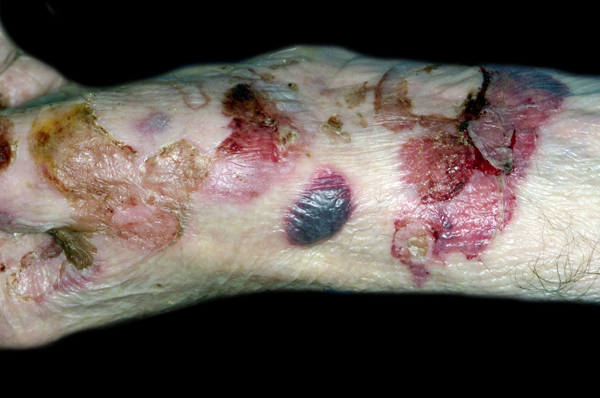
Bullous pemphigoid is an uncommon chronic autoimmune condition. If left untreated it can continue for months, or even years, with a pattern of spontaneous remission and exacerbation. It presents with widespread tense blisters that will occasionally affect the mucous membranes as well. The differential diagnosis includes: drug-induced bullous disorders; epidermolysis bullosa; linear IgA dermatosis; and erythema multiforme. Diagnosis is confirmed by histology and immunofluorescence of perilesional skin. The aim of treatment is to reduce the inflammatory response and the production of autoantibodies. Treatment options include anti-inflammatory drugs such as steroids, tetracyclines and dapsone, and immunosuppressants such as azathioprine and methotrexate.
Bullous pemphigus
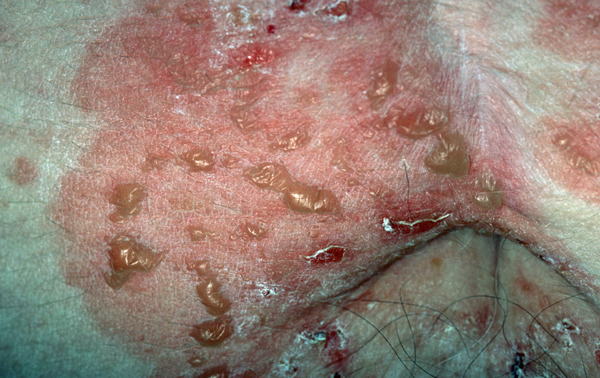
Pemphigus is an autoimmune blistering condition that affects the skin and mucous membranes. In some cases, pemphigus is drug-induced. NSAIDs, captopril, cephalosporins and penicillamine are all known to induce the condition. Typically, lesions first appear on the mucous membranes, sometimes many months before the skin lesions develop. The skin lesions present as flaccid blisters on an erythematous base. The blisters are filled with a clear fluid and will easily rupture, often resulting in large painful erosions with few blisters remaining intact. Pemphigus is one of the conditions in which Nikolsky’s sign will be positive, i.e. a finger rubbed firmly over the skin will produce an erosion. Diagnosis is made by histology from a sample taken from the edge of a blister and direct immunofluorescence of perilesional skin. The treatment is the same as for other autoimmune bullous conditions and aims to reduce inflammation and autoantibody production.
Herpes labialis
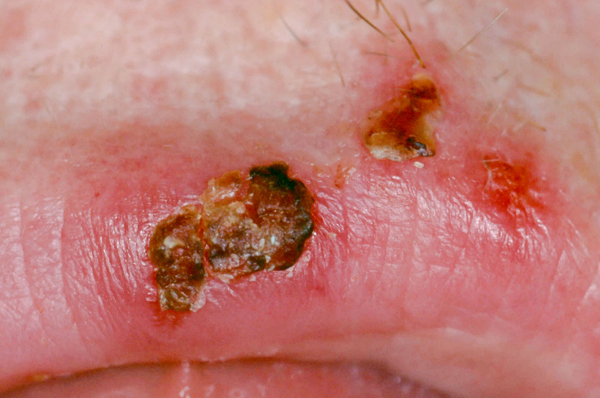
Herpes labialis, more commonly known as cold sores, is caused by the herpes simplex virus type 1. If the initial infection occurs in childhood it is often asymptomatic with the child remaining well. If it occurs in later life it may be associated with systemic symptoms, ulceration and regional lymphadenopathy. Recurrences of herpes labialis are often associated with the presence of triggers such as ultraviolet light, hormonal fluctuations, stress, trauma and immunosuppression. Antiviral medication either topical or oral can be helpful, but needs to be started early in an outbreak to be effective.
Shingles
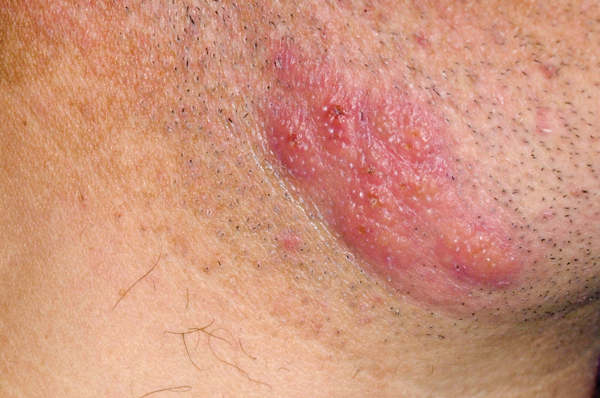
Shingles is caused by a re-emergence of the varicella zoster virus which has been lying dormant in the dorsal root ganglion after an initial attack of chickenpox, often many years before. The virus spreads along the cutaneous nerves leading to a blistering rash in a dermatomal distribution. The patient will often describe pain within the dermatome a few days before the appearance of the rash and associated erythema. The rash is usually present for two to three weeks, during this period the patient may feel systemically unwell. In some cases, post-herpetic neuralgia may cause pain for months or years after the acute illness. Early use of an antiviral such as aciclovir during an attack of shingles may help reduce the incidence of post-herpetic neuralgia.
Insect bite
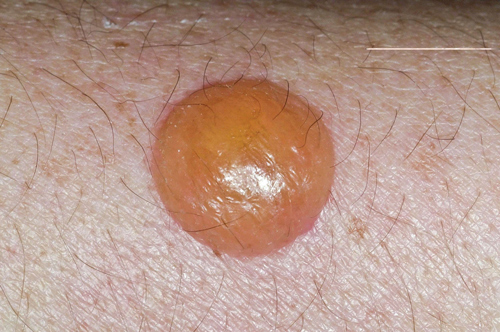
Insects usually cause trauma to the skin by one of three methods, biting, piercing or sponging. During the process saliva is often injected into the skin which can produce an immune response causing a variety of reactions. These range from simple localised pruritus, erythema, heat and pain to more severe reactions such as in the case shown here when a large blister developed at the site. Rarely, an insect bite or sting will lead to an anaphylactic reaction which can be fatal. In this particular case the bite was from a gnat. It was treated with an oral antihistamine and a mild steroid cream.
 Download this article in PDF format