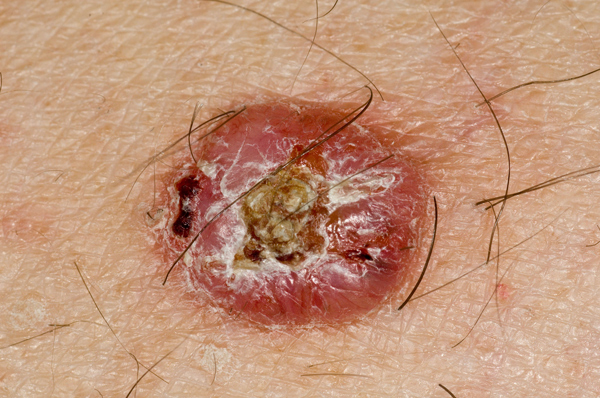
Nodular basal cell carcinoma
Basal cell carcinomas (BCC) may be: superficial, pigmented, nodular or morphoeic. Nodular BCC are the most common type. They are also known as rodent ulcers because of their similarity in appearance to rat bites. Depending on the size and location of the lesions, treatment varies from a simple excision to more extensive surgery requiring skin grafts or flaps. In particularly challenging cases, or where lesions have recurred after excision, Mohs surgery can be undertaken which results in very high cure rates.
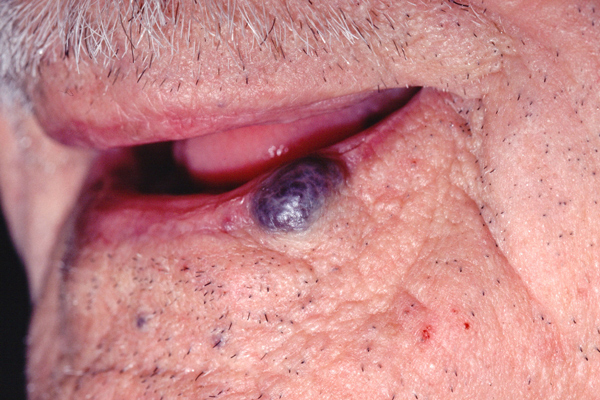
Venous varix
A venous varix is a benign vascular lesion which has a blue/red appearance. The lesions consist of dilated thick-walled blood vessels and are most commonly found on the face and lips of the elderly. They are usually solitary, soft, compressible lesions. Although asymptomatic they may bleed profusely if caught or accidentally cut during shaving. In these cases, formal excision of the lesion may be appropriate. This is a simple procedure carried out under local anaesthesia.
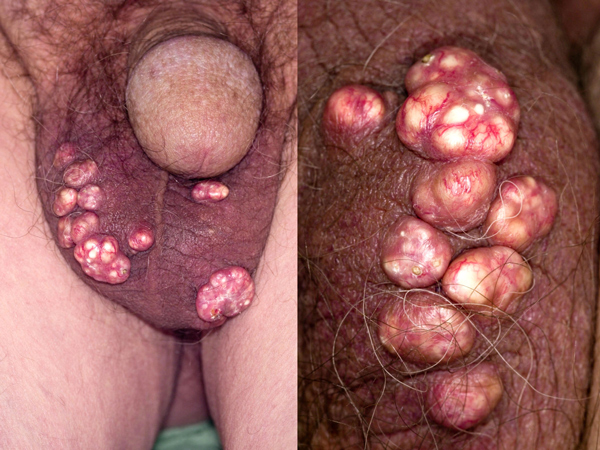
Steatocystoma multiplex
This uncommon autosomal dominant condition usually presents in, or after, puberty. The lesions which are variants of dermoid cysts are multiple and measure 1-3 cm in diameter. They most often occur on the neck, sternum, axillae and, as in this case, the scrotum. If treatment is deemed necessary, the individual lesions can be excised.
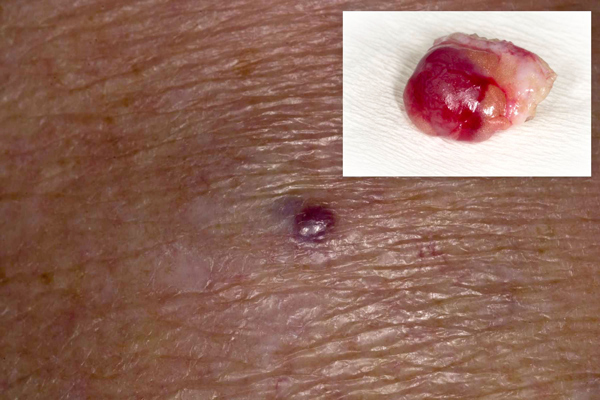
Glomus tumour
Glomus tumours are uncommon, small red or flesh-coloured nodules, which are most often found on the hands. The tumours may develop at any age from childhood onwards. They may occur as multiple lesions with an autosomal dominant pattern of inheritance. Glomus tumours are derived from arteriovenous shunts which occur normally throughout the body. Unlike many other benign tumours, they are characterised by paroxysmal pain with no apparent cause, which is the main reason they are excised. When excising a glomus tumour it is important to remove the whole lesion to prevent recurrence which is otherwise relatively common.
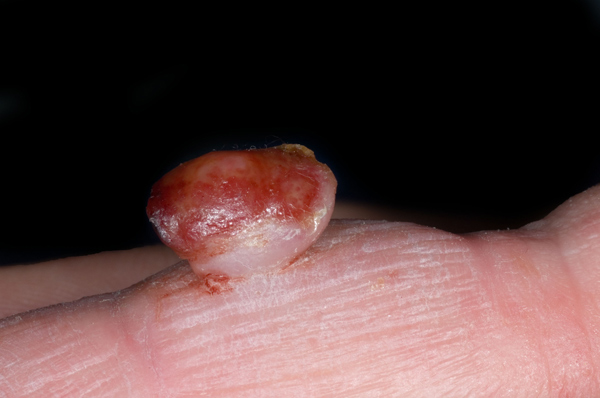
Pyogenic granuloma
Pyogenic granulomas are common benign nodules that often develop following trauma to the skin. They can occur at any age, are usually solitary and are most commonly found on the face and sides of the fingers. Pyogenic granulomas consist of newly formed capillaries surrounded by oedema, which means that they are often very fragile and will bleed easily and profusely. Most lesions can usually be treated by curettage and cautery, but may recur.
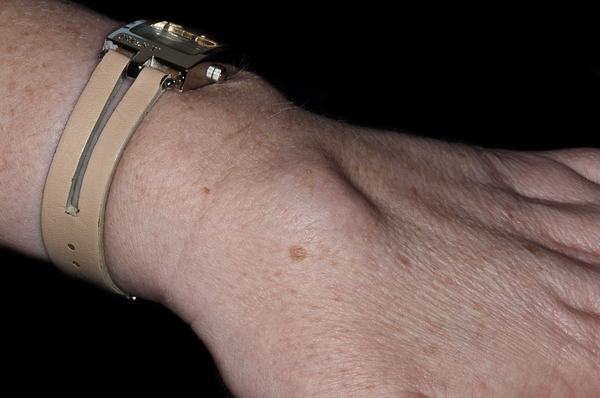
Ganglion
A ganglion is a chronic painless cyst that is most commonly found on the dorsum of the wrist or around the ankle. Following leakage of synovial fluid from the adjacent joint capsule the fluid becomes encapsulated by fibrous tissues leading to the formation of a cyst. Patients often report resolution of these cysts following spontaneous rupture. Ganglions can be treated by incision and drainage, with a wide bore needle, or patients can be referred for excision of the cyst. Regardless of the type of treatment undertaken there is a risk of recurrence.
 Download this article in PDF format