Cement dermatitis
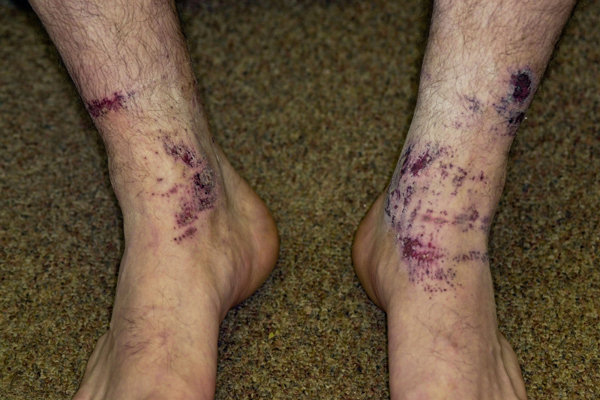
This builder accidentally poured a small amount of cement from his mixer into both his Wellington boots. He thought nothing of it at the time and carried on working.
The cement meanwhile soaked into his socks which he continued to wear for a number of days. Before long he developed an itchy rash affecting both his feet and ankles. Two weeks later there was a large excoriated area with marked erythema. The diagnosis was irritant dermatitis probably caused by the lime in the cement. He was advised to apply liberal amounts of emollients, and topical steroids, and to buy some new socks.
Crush injury
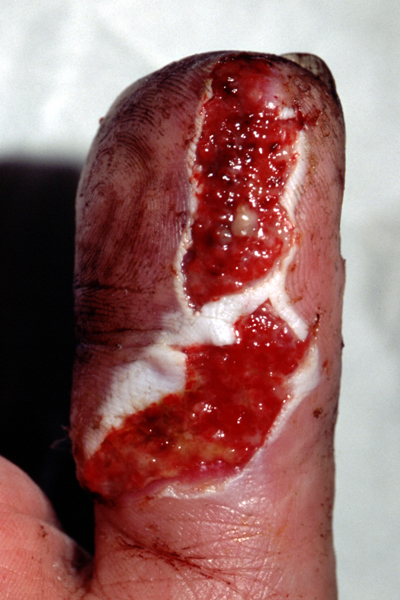
Although this injury to a landscape gardener’s thumb looks like a laceration, it actually occurred after the digit was trapped between two very heavy pieces of granite. In such cases, it is important to check for an associated crush fracture by x-raying the area. At the time the photo was taken suturing was not possible because of the degree of swelling, so the area was cleaned and dressed and allowed to heal by secondary intention.
Penetrating injury
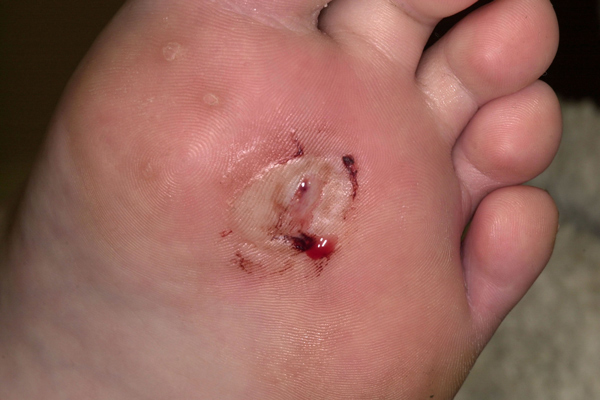
While working as a gardener this man injured his foot by stepping on a nail which pierced his Wellington boot and entered his foot. He did not seek any medical help for three days by which time the wound had become increasingly painful and was discharging pus. No details were available regarding vaccination history so he was vaccinated against tetanus and prescribed a seven-day course of oral antibiotics.
Laceration
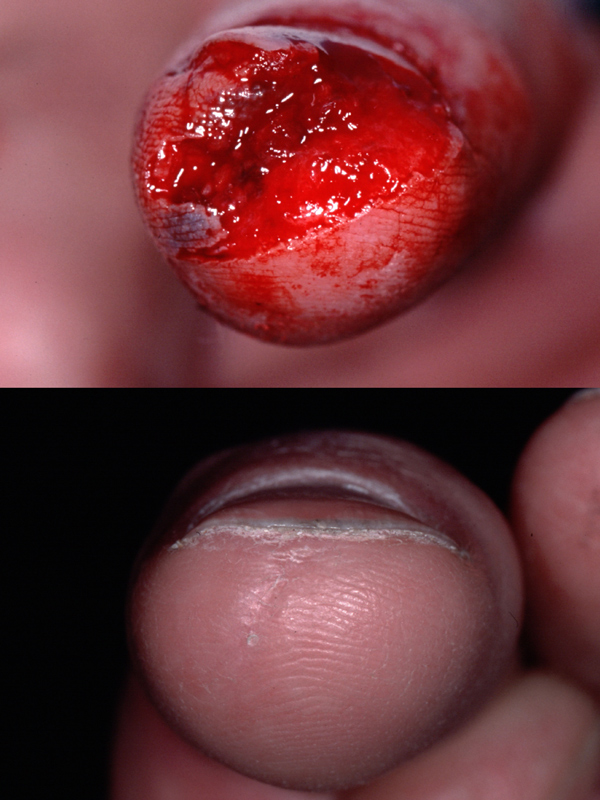
This man lacerated the end of his finger while cutting wood with a large circular saw. The injury resulted in a portion of the skin being destroyed which meant that direct closure was not possible. Fortunately, the area affected was not near the digital artery or nerve and the nails were not damaged. In cases such as this suturing is not possible, so the area was left to heal by secondary intention allowing new skin to fill the defect. This does take longer than directed closure but can give very good functional and cosmetic results as seen in the photo taken a few weeks’ later.
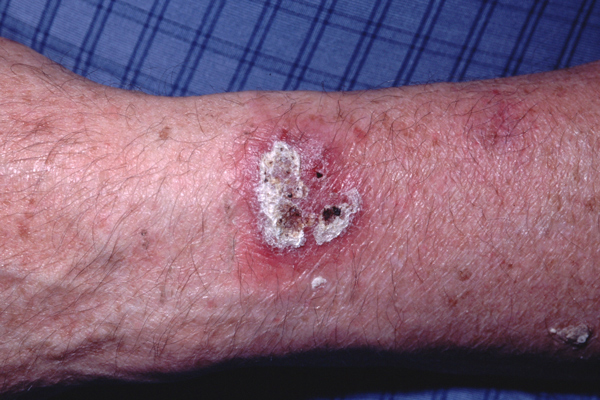
Fish tank granuloma
After many months of cleaning out fish tanks in a garden centre this man developed an inflamed crusted lesion on his left hand. He did not seek medical help and it cleared without treatment after a few weeks. However, before long he developed a similar lesion on his forearm. The diagnosis was fish tank granuloma caused by Mycobacterium marinum. Typically the lesions resolve but then recur through proximal spread along the lymphatic system. Biopsy and tissue culture need to be performed to confirm diagnosis. In resistant cases oral antibiotics such as oxytetracyline can be helpful.
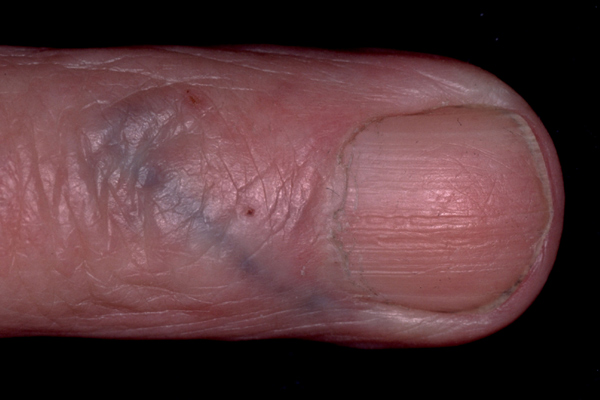
Coal dust tattoo
Coal dust got into a cut on this miner’s index finger leaving him with a permanent reminder of the injury. The dust is clearly visible through the skin producing a tattoo at the site of the laceration. Careful cleaning of the wound at the time would have prevented this, but there are not likely to be any long-term sequelae as a result of this injury, which had occurred many years before the photo was taken.
 Download this article in PDF format