Hyphaema and dilated pupil
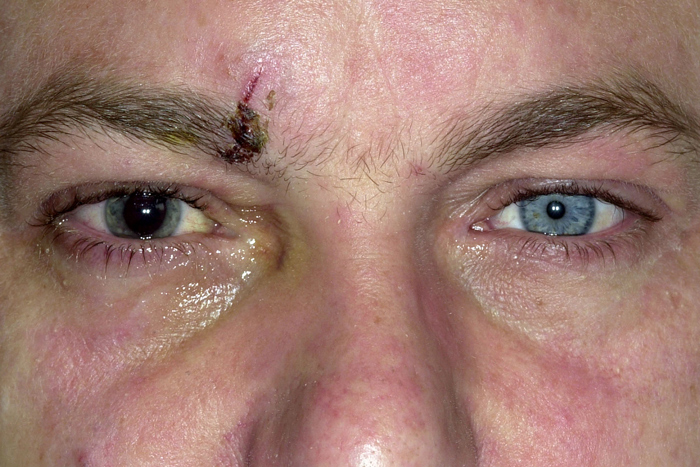
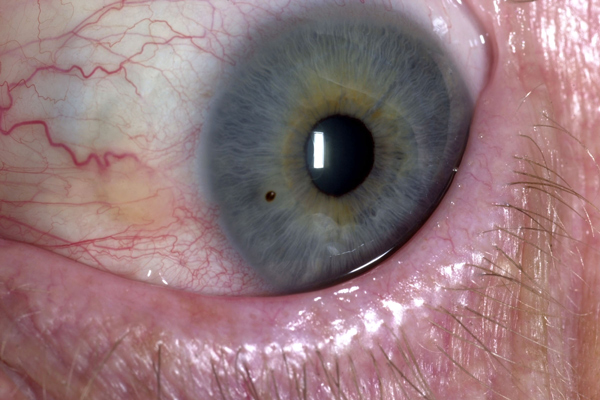
Hyphaema is the term used to describe a collection of blood in the anterior chamber of the eye. It is graded 1 to 4 depending on the extent of the bleeding. Damage to the pupillary muscles and nerves can also occur leading to a dilated pupil. The most common cause is an injury to the eye inflicted by a blunt object, which in this case was a direct blow from a tennis ball. Treatment includes rest to prevent further bleeding and elevation of the bed head to encourage the blood to collect inferiorly to reduce the risk of it interfering with vision. An eye shield may help prevent rubbing and further bleeding. The use of aspirin and NSAIDs should be avoided. The vast majority of cases resolve on their own without complications. However, in cases such as the one shown here, where the pupil became dilated, the damage may be permanent.
Steroid-induced skin atrophy
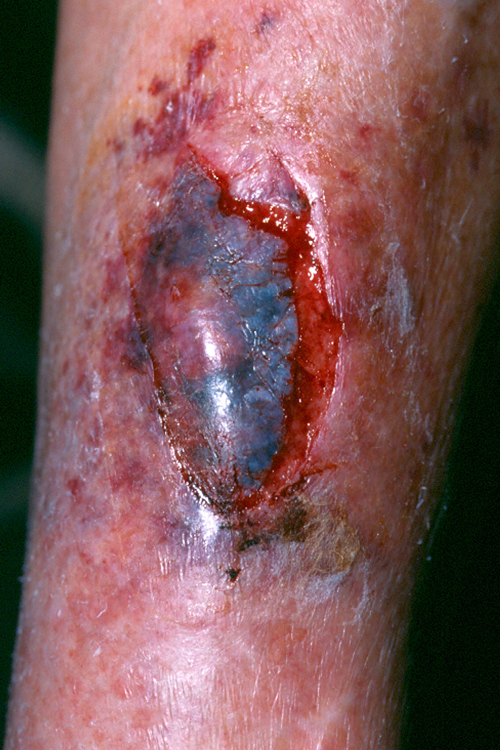
One of the known side effects of oral and topical steroids is skin atrophy which can increase the risk of injury from low-grade trauma. Skin atrophy causes the skin to have a shiny appearance with a lack of surface markings. In this case the patient had been on long-term oral steroids for polymyalgia rheumatica. After a fall she developed a tear and marked bruising over her shin. Regular application of emollients may help increase the elasticity of the skin but otherwise this can be a difficult side effect to manage and the changes may be permanent.
Air bag burn
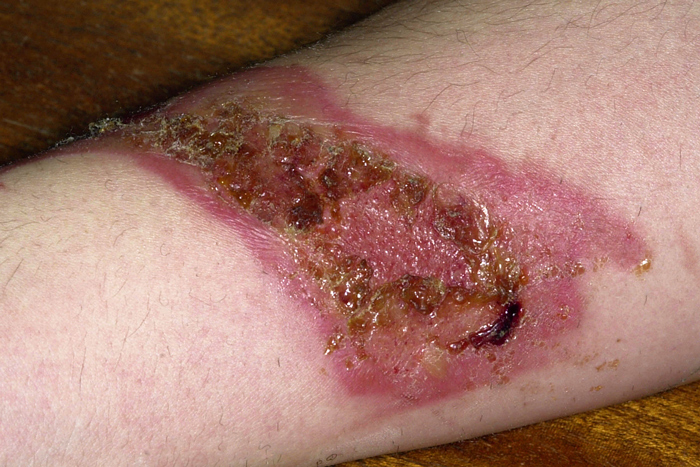
Most modern cars come fitted with air bags which have no doubt saved many lives and prevented serious injuries. They do though, on occasion, cause injuries themselves mainly by way of burns. Most of these are chemical burns caused by sodium hydroxide in the aerosol created during deployment of the air bag. These typically affect the forearms as in this case and should be treated in the same way as any other burn with regular dressings. Other types of air bag injuries include direct thermal burns caused by high-temperature gases or friction burns from direct contact with the bags.
Keloid scarring
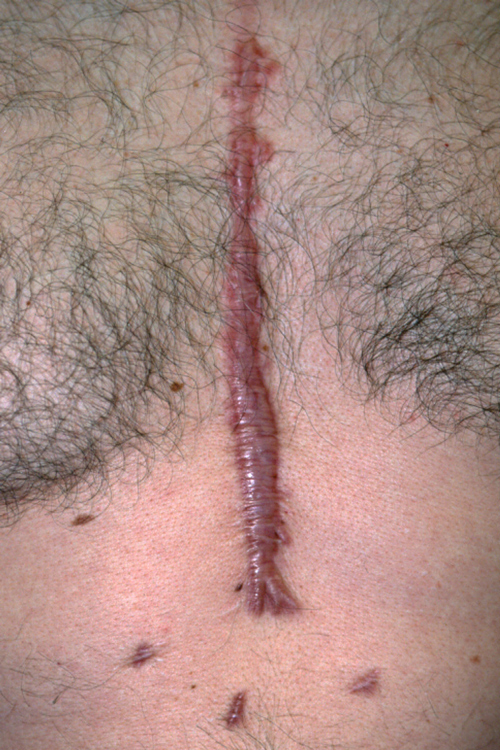
Keloid scars grow beyond the borders of the original wound, do not regress spontaneously and tend to recur after excision. They typically consist of thickened fibrous tissue which is firm to the touch. The areas of highest risk are the face, chest, pre-sternal area, neck and back in Caucasians and the ears, face, neck and lower extremities in black patients. The most common age of onset is between 10 and 30 years of age. Although in most cases it is the cosmetic appearance of the scars which is of greatest concern, in others it may be the resulting contracture of adjacent tissue which may affect function. There are a wide variety of treatment options including intralesional steroid injections, occlusive dressings, cryosurgery, radiotherapy, laser therapy, interferon, imiquimod and tacrolimus.
Rust spot
When considering eye injuries it is very important to take an accurate history to determine the possible extent of the injury and whether there may have been a penetrating injury into the vitreous fluid as well as the visible injury. Simple corneal abrasions may occur from a scratch or grit entering and leaving the eye or persisting, as in the case of this rust spot from a steel fragment. Rust spots should be removed in secondary care using anaesthetic drops to prevent corneal damage.
In more serious high-velocity, penetrating injuries which may occur with welding or strimming, the object may penetrate the eye leaving little evidence of its entry point. If this is thought to be a possibility referral to a specialist eye emergency department should be advised.
Cryotherapy
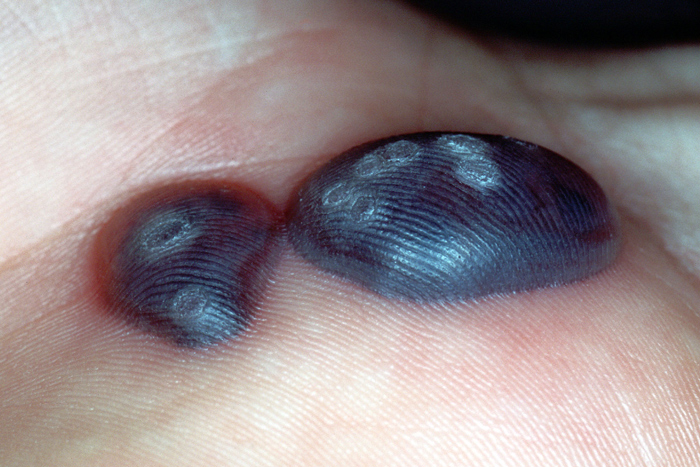
Cryotherapy can be a useful treatment for warts, verrucas, keratoses and some forms of precancerous changes or skin cancer. Care and training are essential to prevent damage to underlying structures such as nerves, blood vessels or tendons. This is especially important when treating warts on fingers. In this case cryotherapy to warts on the hand produced blistering into which there was bleeding.
Although this looks alarming and may be painful, this is in fact a desired result, which should allow the warts to be sloughed off with the skin overlying the blisters.
 Download this article in PDF format