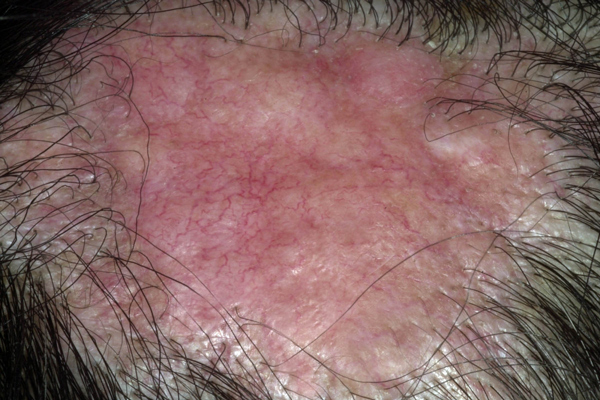
Metastatic breast cancer
Internal malignancies can sometimes lead to the development of metastases in the skin. These usually occur late in the disease after the diagnosis has been established but very rarely they may occur before the primary tumour has been detected. Tumours which most commonly metastasise to the skin include breast, as in this case, nasal sinus, larynx, oral cavity, lung and melanoma. Spread of malignant cells to the skin usually occurs via the blood stream or lymphatic system. Treatment is generally palliative and includes debridement, imiquimod, cryotherapy, photodynamic therapy, excision, laser therapy and intralesional cytotherapy.
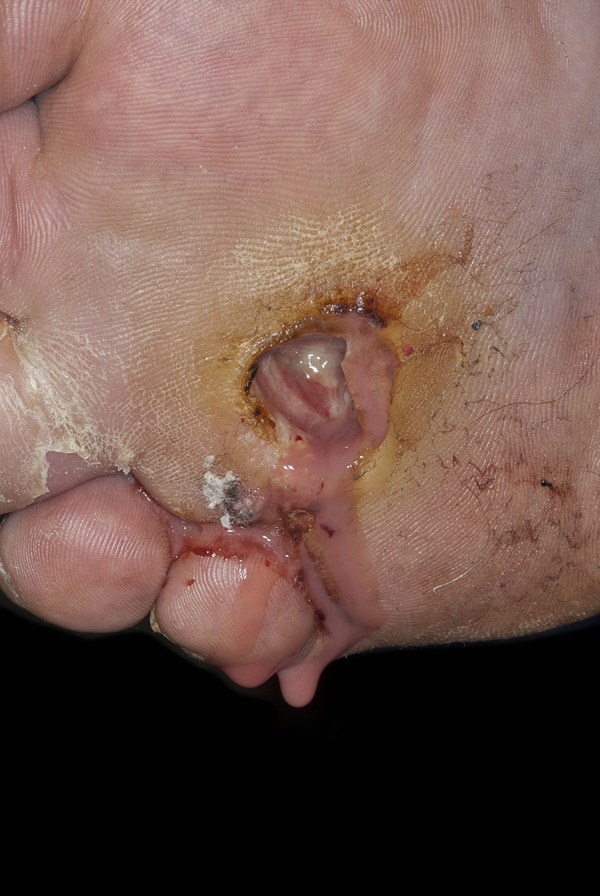
Cellulitis
The development of severe cellulitis and ulceration, following a superficial blister caused by a treadmill, led to suspicion that this man might have undiagnosed diabetes. He was relatively asymptomatic but did have a family history of diabetes. The infection spread rapidly through his foot and lower leg, but responded well to oral antibiotics. Swabs showed the presence of Staphylococcus aureus only. A fasting blood glucose was found to be elevated and a new diagnosis of type 2 diabetes was made. With this type of infection underlying diabetes or compromised immunity should always be considered.
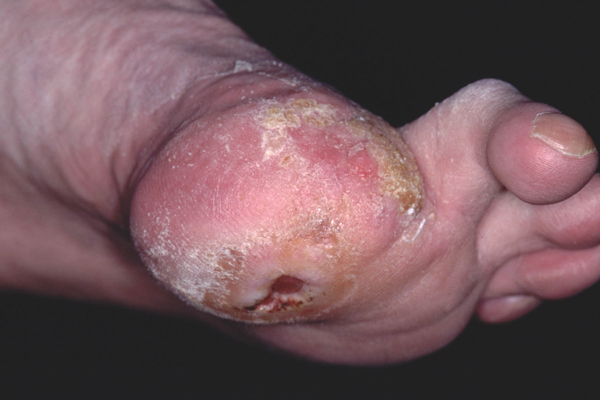
Peripheral neuropathy
Painless ulceration of the toes and feet secondary to trauma may be the first indication of a peripheral neuropathy secondary to an underlying condition such as diabetes, chronic renal failure, hypothyroidism or vitamin B12 deficiency. The peripheries will usually have decreased sensory, and sometimes motor, function with numbness. There may be problems with gait. Some patients may also experience increased sensitivity leading to burning, tingling and crawling sensations and sometimes pain. Management should initially focus on any underlying cause, which may improve the condition. Treating the pain of neuropathy can be very helpful. In the case of diabetic peripheral neuropathic pain NICE recommends duloxetine as first-line treatment, followed by amitriptyline.
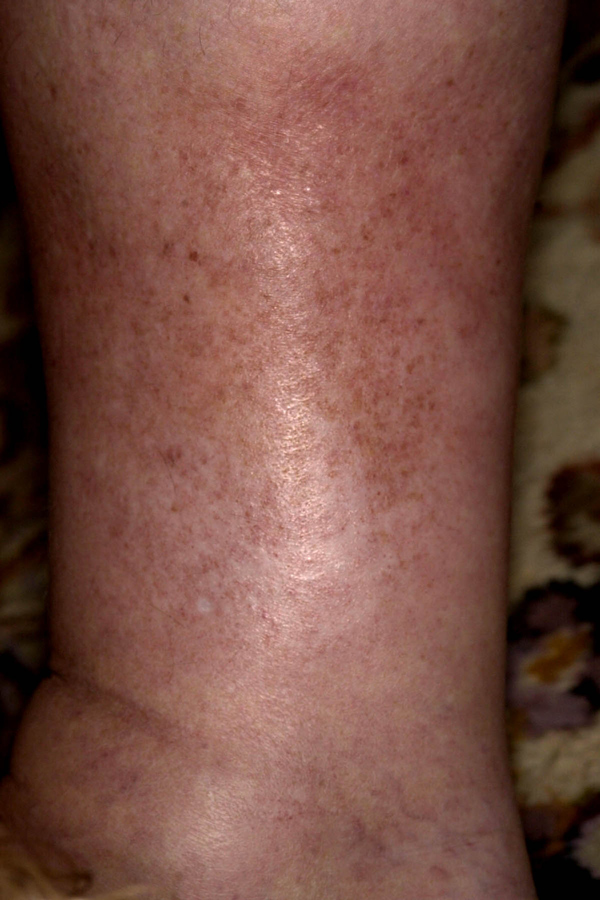
Atrophie blanche
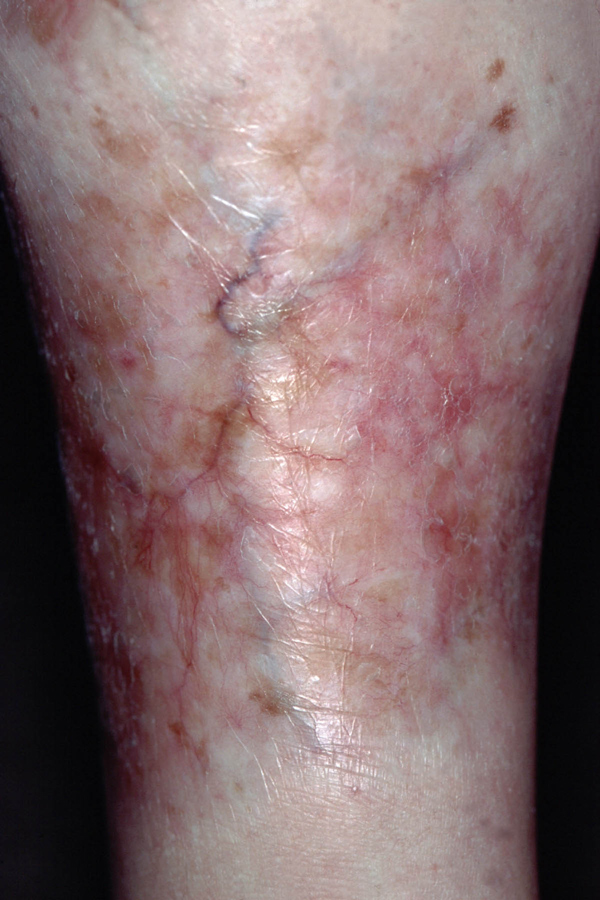
Atrophie blanche consists of recurrent painful ulceration and scarring. It is characterised by star-shaped or polyangular ivory white, depressed atrophic plaques with prominent red dots caused by enlarged capillaries, surrounded by hyperpigmentation. It usually occurs on the lower legs in women and may be associated with livedoid vasculopathy, venous insufficiency and diabetic vascular disease. It can also occur following trauma to the lower leg including that caused by cryotherapy, curettage and cautery. Treatment can be difficult, but topical 5% dapsone gel has recently been found to be helpful. Other treatments include low-dose aspirin, dressings and analgesia.
Necrobiosis lipoidica diabeticorum
Although the exact cause of necrobiosis is unknown, it is associated with diabetes in 50% of cases. Approximately 0.3% of all patients with diabetes are affected. In 15% of patients the condition occurs before the onset of diabetes.
Necrobiosis is a disorder of collagen degeneration with a granulomatous response, thickening of blood vessels and fat deposition leading to characteristic atrophic shiny patches. The patches slowly enlarge with time developing a yellow waxy appearance. The most commonly affected area is the pre-tibial region, but lesions can occur on any part of the skin including the face and scalp. In 25% of cases the lesions will be painful; they are asymptomatic in the remainder. Skin care is important to reduce the risk of ulceration. Topical or intralesional steroids may help. Topical tacrolimus has also been found to be helpful, but none of these treatments are usually very effective. Spontaneous resolution may occur in some cases Download this article in PDF format