Otitis externa
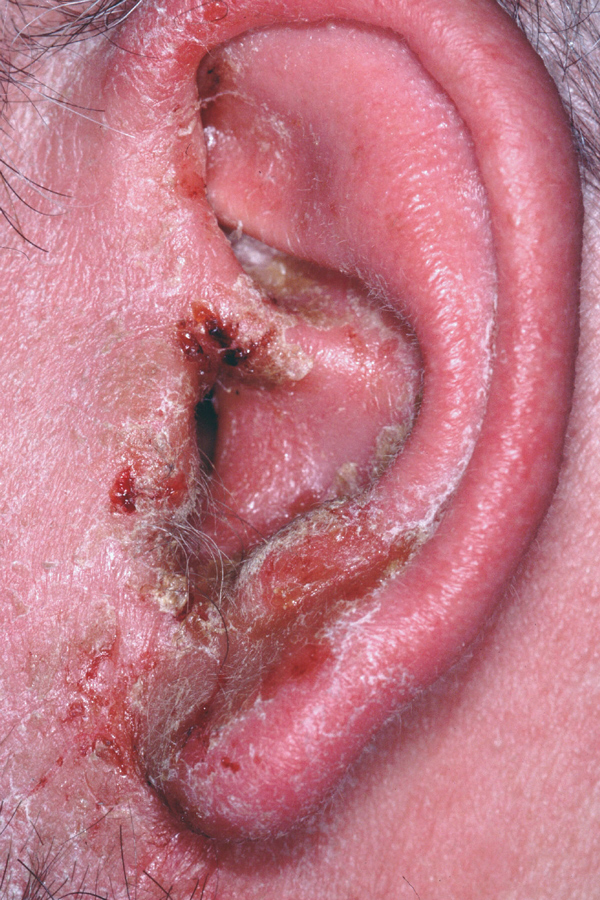
Otitis externa is an infection of the external auditory canal, which in most cases is acute and responds well to antibiotic treatment. When the condition has been present for more than four weeks it is termed chronic otitis externa. Rarely otitis externa may be more serious, invading deeper structures and destroying the temporal bone. So-called malignant otitis externa is more common in patients with diabetes and those who are immunocompromised. If left untreated it may be life threatening. The most common organism to cause otitis externa is pseudomonas followed by staphylococcus and streptococcus.
Skin abscess
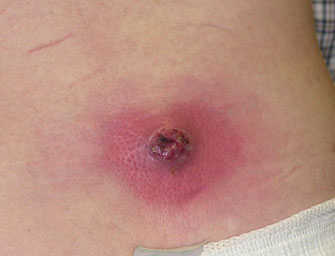
A skin abscess is a localised collection of pus which develops in the skin in response to infection or the presence of a foreign body. The cardinal signs of infection are pain, erythema, heat and swelling which are usually present with a skin abscess and give clues to the diagnosis. The abscess may also point whereby a white pustule develops over the underlying pus. Antibiotics are the treatment of choice, but in most cases drainage of the abscess will also be required, this will often occur spontaneously, if not an incision can be made.
Cellulitis
In general, cellulitis is a term used to describe a non-necrotising inflammation of the dermis and hypodermis related to acute infection which does not involve deeper structures such as fascia and muscles. It typically presents with localised pain, erythema, tenderness, swelling and warmth. In most cases cellulitis develops following a break in the skin. In this case, the patient had a cut caused by banging the leg against a cupboard door. Treatment consists of oral or intravenous antibiotics, rest and analgesia.
Infected olecranon bursitis
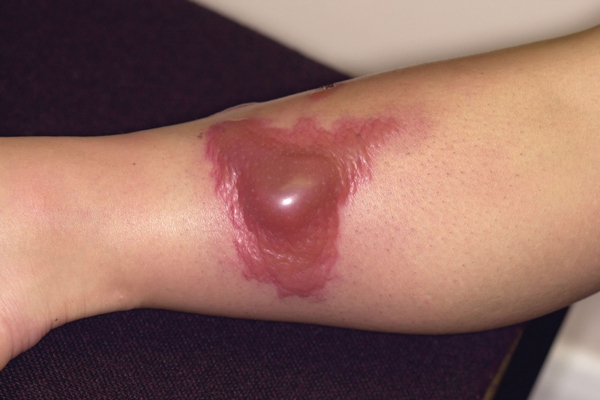
Olecranon bursitis is an inflammation of the bursa which overlies the olecranon process at the proximal aspect of the ulna. The condition is relatively common and may require no treatment, resolving spontaneously with time. If the skin overlying the bursa becomes red and tender this may be due to a secondary bacterial infection within the bursa. In severe cases, the patient may be systemically unwell with a temperature and flu-like symptoms. The treatment of choice is oral antibiotics in most cases with or without drainage of the bursa. More severe cases may require admission and intravenous antibiotics. It can be useful to mark the distal edge of the erythema with a pen to monitor whether this is extending or retracting with treatment.
Meibomian abscess
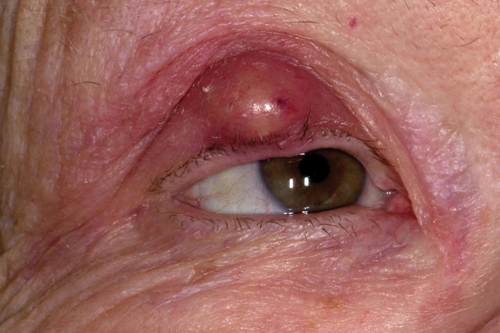
Meibomian cysts are quite common and in many cases require no specific treatment. However, if a secondary bacterial infection develops within the cyst a localised abscess can form which is usually painful and, if large, may interfere with vision. Topical antibiotics, such as those used for conjunctivitis, are usually of little help and systemic antibiotics may be required, along with incision and drainage of the abscess.
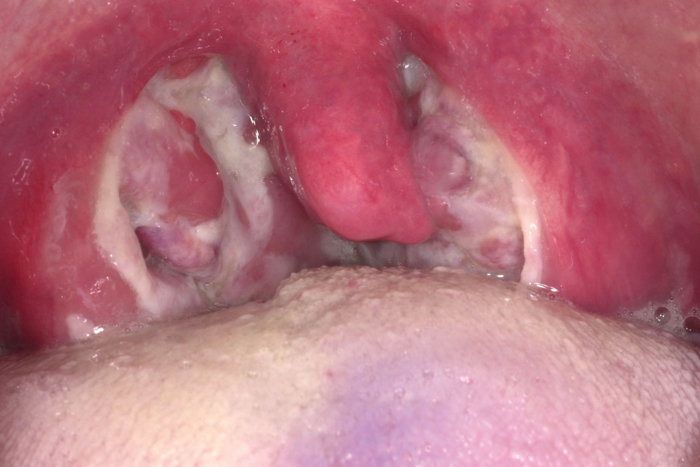
Tonsillitis
Infections affecting the throat are very common and in the majority of cases are viral in origin and require no specific treatment. Occasionally the infection will be bacterial and antibiotics required. A thick coating over the tonsils can be an indication that the cause is more than a simple virus. Infectious mononucleosis can present with such an appearance, with generalised lymphadenopathy, so can bacterial tonsillitis which will also produce a localised cervical lymphadenopathy. If in doubt, throat swabs should be taken and a blood test for infectious mononucleosis carried out. In practice, most cases of tonsillitis are treated simply without swabbing.