Squamous cell carcinoma
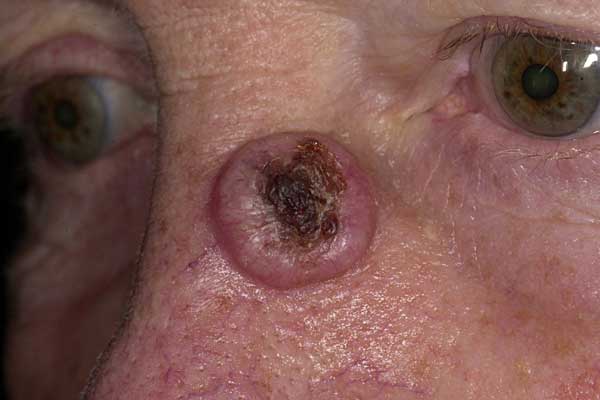
Squamous cell carcinoma (SCC) should be referred urgently under the two week wait rule because of its potential to metastasise. Diagnosis can be difficult as the lesions can appear in many different guises. In this case, the lesion was thought to be a basal cell carcinoma with a central ulceration and rolled edge, against this though was its rapid growth and short history. Biopsy showed it to be an SCC and wide excision and grafting was required to treat it. In any lesion where there is a sudden change in growth pattern, including chronic leg ulcers, malignant transformation needs to be considered.
Haematoma
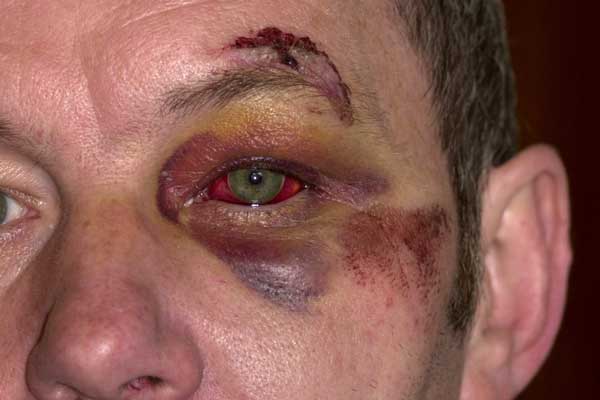
Periorbital haematomas, black eyes, are relatively common after trauma to the structures surrounding the orbit. In most cases they are the result of superficial bruising, and analgesics may be all that is required. In this case, there is also bruising of the conjunctiva. When this occurs, or the bruising is extensive, an underlying fracture or damage to the eye itself needs to be considered. If a penetrating injury to the eye is suspected, referral to an eye casualty department is recommended even if there is no obvious point of entry on the conjunctiva.
Folliculitis
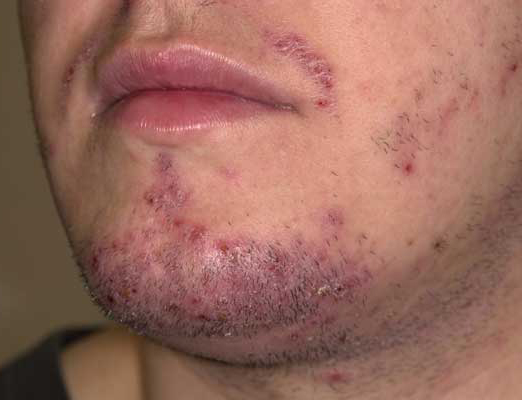
Folliculitis is caused by infection of the superficial hair follicles which results in the development of small pustules surrounded by erythema. It can occur anywhere on the body. The causative organism is usually Staphylococcus aureus. Folliculitis is more common in atopic patients who regularly use topical steroids and may occur following application of emollients to the skin which clog the follicles. In order to prevent folliculitis the cream or ointment should be applied in the direction of the hairs, not against it. Using the example of stroking a cat or dog can be useful when explaining this to patients. Treatment depends on the severity of the infection. In mild cases antibiotic creams may be adequate, in more severe cases oral antibiotics may be required. In recurrent infections, nose swabs should be taken to check for MRSA which, if present, can be eradicated with intranasal mupirocin.
Chondrodermatitis nodularis chronica helicis
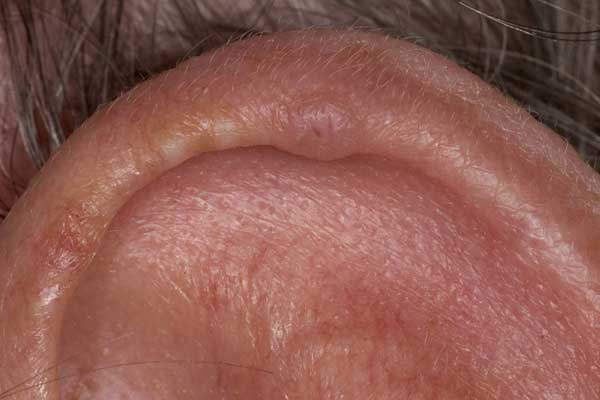
The most common presenting complaint in patients with this condition is pain especially in cold weather and when pressure is applied to the affected area, such as at night when lying down in bed. The condition is most common in men aged 60-80 but it also affects women in around 10-30% of cases. Although the cause is unclear it is more common after repeated trauma, exposure to cold and pressure and actinic damage. Symptoms can be eased by avoiding pressure to the area by using pillows with a hollow centre, keeping the affected area warm by wearing suitable clothing and the use of topical or injected steroids to reduce inflammation. If this doesn't work then surgery may be required. It involves opening the overlying skin, removing the prominent cartilage and then closing the skin back over the area. Patients need to be warned that this may affect the shape of the ear and that the condition may recur.
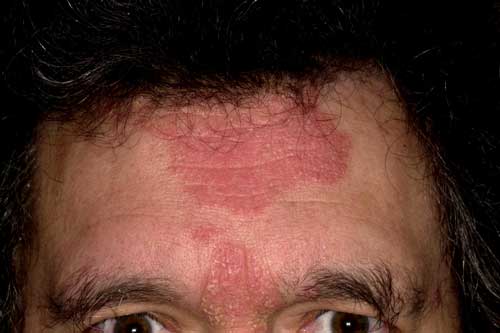
Seborrhoeic dermatitis
Seborrhoeic dermatitis is a common papulosquamous disorder that affects the sebum-rich areas of the scalp, face and trunk. It can occur at any stage of life. In neonates, it presents as cradle cap and in teenagers it may produce a simple dandruff. In adults it presents as a dry erythematous rash with superficial scaling. The condition is associated with an abnormal immunological response to the Malassezia yeast which is present in normal levels. Treatment should be aimed at reducing the levels of Malassezia by using a topical antifungal which can be combined with a mild steroid to reduce inflammation. Stronger steroids should be avoided as they can result in a rebound flare when they are reduced or stopped. Other treatments include calcineurin inhibitors.
Epidermoid cyst
Cystic skin lesions are very common. They used to be referred to as sebaceous cysts because it was thought that they arose from sebaceous glands within the hair follicle. This is now known not to be the case hence they are termed epidermoid or pillar cysts instead. Epidermoid cysts occur when a small sac develops in the epidermis whereas in the case of a pillar cyst it is the lower part of the hair follicle that is affected. In both cases, the cysts contain sebum, a thick greasy creamy white material, that has a cheesy odour. The cysts can occur at any age, but in general epidermoid cysts are more common in young to middle-aged men. They generally affect the face, neck, chest and back whereas pillar cysts are more common in middle-aged women and tend to affect the scalp. If the cysts are unsightly or prone to trauma they can be surgically removed. However, patients need to be warned that recurrence and scarring can occur.
 Download this article in PDF format