Clubbing
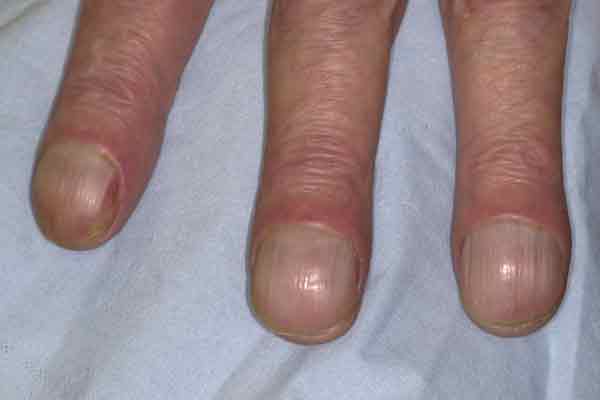
Fingernail clubbing was first described by Hippocrates giving rise to the eponym Hippocratic nails. It is a well recognised systemic marker of internal disease such as chronic lung disease (cor pulmonale), heart disease and thyroid disease. In other cases, it may be congenital and not associated with any underlying problems, so it is always worth asking about family history before undertaking investigations.
Beau lines
The transverse depressions of the surface of the nail, shown here, are called Beau lines. All the nails are generally affected and their appearance is usually first noticed a few weeks after a severe illness such as shock, sepsis, coronary occlusion with hypotension, or following chemotherapy for malignancy. The defect is the result of an acute arrest in nail growth during illness followed by regrowth as the patient’s general condition improves. No treatment is required as the defect will move distally as the nail grows to the point where it can be removed.
Onycholysis
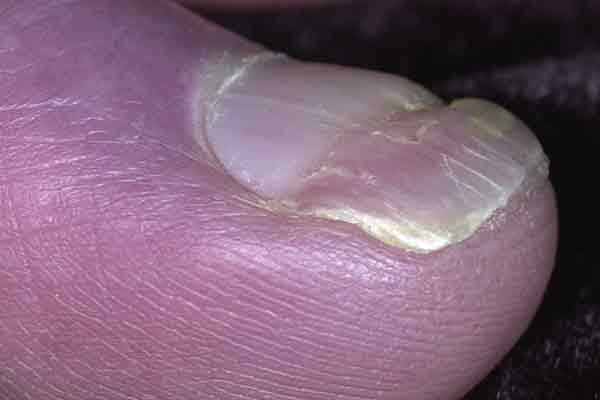
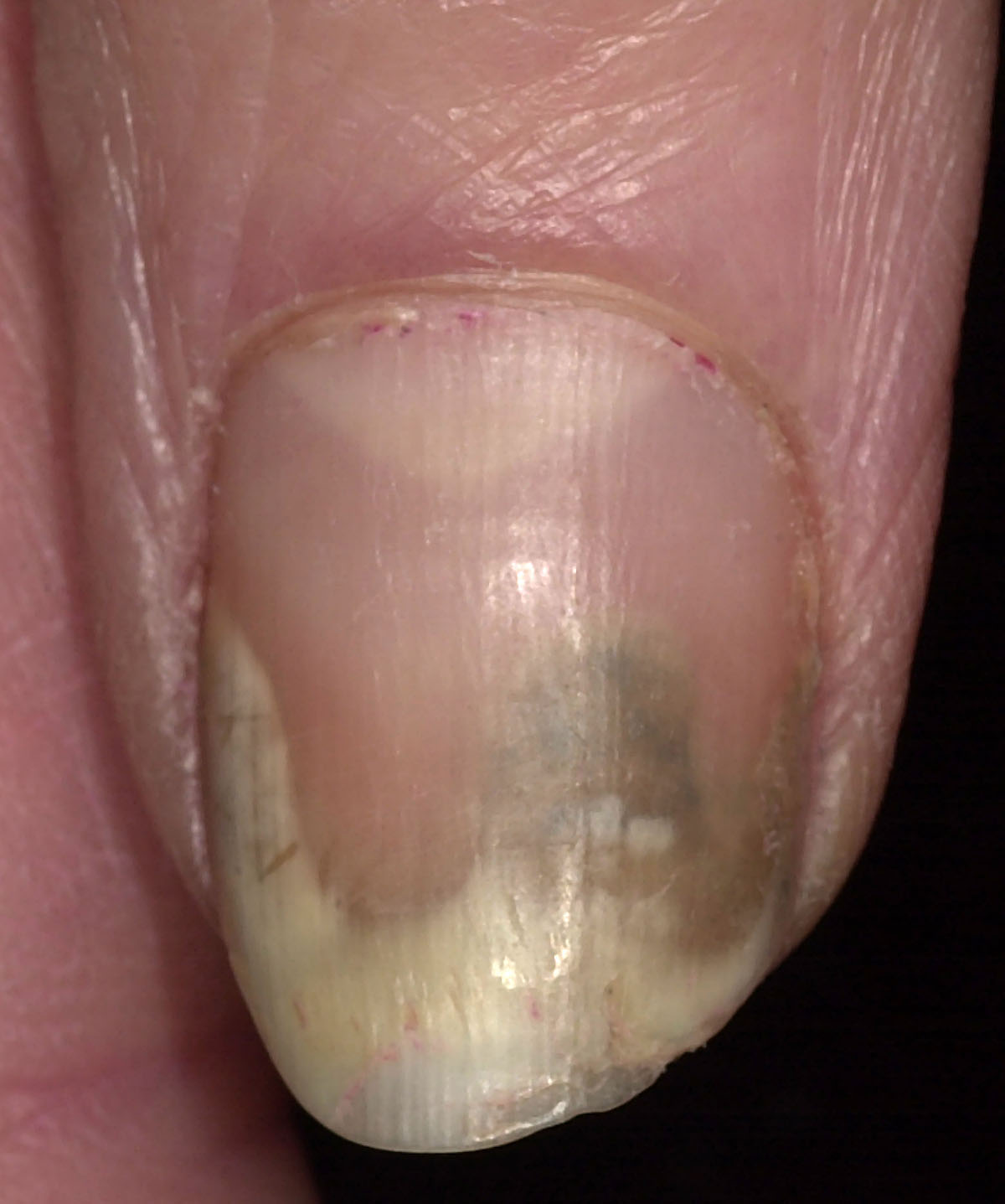
Onycholysis is the term used to describe the separation of the nail plate from the nail bed. In most patients it is usually idiopathic. However, it can occur in association with conditions such as hyperhidrosis, thyrotoxicosis, psoriasis, fungal nail infections and after prolonged immersion of the nails in water.
In the case shown here, fungal cultures were negative, and there was no evidence of surface pitting to suggest psoriasis. It was concluded that the cause was most likely to be secondary to the lever effect of the lady's long nails.
Ingrowing toenails
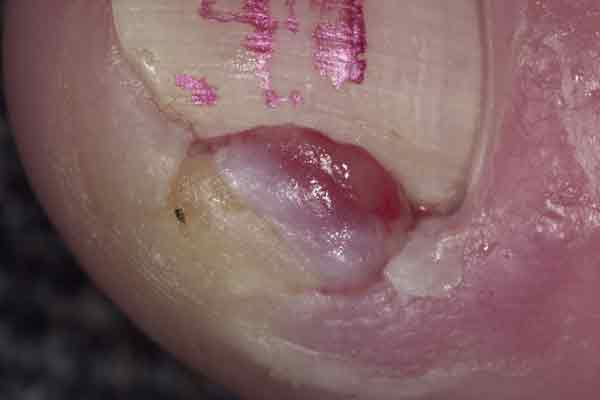
This condition is very common and in most cases is treated without consulting primary care. Common causes include: poorly fitting footwear, trauma during sport, and overtrimming of the lateral edges of the nails. Although the first toe is most commonly affected the condition can affect any nail and may be recurrent. Pain is the most troublesome symptom and the development of granulation tissue at the affected areas can leave toes looking very unsightly. Conservative treatment includes: changing to broader fitting shoes, cutting nails correctly, inserting cottonwool under the free edge of the nail and the application of a nail brace to flatten the nail. If all this fails then surgery may be required.
Pincer nails
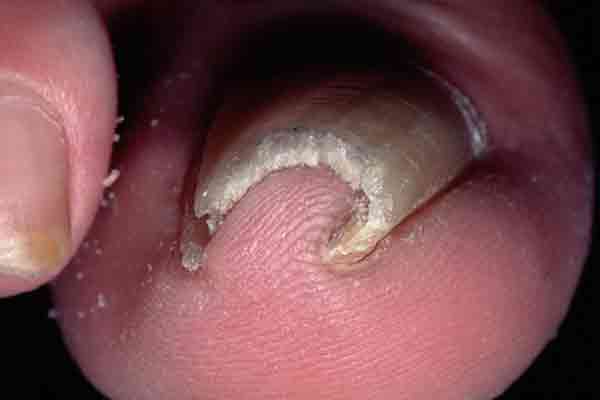
Also known as trumpet nails, pincer nails are caused by an exaggerated transverse overcurvature of the nail.
In the majority of cases only the toenails are affected. However, in the hereditary form of the condition the fingernails may also be involved.
In a similar process to that seen with ingrowing toenails, the lateral edges of the nail plate pierce the skin causing a lot of pain. The only successful treatment is surgical resection of the lateral edges of the nail matrix.
Yellow nails
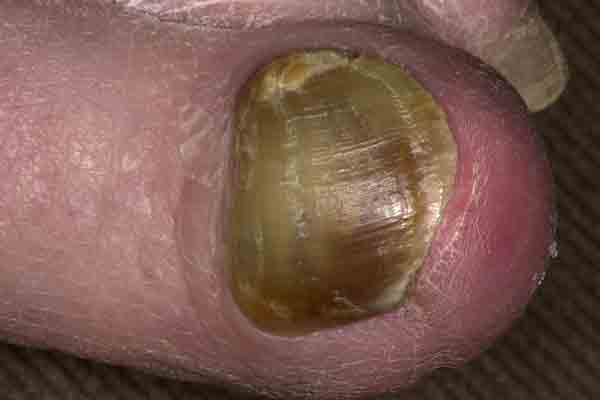
Patients who have ‘yellow nails’ usually only have to cut their nails once or twice a year as growth is very slow. Along with the marked discoloration of the nails the nail plate is noticeably thickened and there is an increase in the curvature of the nails in both axes. All nails are affected and cuticles are absent. The condition is sometimes associated with lymphoedema and atypical pulmonary infections such as Mycobacterium avium, but in other cases the cause is unknown. Where an underlying cause is identified treatment of this will help improve the condition of the nails.