Dropped arches
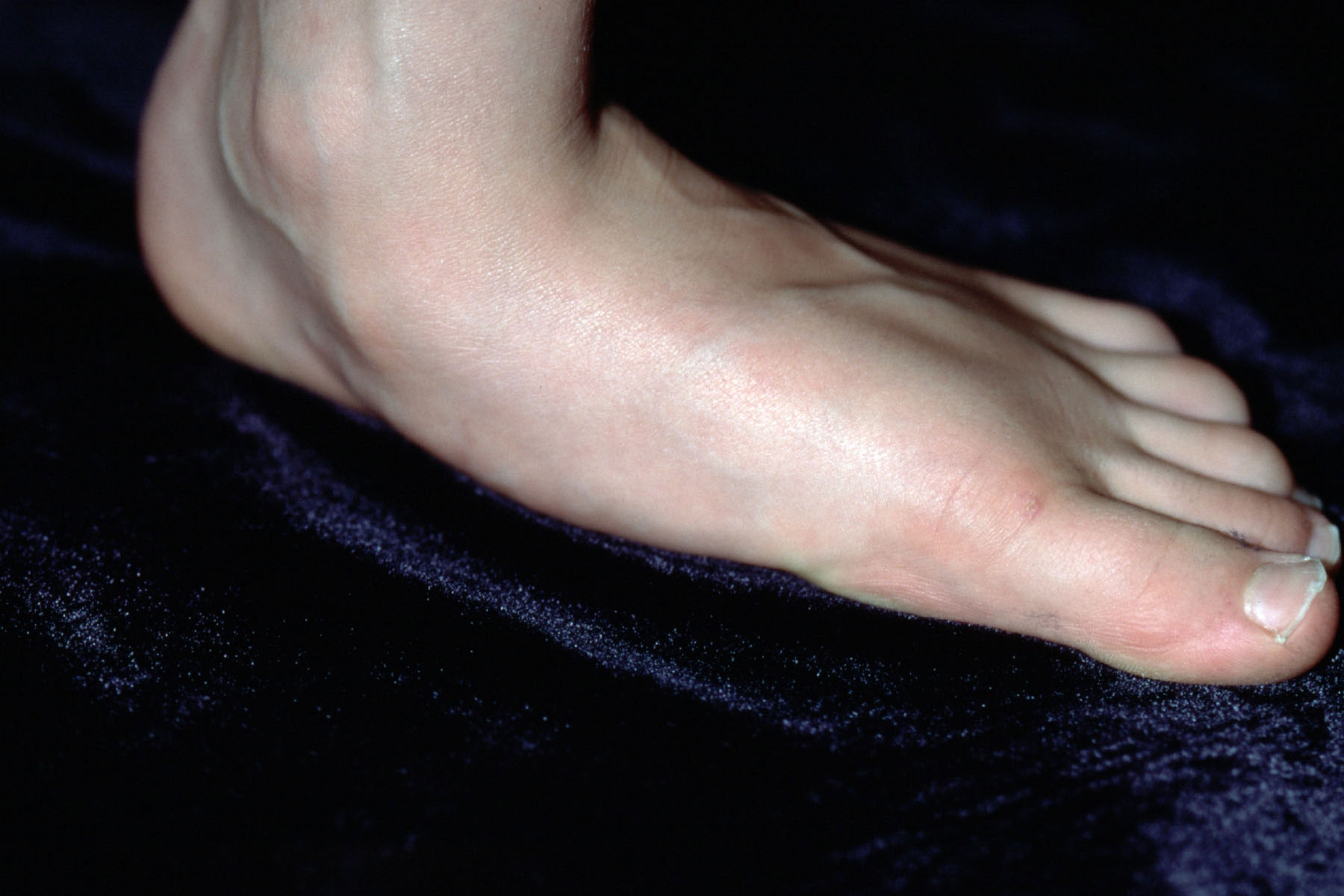
The arch of the foot only becomes fully developed after a child has been walking for a few years. In some cases the arches fail to develop resulting in flat feet, which cause problems with walking and running. A telltale sign is the abnormal pattern of wear on the heels of shoes. In the majority of cases reassurance and good footwear with insoles is all that is required to remedy the problem. Physiotherapy may also be helpful. In the older child with persistent flat feet surgical intervention may be necessary.
Tinea pedis
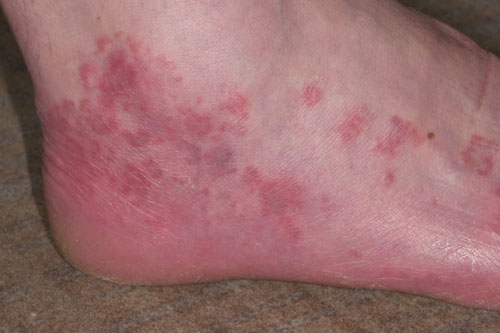
When you are trying to decide whether a rash has a fungal or eczematous cause, it is important to look for significant clues. Fungal infections are usually, but not always, asymmetrical whereas eczema tends to be symmetrical. The former are also usually very itchy whereas this is not always the case with the latter. Fungal infections affecting the dorsal and plantar aspects of the feet usually spread from the toe web spaces where evidence of preceding athlete’s foot can often be found. If in doubt, scrapings can be taken and sent for mycology. Treatment with a topical antifungal is usually adequate. It is important not to apply steroids to fungal infections. This will further delay diagnosis as the appearance of the fungal infection will change, resulting in a condition known as tinea incognito.
Eczema
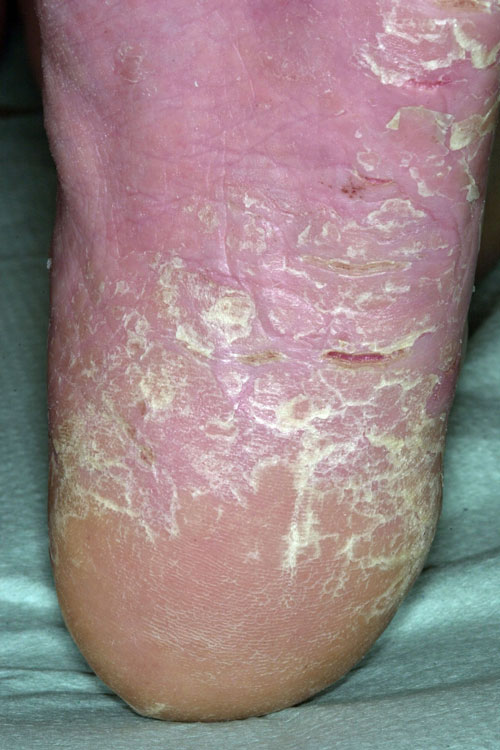
Eczema can occur on the feet in the same way as it does on other areas of the body, but walking and exercise can result in the development of deep and often very painful fissures. Treatment involves the regular application of emollients and moderate to potent topical steroids. However, these may be inadvertently removed by walking and other movement. Application under occlusion may help or a trial of a steroid-impregnated tape that can be cut into appropriately sized strips and then placed directly over the fissures.
Chilblains
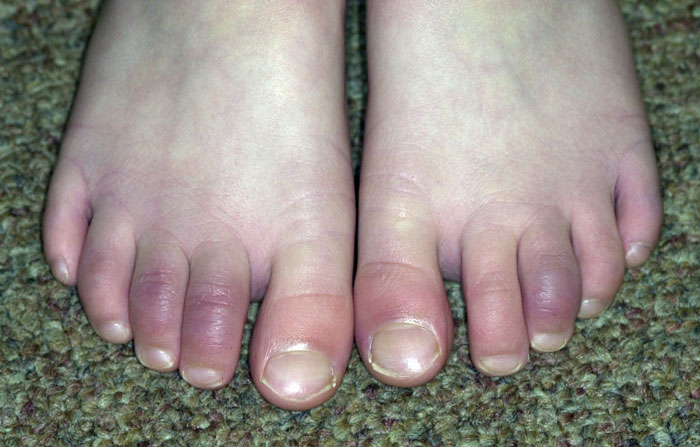
Chilblains (perniosis) occur predominantly on the toes and fingers as a result of exposure to cold. Other areas may also be affected such as the fatty prominences of the thighs and the inner aspects of the knees. The occurrence of chilblains on the thighs of horse riders is termed equestrian cold panniculitis. In milder cases of chilblains, initial treatment involves keeping the affected areas warm e.g. with thermal socks or gloves. If this is ineffective, calcium channel blockers may be tried. Laparoscopic sympathectomy may be considered if the condition is severe.
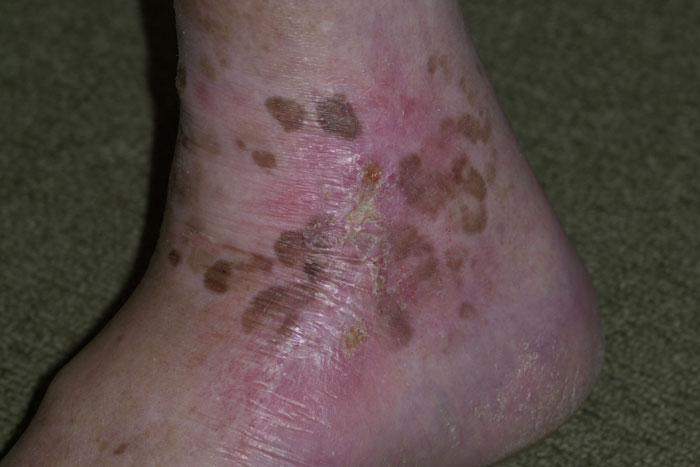
Postinflammatory hyperpigmentation
Postinflammatory hyperpigmentation can occur following an inflammatory episode affecting any area of the skin.
The localised increase in pigment often causes alarm that a malignancy has developed and referrals are made to secondary care. Careful questioning is required to determine the initial precipitating episode as patients often do not associate the two events. In this case varicose eczema was the cause. Treatment can be difficult.
Topical treatments include hydroquinone, tretinoin cream, corticosteroid cream, glycolic acid peels and azelaic acid. However, none of these treatments works very well.
The degree of discoloration will usually lessen with time. Avoiding exposure to sunlight will often help, even in those with naturally darker pigmented skin.
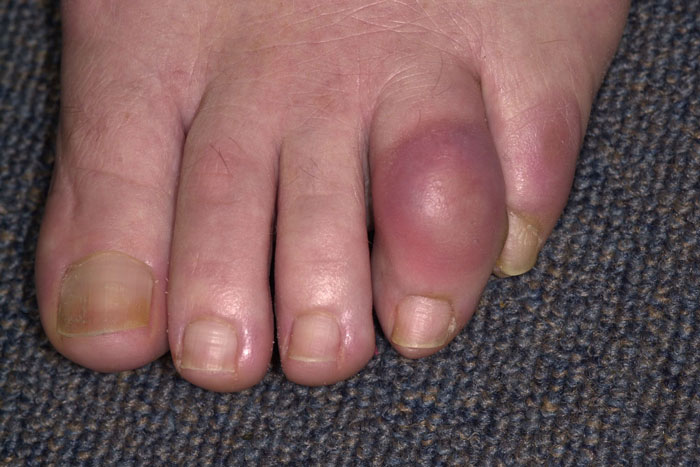
Gout
Acute gout can occur in any joint, although in 25% of cases the great toe is affected. A typical attack starts in the early hours of the morning and may follow a traumatic event such as a surgical operation, dietary or alcoholic excess, or starvation. Certain drugs, such as thiazide diuretics, may also cause gout. The affected joint is usually very hot, red and tender. An acute episode is generally treated with NSAIDs, such as indomethacin or naproxen, and usually settles after a few days. In recurrent cases, a preventative treatment may be required such as allopurinol.
 Download this article in PDF format