SEARCH

Haslam D. Haslam’s view: Coping with stress in general practice. Practitioner October 2021;265(1852):31
Coping with stress in general practice
27 Oct 2021
AUTHORS
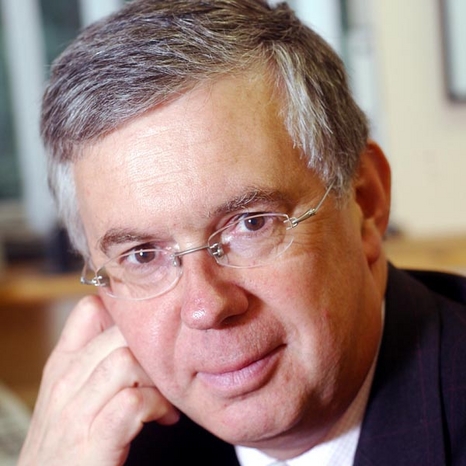
Professor Sir David Haslam CBE FRCGP, Past President BMA, Past President RCGP
Article
These are quite extraordinarily difficult times for everyone in general practice. The combination of the clinical challenges posed by COVID-19, increased demand following the various lockdowns, the need to provide immunisation campaigns for both COVID-19 and flu, have all taken their toll on GPs and their teams.
I have long held a theory about personal stress that perceives our response to stress as a pair of scales. On one side are the stressors, all the problems and challenges that can really get to us and bring us down. On the other side are the many things that help us get through life, which may be family, friends, relaxation, holidays, cinema, music. The choice and the positives will be very different for all of us.
Many of us can cope with remarkable levels of stress if our support side is functioning well. We can face immense levels of challenge as long as we have a balancing set of positives in our lives. But it is when the two move out of balance that, of course, there is a real risk that the scales will dip badly to one side, and we can come crashing down.
Because working hours at present are so long, we often have to sacrifice time that we should be using to recharge our batteries. It’s little wonder that in a situation like this, so many doctors burn out.
The positives, of course, are not just to do with our personal lives. We chose to become GPs. The role can be immensely satisfying and packed with positives. After all, being able to help fellow human beings at desperate times in their lives can be massively rewarding. But when life is so hectic, there is a real danger that the opportunities for positivity get swamped by the never ending deluge of demand.
In normal times, what aspects of work normally give you a positive buzz, a feeling of real satisfaction? Yours will be very different to mine, but it is worth wondering if the way everyone is currently working is reducing the positives and maximising the negatives.
I always considered myself a doctor whose main skill was in the consultation, rather than in hands-on technical ability. However, I realised long ago that many of the moments in my working week that really made me feel good actually turned out to be technical. It was always really satisfying to be able to carry out a minor surgical procedure or a suturing that went really well.
I suspect the reason for the positivity was the instant feedback. You could see in a moment that your work had been successful, whereas so much medical care is long term. All too often, the patient leaves your consulting room, and you really don’t know for certain whether your diagnosis or treatment will make a difference. Without continuity of care, there is a real risk that you will never know.
Evidence has shown for years that continuity of care is beneficial for patients and the NHS, including a reduction in hospital admissions, improved health outcomes, and improved cost effectiveness.
I wonder if it is equally important for clinicians as well.
In a pandemic, with too few clinicians and a need to get through the maximum number of cases you possibly can, continuity is likely to be sacrificed.
This could well be one of the many reasons why so many doctors are struggling. They have lost the positive feedback that comes from knowing their patients as people and seeing how their help and care has made a real difference.
There are two people in every consultation – and they both matter.
ARTICLE IN PDF
 Download this article in PDF format