SEARCH

Haslam D. Every life lost is a tragedy. Practitioner December 2020;264(1843):31
Every life lost is a tragedy
21 Dec 2020
AUTHORS
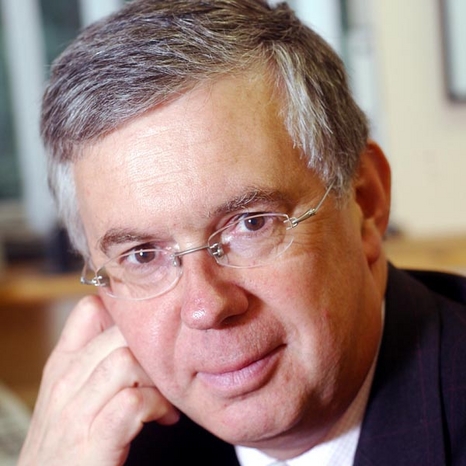
Professor Sir David Haslam CBE FRCGP, Past President BMA, Past President RCGP
Article
I doubt if any of us will be sad to wave goodbye to 2020. When we look back on our lives, this will certainly be one year that will be truly memorable unlike no other.
This time last year, few of us would have thought that news bulletins in the months ahead would be so packed with epidemiological predictions, statistics, talk of herd immunity, and R numbers.
We would also have been astonished to be told how many of our fellow citizens would see themselves as experts in these topics. It has been extraordinary to see how many people believe that reading two Tweets and a Facebook entry gives them sufficient expertise to debate online with epidemiological experts. It’s been a real eye-opener.
Hidden in all those horrific morbidity and mortality statistics have been tens of thousands of individual tragedies. When deaths appear in large numbers the personal stories can become blurred. Each death is a pixel, part of a greater national picture, but also an entire portrait in itself.
I will never ever forget one of my own patients who died early in my career as a GP, on the day of a major national tragedy. Thirty-one people died, and a hundred more were injured, in a horrific fire at King’s Cross underground station.
The story was the stuff of nightmares. The fire had been started by a lit match being dropped onto an escalator and had seemed minor until it suddenly increased in intensity and shot a violent ball of flame and billowing smoke up into the ticket hall.
It’s hard to imagine a more distressing and terrifying event than being trapped underground with flames all around you.
It was little wonder that there was a massive outpouring of support for the victims and their families. Memorial services were held. The nation was shocked.
My patient, however, died at home in her bed. Her death was equally unnecessary, equally tragic. She might have died on the same day as the fire, but by dying alone her death was almost invisible to anyone other than her closest friends and family.
Over the next few days every national newspaper carried photographs of the victims of the fire. Not even our local paper carried a photo of my patient, even though she was equally dead, and her family was equally bereaved.
I remember at the time pondering over the fact that some deaths seem to carry more significance than others.
A hundred people dying in an air crash becomes a far bigger story than a hundred people dying in separate road accidents, spread across a nation.
It is so easy to lose sight of individual stories, but as GPs who know our patients, we can see the ongoing impact on loved ones and families.
For many years, whenever and wherever I travel around the UK, I have looked at different areas and thought to myself: ‘This is on a GP’s patch. This is where some GP spends their life, knows their patients, knows their stories.’
It might be a beautiful Cotswold village, or a deprived inner-city tower block, a tiny hamlet in the Highlands, a seaside resort, a near-endless row of back-to-back terraces glimpsed from an urban train, or the manicured lawns of suburbia. Each and every one will have a local GP, or team of GPs, whose careers are dedicated to the people who live and work there.
And so it goes with the ever escalating daily numbers of cases or fatalities from COVID-19.
Every single one of them is a real person, looked after by a real GP and a real primary care team. Every single one of them has a life story to be celebrated and a family to be consoled. There is so much more to statistics than mere numbers.
 Download this article in PDF format