SEARCH

Ahmed S, Baker I, Butler CR. Diagnosing young onset dementia can be challenging. Practitioner 2016; 260(1793):11-17
Diagnosing young onset dementia can be challenging
23 May 2016
AUTHORS
Dr Samrah Ahmed BSc PhD Research Associate, Nuffield Department of Clinical Neurosciences, University of Oxford, John Radcliffe Hospital, Oxford, UK
Dr Ian Baker DClinPsych Consultant Clinical Neuropsychologist and Honorary Senior Clinical Lecturer, Russell Cairns Unit, Oxford University Hospitals NHS Foundation Trust, John Radcliffe Hospital, Oxford, UK
Dr Christopher R Butler MA MB ChB MRCP PhD Honorary Consultant Neurologist and Senior Clinical Research Fellow, Nuffield Department of Clinical Neurosciences, University of Oxford, John Radcliffe Hospital, Oxford, UK
All the authors are also affiliated with the Oxford Clinic for Cognitive Disorders, John Radcliffe Hospital, Oxford and the Memory Research Group, University of Oxford, UK
Article
Although the risk of developing dementia increases with age onset can be as early as the third or fourth decade of life.
Dementia is not a single diagnosis;it is a term used to describe symptoms that cause a progressive decline in intellectual functioning, leading to loss of independence in activities of daily living. Young onset dementia (YOD) refers to dementia affecting a person under 65 years of age. This cutoff is somewhat arbitrary and more closely related to retirement age rather than to disease characteristics. With increasing working age, it is likely to rise.
It is estimated that there are 42,325 people diagnosed with YOD in the UK,1 representing approximately 5% of the 850,000 people living with dementia. The true figure is likely to be higher given the difficulties in diagnosing YOD and the lack of awareness among healthcare professionals. Genetic influences play a more important role in younger than in older people with dementia, so YOD may cluster in families.
Challenges
Diagnosing YOD is challenging. The range of possible presenting features is broad, encompassing behavioural, cognitive, psychiatric and neurological domains, and symptoms are often subtle initially. Frequently, the complaints are attributed to stress or depression, and the patient is reassured that they are too young to have dementia. Diagnosis is often markedly delayed in comparison with late onset dementia.
Equally challenging are the psychosocial consequences for the patient and family. Patients with YOD are more likely to be still in employment, financially responsible for their family, and a parent of dependent children. Renouncing these roles can lead to low mood and increase the burden on the family. Caregiver burden is significantly higher among carers of patients with YOD compared with carers of late onset dementia patients,2 a problem further amplified because carers may themselves have occupational and family responsibilities.
With the rise in awareness of dementia and the lessening stigma associated with it, there are increasing numbers of younger people with worries about their cognitive health. Many of these people will not have an organic brain disease underlying their symptoms. It is therefore essential that GPs are aware of the key features of organic and non-organic causes of cognitive symptoms in order to identify which patients need referral to specialist centres, and which can be reassured and spared extensive and costly investigations.
Common causes
The list of causes of YOD is extensive, see table 1, left and above. Epidemiological studies conducted in the UK have found that the most common causes of YOD are early onset forms of adult neurodegenerative conditions and alcohol, see table 2, below.4
Alzheimer’s disease
Alzheimer’s disease (AD) is defined by histopathology: extracellular plaques of beta-amyloid protein and intracellular tangles of hyperphosphorylated protein tau. The clinical phenotype of young onset AD is heterogeneous. In a proportion of AD patients, the presenting features deviate from the classic memory presentation, and include salient visuospatial or language impairment. Autosomal dominant AD is more common among YOD, but still only represents < 1% of all AD cases.5
The presence of mutations in three genes has been identified: amyloid precursor protein (APP), presenilin 1 (PS1) and presenilin 2 (PS2). Carriers can develop AD as early as their 30s. Evidence also suggests that people with Down's syndrome have an increased risk of developing early onset AD due to the overexpression of the APP gene.
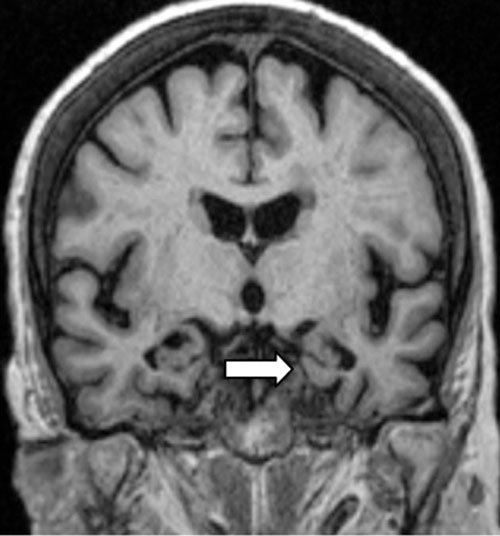
Amnestic Alzheimer’s disease (amAD): The large majority of cases present with classic symptoms of memory decline, including forgetfulness relating to daily tasks and events (episodic memory impairment) and disorientation in familiar environments (topographical memory impairment), reflecting pathology in the medial temporal lobe. Other early signs may include word finding difficulty, apraxia6 and visuospatial errors.
Posterior cortical atrophy (PCA):Patients with PCA present with core visuospatial and visuoperceptual impairment not explained by ocular disease but rather by higher visual processing deficits. Brain imaging reveals predominant posterior (occipito-parietal) cortical atrophy. Typical features are simultanagnosia (an inability to discern individual objects in a cluttered visual environment), visual neglect, and difficulty judging visual distance or movement. Limb apraxia is a common accompaniment. Recent evidence suggests memory impairment can also be an early feature.7
Logopenic primary progressive aphasia (lvPPA): In this AD variant, the predominant problem is with language function rather than memory. Speech output in lvPPA is characterised by a slow production rate, long word finding pauses and difficulty with sentence (but not single word) repetition. Imaging reveals atrophy of the left temporoparietal gyri.8
Vascular dementia
Vascular dementia (VaD) is the second most common cause of YOD after AD. Conventional vascular risk factors may be absent and diagnosis relies on imaging evidence of cerebrovascular disease. In younger people with YOD, atypical haematological, metabolic or genetic causes should be considered, such as cerebral autosomal dominant arteriopathy with subcortical infarcts and leukoencephalopathy (CADASIL) and cerebral amyloid angiopathy (CAA).9
The term VaD comprises several heterogeneous syndromes:
• Multiple cortical infarcts are commonly characterised by early urinary and gait disturbance
and features of pseudobulbar palsy.
A background of thromboembolic disease is also common
• Strategic infarcts produce rapid onset cognitive impairment. Patients do not often have classical focal neurological signs
• Small vessel disease is frequently associated with hypertension and diabetes mellitus. Patients perform poorly on tests of executive function and processing speed. Fluctuations in cognitive function and emotional lability are commonly observed.
Frontotemporal dementias
The frontotemporal dementias (FTD) form a spectrum of neurodegenerative disorders which can be broadly clustered into three groups — behavioural, language and motor variants — based on the salient features. Their underlying histopathology is different from that of AD. Patients are characterised by atrophy in the frontal lobes bilaterally and the temporal regions.
Behavioural variant frontotemporal dementia (bvFTD):The clinical hallmarks of bvFTD are personality change, apathy, and loss of empathy.10 Patients typically become rigid in their thoughts and behaviour, disinhibited and socially inappropriate. They may demonstrate executive dysfunction (for example, being unable to plan a simple task). Commonly, there are changes in food preferences, particularly towards favouring sweet food and drink. Behavioural changes are often attributed to a mid-life crisis early on and, even after evaluation, patients may be misdiagnosed with treatment resistant depression or AD.
A family history of dementia is present in about 30% of patients with bvFTD.
In up to half of such cases, an autosomal dominantly inherited mutation may be identified.
Primary progressive aphasias (PPA): A diagnosis of PPA is given when cognitive decline is limited to the language domain.11 Clinical, neuropsychological, and imaging studies distinguish between semantic and non-fluent subtypes.
Semantic variant (svPPA) is characterised by fluent but empty speech, impaired single word comprehension and a high incidence of surface dyslexic errors on single word reading. Imaging shows selective atrophy in one or both anterior temporal regions.
Non-fluent aphasia (nfvPPA) presents with phonologically and/or grammatically distorted speech output, with preserved single word comprehension. Atrophy is focused on the left inferior frontal and insular region. In these focal language syndromes, cognitive function in other domains is typically well preserved in the early stages. A more generalised cognitive decline is evident in the later stages of the illness.
Motor variants: FTD can also present with motor disturbances. A pathological and clinical overlap between progressive supranuclear palsy syndrome (PSP), corticobasal syndrome (CBS) and FTD with motor neurone disease (FTD-MND) is now well recognised.12
These syndromes are characterised primarily by the nature of the movement disorder, but behavioural and language impairment may also be observed.
CBS typically presents with asymmetric parkinsonism with dystonia, rigidity and limb apraxia.
The cardinal features of PSP are falls, ophthalmoplegia and axial rigidity. Cognitively, PSP is variable, but patients most often present with a frontal-dysexecutive syndrome with profound slowing.
In FTD-MND, the behavioural changes typical of bvFTD are accompanied by weakness, wasting and fasciculation of limb or bulbar muscles. Progression is rapid, and average survival time is 1.4 years, making early diagnosis even more crucial.
Dementia with Lewy bodies
Dementia with Lewy bodies (DLB) is a less common cause of dementia in younger people. Cognitive impairment is characterised by difficulties with visuospatial and executive function, worse than that seen in early AD. Memory may be relatively spared early on. Progression is slow. Core clinical features include fluctuating cognitive impairment, vivid and sometimes disturbing visual hallucinations, and parkinsonism. Many of the clinical characteristics of DLB overlap with those seen in Parkinson’s disease and evidence supports a DLB/Parkinson’s disease continuum rather than distinct entities.
Other suggestive features include REM sleep behaviour disorder, sensitivity to neuroleptics, repeated falls and syncope, unexplained loss of consciousness, and autonomic dysfunction.13
Alcohol-related dementia
The label of alcohol-related dementia is not well defined and presentation is heterogeneous. For example, some patients may present with features of Wernicke-Korsakoff syndrome as a result of thiamine deficiency. Other patients may present with hepatic encephalopathy.14
Common cognitive features include problems with executive function and autobiographical memory, and patients may confabulate. Brain imaging is non-specific, often showing generalised cerebral atrophy with prominent frontal changes.
Identifying patients who need referral
Priority should be given to diagnosing treatable causes for cognitive complaints, which include depression, hydrocephalus, hypothyroidism, alcohol and drugs including prescribed medication e.g. opioids. Obtaining a detailed history remains the most important part of the workup and usually requires corroboration by a third party. Data from secondary care indicate that a patient attending clinic alone is a specific sign of the absence of dementia.15 In those attending with a caregiver, a positive head turning sign, that is turning towards the caregiver to provide information about the reason for attending the appointment, is again a specific but not sensitive sign of both dementia and mild cognitive impairment.16
After obtaining details of memory complaints, a useful approach is to attempt to falsify significant amnesia. This can be done, for example, when patients are able to give a detailed account of their everyday memory symptoms, see table 3, and what they have forgotten. Such complaints are more characteristic of depression or anxiety than of degenerative brain disease. The ability to give a detailed account of daily activities or of specific interests such as the fortunes of a favourite football team can assist in falsifying a sinister cause of impaired memory and has the advantage of inducing less anxiety than more formal assessment of orientation.
Undertaking a basic neurological examination is important. Hard neurological signs such as parkinsonism, apraxia or fasciculations significantly raise the index of suspicion that cognitive problems are neuropathological in origin.
Physical examination should be supplemented by brief cognitive assessment such as the Addenbrooke's Cognitive Examination (www.neura.edu.au/ frontier/research/test-downloads). This tool is more useful, though more time consuming, than the General Practitioner Assessment of Cognition, which is not sensitive to non-memory presentations that are common in YOD. However, results obtained from brief cognitive screening tests in patients suspected of YOD should be viewed with caution as they necessarily examine a restricted number of cognitive domains and have limited sensitivity to detect mild cognitive impairment which may only be identified following comprehensive neuropsychological assessment.
Quick additional assessment of cortical functions can be undertaken by the clock drawing task, see figure 1. Diagnosing PCA is particularly difficult as visual symptoms often fluctuate and patients may make repeated visits to opticians or seek an ophthalmological referral.
A set of screening blood tests that includes full blood count, urea and electrolytes, liver function tests, thyroid function tests and glucose level should be carried out in all patients. Those with suspected YOD should be referred to a neurology-led cognitive disorders clinic where available as the differential diagnosis is considerably broader than in older adults and requires specialist investigation.
Management
The management of patients with YOD is complex. As discussed above, the proportion of patients with a treatable cause for their symptoms is much higher than in late onset dementia. Identifying such cases is a priority and their management should be focused appropriately. Nevertheless, the majority of patients will have a neurodegenerative disease.
There are currently no licensed medications that specifically reverse the pathology underlying any of the most common forms of dementia, although addressing vascular risk factors can modify the course of VaD.
While non-pharmacological interventions are vital in improving quality of life for both patients with dementia and their caregivers, there is nonetheless a role for medication for symptom management in certain contexts.
The most widely used family of drugs in AD is the acetylcholinesterase inhibitors (donepezil, rivastigmine and galantamine). The trials have mainly been conducted in patients with typical, amAD and provide modest improvements in attention and memory. Their efficacy in the atypical variants of AD (PCA and lvPPA) is unproven, but they are still often prescribed. Acetylcholinesterase inhibitors are also effective in improving cognition and reducing visual hallucinations in DLB. Trials in FTD have shown no benefit and possibly some negative effects.17
In the UK, the NMDA receptor antagonist memantine is recommended for use in severe AD or in patients with moderate AD who cannot take acetylcholinesterase inhibitors. Trials of memantine in these groups have shown modest evidence of benefit in behavioural symptoms. Memantine is not useful in the management of FTD.18
Depression and anxiety are common accompaniments of dementia, and there should be a low threshold for treatment. Agents such as SSRIs, which do not have anticholinergic effects, are the treatment of choice in most cases.
In some circumstances when behavioural disturbance is marked, when there are psychotic symptoms, and when the patient is at danger to him/herself or others, sedative or neuroleptic medication may be appropriate. However, some patients, especially those with DLB or FTD, may develop extrapyramidal side effects, so extreme caution is recommended. Atypical antipsychotics such as quetiapine or risperidone are preferred. Trazodone can sometimes be effective for managing agitation in FTD.
A multidisciplinary approach is essential. However, specific services for patients with YOD are lacking in many regions of the UK. Most patients will require a comprehensive social needs assessment.
Speech and language therapy input is important in patients with communication or swallowing difficulties. Motor impairment (apraxia, parkinsonism, motor neurone disease or ataxia) is common, and often necessitates input from physiotherapy and occupational therapy. Advice needs to be given about establishing lasting power of attorney while the patient retains capacity to consent.
In circumstances where a genetic cause for the dementia syndrome has been identified, there will be questions about the implications for other family members. Such questions should always be referred to a specialist service such as clinical genetics.
Some YOD syndromes may have little impact on driving ability, at least in the early phases, for example in cases of PPA where the predominant problem is with speech output. However, in other syndromes such as bvFTD or PCA, driving risks become apparent much earlier in the course of disease. Our approach is to advise all patients with dementia that they should alert the DVLA to the diagnosis. If there is doubt about how significant an impact the disease is having upon the patient’s ability to drive, this can be evaluated at a regional driving assessment centre.
Early behavioural changes and lack of insight are common features of YOD and place a huge burden on carers. Support groups such as the Frontotemporal Dementia Support Group and Young Dementia UK are a valuable resource, see External links.
REFERENCES
1 Dementia UK, 2nd Edition 2014. Alzheimer’s Society.
2 Freyne A, Kidd N, Coen R, Lawlor BA. Burden in carers of dementia patients: higher levels in carers of younger sufferers. Int J Geriatr Psychiatry 1999;14(9):784-788
3 Sampson EL, Warren JD, Rossor MN. Young onset dementia. Postgrad Med J 2004;80:125-139
4 Harvey RJ, Rossor MN, Skelton-Robinson M et al. Young onset dementia: epidemiology, clinical symptoms, family burden, support and outcome. Dementia Research Group. London. 1998
5 Bateman RJ, Aisen PS, Stropper BD. Autosomal-dominant Alzheimer's disease: a review and proposal for the prevention of Alzheimer's disease. Alzheimer's Res Ther 2011 ;3(1):1
6 Ahmed S, Baker I, Thomson S et al. Utility of testing for apraxia and associated features in dementia. J Neurol Neurosurg Psychiatry. In press.
7 Ahmed S, Baker I, Husain M et al. Memory impairment at initial clinical presentation in posterior cortical atrophy. J Alzheimer's Dis 2016;Apr 23 [Epub ahead of print]
8 Gorno-Tempini ML, Brambati SM, Ginex V et al. The logopenic/phonological variant of primary progressive aphasia. Neurology 2008;71(16):1227-1234
9 Román GC, Tatemichi TK, Erkinjuntti et al. Vascular dementia. Diagnostic criteria for research studies: Report of the NINDS-AIREN International Workshop. Neurology 1993;43(2):250
10 Neary D, Snowden JS, Gustafson L et al. Frontotemporal lobar degeneration: a consensus on clinical diagnostic criteria. Neurology 1998;51:1546-54
11 Gorno-Tempini ML, Hillis AE, Weintraub S et al. Classification of primary progressive aphasia and its variants. Neurology 2011;76(11):1006-14
12 Josephs KA, Petersen RC, Knopman DS et al. Clinicopathological analysis of frontotemporal and corticobasal degnerations and PSP. Neurology 2006;66(1):41-8
13 McKeith I, Mintzer J, Aarsland D et al. Dementia with Lewy bodies. Lancet Neurol 2004;3(1):19-28
14 Victor M. Alcoholic dementia. Can J Neurol Sci 1994;21:88-99
15 Larner AJ. ‘Attended Alone’ sign: validity and reliability for the exclusion of dementia. Age Ageing 2009;38(4): 476-478
16 Larner AJ. Head turning sign: pragmatic utility in clinical diagnosis of cognitive impairment. J Neurol Neurosurg Psychiatry 2012;83(8):852-853
17 Kerchner GA, Tartaglia MC, Boxer A. Abhorring the vacuum: use of Alzheimer’s disease medications in frontotemporal dementia. Expert Rev Neurother 2011;11(5):709-717
18 Boxer AL1, Knopman DS, Kaufer DI et al. Memantine in patients with frontotemporal lobar degeneration: a multicentre, randomised, double-blind, placebo-controlled trial. Lancet Neurol 2013;12(2):149-56
ARTICLE IN PDF
 Download this article in PDF format
EXTERNAL WEBLINKS
Charities and support groups
Posterior Cortical Atrophy
Frontotemporal Dementia
Motor Neurone Disease Association
Further practical information
Regional Driving Assessment Centre (UK)
Royal College of Speech and Language Therapists
Dementia research
Patients based in the UK can sign up to Join Dementia Research a research registry coordinated by the National Institute for Health Research.
www.joindementiaresearch.nihr.ac.uk
We welcome your feedback
If you would like to comment on this article or have a question for the authors, write to: [email protected]