SEARCH

Keane MB, Johnson GJ. Early diagnosis improves survival in colorectal cancer. Practitioner 2012;256 (1753):15-18
Early diagnosis improves survival in colorectal cancer
26 Jul 2012
AUTHORS
Dr Margaret G Keane BSc (Hons) MRCP, Academic Clinical Fellow in Gastroenterology and Hepatology
Dr Gavin J Johnson MSc MD MRCP, Consultant Gastroenterologist, Department of Gastroenterology, University College London Hospitals, London, UK
Article
Colorectal cancer is the second most common cause of death from cancer in the UK.1 In 2009, there were 41,142 new cases of colorectal cancer, 22,711 (55%) in men and 18,431 (45%) in women in the UK.2
Around two-thirds of all bowel cancers originate in the colon, the other third occur in the rectum including the anus.
The UK has one of the lowest survival rates for colorectal cancer in Europe. Collaborative work from cancer registries across Europe has indicated that early symptom recognition and early diagnosis are important factors in improving survival.3
Common alarm symptoms for colorectal cancer include:
• rectal bleeding
• change in bowel habit (with a tendency toward diarrhoea)
• iron deficient anaemia.
Abdominal mass, weight loss, nausea and vomiting, anorexia and abdominal swelling are less common presenting symptoms. Patients with lesions in the rectum or sigmoid colon commonly report rectal bleeding and change in bowel habit4 whereas those with proximal tumours have more subtle symptoms which can be difficult to differentiate from benign disease.5,6
Risk factors
Colorectal cancer has a male predominance and is strongly associated with age, 80% of new cases occur in patients aged over 60.7
Lifestyle factors are important in colorectal cancer. Obesity8 and limited exercise9 are strong risk factors. Diets low in fruit and vegetables10 and fibre11 and high in red meat12 have also been associated with an increased risk. Family history is a common reason for patients to seek advice on screening for bowel cancer.
Patients with one first-degree relative under 45 or two first-degree relatives of any age have an approximate lifetime risk of developing colorectal cancer of 16-25%, in men, and 10-15%, in women. Having one first-degree relative who developed the disease after the age of 65 barely increases lifetime risk.13
Rarer genetic conditions such as familial adenomatous polyposis and hereditary non-polyposis colorectal cancer are associated with < 5% of cases of bowel cancer but are often responsible for the development of colorectal cancer at a younger age.2
Patients with a significant family history or known genetic predisposition should be referred to specialist clinics for further evaluation.
Patients with ulcerative colitis and Crohn’s colitis have an increased lifetime risk of colorectal cancer. This risk is dependent on the extent, severity and duration of the colitis, and these factors inform the guidelines on the colonoscopy surveillance of patients with inflammatory bowel disease.14
Screening
The NHS Bowel Cancer Screening Programme (BCSP) was introduced in England in 2006 after several successful pilot studies.15 The programme offers screening to all patients between the ages of 60 and 69 and is in the process of being extended to patients aged 70-74.16 The respective screening age ranges for Wales, Scotland and N. Ireland are 60-74, 50-74 and 60-71. Presently patients are screened with a faecal occult blood test (FOBT) which they complete at home and return by post. Patients with positive tests are then offered further investigation, typically colonoscopy.
Following a multicentred randomised controlled trial which showed that once only flexible sigmoidoscopy between the ages of 55 and 64 reduced colorectal cancer mortality by 43%,17 the NHS BCSP plans to introduce flexible sigmidoscopy to the current screening programme as a one-off test for both men and women at age 55. It is expected to be introduced in the next few years.
Patients in colorectal cancer surveillance programmes because of previous polyps or colitis should only be followed up as long as they are medically fit to undergo treatment. The interval for surveillance should follow British Society of Gastroenterology guidelines.14, 18
Patients outside the screening or surveillance programmes who present with alarm symptoms of colorectal cancer should be referred urgently under the two week wait pathway for further investigation. Patients typically need to undergo one or more investigation(s) to confirm or exclude a diagnosis of colorectal cancer.
Investigations
Faecal occult blood test
The FOBT is a cheap, non-invasive method for detecting blood in the stool. Several randomised controlled trials have shown that population screening with FOBT every two years has the potential to reduce colorectal cancer mortality by 15-18%. 19, 20, 21, 22 The NHS BCSP uses an unrehydrated FOBT so pre-test dietary restrictions are not necessary.
Carcinoembryonic antigen
Carcinoembryonic antigen (CEA) is a complex glycoprotein produced in about 90% of colorectal cancer cases.23 However, it is elevated in a number of other malignant and benign conditions thus it lacks sensitivity and specificity as a screening tool.24
Following surgery for colorectal cancer CEA has been shown to be a sensitive predictor of recurrence 25, 26 and therefore it is recommended that patients should have a CEA test at least every six months for the first three years after surgery.
Colonoscopy
The sensitivity of colonoscopy for detecting abnormalities is > 90% and hence it is the gold standard test for evaluating the large bowel.27 It allows the bowel to be visualised and biopsies to be taken to gain histological confirmation of the diagnosis. Colonoscopy should be offered to patients with a suspected colonic lesion without major comorbidity or contraindications.
Complications following a colonoscopy are rare but include significant bleeding (about 1 in 400) and perforation of the bowel (about 1 in 2,500).28 On discharge after the test, patients will be counselled about what to look out for and will be given advice on what to do if any of these complications arise.
Flexible sigmoidoscopy
Flexible sigmoidoscopy is a limited investigation visualising the left side of the colon where approximately 60% of colorectal cancers develop.29 In patients with significant comorbidities it is often combined with a barium enema or CT scan to provide a less invasive assessment of the bowel.
Computerised tomography
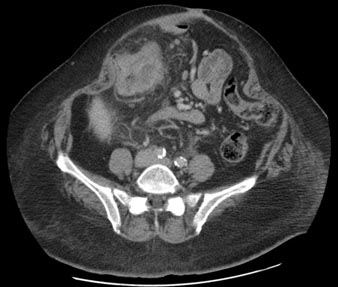
Once a diagnosis of colorectal cancer has been confirmed, the extent of disease is evaluated by a computerised tomography (CT) scan of the chest, abdomen and pelvis.
CT colonography is a technique which offers a less invasive alternative to colonoscopy. It is particularly useful in patients with major comorbidity or contraindications to colonoscopy to establish a diagnosis of colorectal cancer. In patients who have undergone surgery for colorectal cancer, CT has the potential to screen for both metastases as well as further colonic lesions. However, CT colonography is dependent on local radiological expertise and its exact role in colorectal cancer screening and surveillance still needs to be fully evaluated.
Magnetic resonance imaging
Magnetic resonance imaging (MRI) is a particularly valuable investigation in rectal cancer. It is used preoperatively to stage the tumour and predict risk of recurrence. If the MRI scan shows the tumour is amenable to local excision or if MRI is contraindicated, patients should be considered for endorectal ultrasound.
Referral
In 2004, NICE outlined high risk criteria, see table 1, to help stratify referral patterns for suspected colorectal cancer. Although it emphasised that new and persistent symptoms require prompt investigation it did note that in more equivocal cases ‘treat, watch and wait’ is also an acceptable approach.30 Patients meeting the NICE criteria for urgent referral should be referred via the two week wait pathway to the local colorectal department for prompt assessment to exclude colorectal cancer.
Recent research has explored combining common early symptoms to develop an algorithm to give an absolute risk of colorectal cancer and prompt early referral for investigation. The QCancer risk score has been incorporated in certain GP record systems to highlight at-risk patients. However, diagnostic pathways and cost-effectiveness modelling for this algorithm are still required before this approach can be more widely adopted in primary care.31
Treatment
All patients with colorectal cancer should have their case discussed, and a treatment plan decided, at a dedicated multidisciplinary team (MDT) meeting. Patients should then be invited to attend a specialist clinic where they are given written and oral information on the treatment options available. This information should include the potential benefits and risks of these treatments including the effect on bowel function and the prognosis with no treatment. Team contact details and information about support organisations and recommended internet resources should be provided.
The treatment of colorectal cancer depends on the site and stage of the disease. The stage of the tumour reflects the depth of tumour invasion and is closely linked to survival, see table 2.
Stage I
Although stage I tumours were previously rare the NHS BCSP is detecting increasing numbers, however, the optimum management of these very early tumours is unclear. At present although some consensus can be reached on which pathological risk factors lead to poorer outcomes, there is no evidence about how these factors might be used to guide subsequent clinical management, particularly if resection margins are clear. Some clarity is expected over the coming years from following up this patient group closely.
Currently it is recommended in stage l disease that if the histology reveals that the tumour involves, or is within 1 mm, of the resection margin, further treatment should be considered. This could be surgical resection or endoscopic surveillance with or without further polypectomy. NICE advises that these treatment options are discussed on an individual basis at the MDT and with the patient.33
Stages ll and lll
Patients should be offered surgical resection of their tumour. This can be performed by an open or laparoscopic procedure depending on local expertise, suitability of the patient for a laparoscopic technique and following discussion with the patient about the potential risks and benefits of the two procedures.
Before surgery all patients should be advised on the likelihood of having a stoma and should be counselled and educated about stoma management by a dedicated stoma nurse.
Adjuvant chemotherapy should be considered after surgery in all patients with colorectal cancer greater than stage ll. Specifically in stage lll disease, capecitabine can be used as monotherapy or oxaliplatin in combination with 5-fluorouracil and folinic acid.34
Stage lV
If the staging CT reveals metastatic disease the priority of treatment should be to control the patient’s symptoms.
If spread is confined to the liver and the patient has no contraindications to further intervention, the case should be discussed at a hepatobiliary MDT to decide if the liver lesions are resectable. Typically patients undergo resection of their colonic primary with adjuvant chemotherapy followed by subsequent resection of their liver metastases once they have recovered.
Detailed imaging of other sites for suspected metastasis should only be performed as symptoms arise.
If intracranial disease is suspected, patients should be offered a contrast-enhanced MRI brain scan.
Radical surgery is occasionally possible for extra-hepatic metastases but this will require discussion at a site-specific MDT. Positron emission tomography (PET-CT) may be useful in evaluating these lesions. If imaging remains equivocal for extrahepatic disease patients should be kept under regular clinic review with interval imaging.
Chemotherapy should be offered for advanced and metastatic colorectal cancer. One of the following sequences of chemotherapy are offered unless there is a contraindication or the patient has been recruited to a trial:
• FOLFOX (folinic acid plus fluorouracil plus oxaliplatin) as first-line treatment then single agent irinotecan as second-line treatment
• FOLFOX as first-line treatment then FOLFIRI (folinic acid plus fluorouracil plus irinotecan) as second-line treatment
An oral chemotherapy option with capecitabine or tegafur with uracil (in combination with folinic acid) is sometimes considered by specialist colorectal oncologists in metastatic colorectal cancer. Raltitrexed can be considered in patients with advanced colorectal cancer who are intolerant to the above regimens or who have developed side effects.
Acute presentation with large bowel obstruction
Patients presenting with acute large bowel obstruction should have a CT chest, abdomen and pelvis to confirm the diagnosis of obstruction and to determine whether there is metastatic disease or colonic perforation. Patients should then be resuscitated and considered for urgent surgery to resect the tumour or perform palliative defunctioning of the bowel.
Self-expanding metal stents are a minimally invasive alternative palliative therapy, and can be inserted to relieve large bowel obstruction in patients with metastatic disease or alternatively used as a bridge to surgery in the acutely unwell patient. The exact role and safety of colonic stents continues to be investigated.35 Current recommendations are that their insertion should be attempted urgently and no longer than 24 hours after patients present with colonic obstruction.33
Rectal cancer
Rectal tumours which are determined to have a low risk of recurrence based on MRI findings can be managed by transanal excision or radical surgery. Moderate-risk tumours with extramural or lymphovascular invasion, should probably have additional treatment before definitive surgery. Typically this is a short course of preoperative radiotherapy or chemoradiotherapy to enable tumour shrinkage.
Although radiotherapy reduces the risk of recurrence, it carries a significant risk of morbidity, particularly to sphincter function which should be highlighted to the patient before treatment.
In operable patients with a high risk of recurrence, preoperative chemoradiotherapy should be performed before surgery. Preoperative chemoradiotherapy should not be offered solely to facilitate sphincter-sparing surgery. Adjuvant chemotherapy can also be considered in rectal cancers of stage ll and above.
Follow-up
After curative resection patients should be followed up in a colorectal clinic initially every four to six weeks. They should be offered regular surveillance for recurrence and metastatic disease with a minimum of two CT scans of their chest, abdomen, and pelvis in the first three years and regular CEA tests.
At one year after treatment patients should be offered a surveillance colonoscopy. If this investigation is normal further colonoscopic follow-up is not required for a further five years. Thereafter surveillance is arranged on an individual basis, reflecting personal risk factors and emergent symptoms. The timing of surveillance for patients with subsequent adenomas should be determined by the number and type of adenomas.18 Prompt reinvestigation of the patient should be commenced if there is any clinical, radiological or biochemical suspicion of recurrent disease. Follow-up should be ceased following discussion between the patient and the healthcare professional regarding the necessity and benefits of further investigations and treatments.
Conclusion
Colorectal cancer is a common malignancy associated with significant mortality. Prognosis can be much improved if the disease is diagnosed at an early stage. GPs play an important role in recognising symptoms and supporting patients through the investigation and ongoing management of their disease. They may be called upon to act as an advocate for their patient in the facilitation of necessary investigations. During and after treatment patients may have significant ongoing morbidity which can be life changing. Patients often need support during this period along with advice about symptom management and ongoing medical or palliative care. GPs are ideally placed to provide this advice in addition to psychosocial support for both patients and their relatives. 36
REFERENCES
1 Ferlay J, Autier P, Boniol M et al. Estimates of the cancer incidence and mortality in Europe in 2006. Ann Oncol 2007;18(3):581-592
3 Thomson CS, Forman D. Cancer survival in England and the influence of early diagnosis: what can we learn from recent EUROCARE results? Br J Cancer 2009;101(suppl 2):S102-4
4 Thompson MR, Perera R, Senapati A, Dodds S. Predictive value of common symptom combinations in diagnosing colorectal cancer. Br J Surg 2007;94:1260-1265
5 Shallow TA, Wagner FB, Colcher RE. Clinical evaluation of 750 patients with colon cancer. Diagnostic survey and follow-up covering a 15 year period. Ann Surg 1955;142: 164-175
6 Flashman K, O’Leary DP, Senapati A, Thompson MR. The Department of Health’s “Two-week standard” for bowel cancer: is it working? Gut 2004:53(3):387-391
7 Boyle P, Langman JS. ABC of colorectal cancer: Epidemiology. BMJ 2000;321 (7264):805-8
8 Bergstrom A, Pisani P, Tenet V et al. Overweight as an avoidable cause of cancer in Europe. Int J Cancer 2001; 91:421-430
9 Samad AK, Taylor RS, Marshall T, Chapman MA. A meta-analysis of the association of physical activity with reduced risk of colorectal cancer. Colorectal Diseases 2005;7:204-213
10 Steinmetz KA, Potter JD. Vegetables, fruit and cancer prevention: a review. J Am Diet Assoc 1996; 96:1027-1039
11 Bingham SA, Day NE, Luben R et al. Dietary fibre in food and protection against colorectal cancer in the European Prospective Investigation into Cancer and Nutrition (EPIC): an observational study. Lancet 2003; 361:1496-1501
12 Norat T, Lukanova A, Ferrari P, Riboli E. Meat consumption and colorectal cancer risk: dose-response meta-analysis of epidemiological studies. Int J Cancer 2002; 98:241-256
13 Faivre J, Bouvier A-M, Bonithon-Kopp C. Epidemiology and screening of colorectal cancer. Best Practice & Research Clinical Gastroenterology 2002; 16:187-199
14 Cairns SR, Scholefield JH, Steele RJ et al. Guidelines for colorectal cancer screening and surveillance in moderate and high risk groups (update from 2002). Gut 2010;59: 666-690
15 UK Colorectal Cancer Screening Pilot Group. Results of the first round of a demonstration pilot of screening for colorectal cancer in the United Kingdom. BMJ 2004; 329:133
16 NHS Bowel Cancer Screening Programme. 2009. www.cancerscreening.nhs.uk/bowel/publications/nhsbcsp-guidance-note-1.pdf
17 Atkin WA, Edwards R, Kralj-Hans I et al. UK Flexible Sigmoidoscopy Trial Investigators. Once-only flexible sigmoidoscopy screening in prevention of colorectal cancer: a multicentre randomised controlled trial. Lancet 2010;375:1624 -1633
18 Atkin WS, Saunders BP. Surveillance guidelines after removal of colorectal adenomatous polyps. Gut 2002; 51(Suppl V):v6-v9
19 Mandel JS, Bond JH, Church TR et al. Reducing mortality from colorectal cancer by screening for fecal occult blood. Minnesota Colon Cancer Control Study.N Engl J Med 1993; 328(19):1365-71
20 Hardcastle JD, Chamberlain JO, Robinson MH et al. Randomised controlled trial of faecal-occult-blood screening for colorectal cancer. Lancet 1996. 348: 1472-7
21 Kronborg O, Fenger C, Olsen J et al. Randomised study of screening for colorectal cancer with faecal-occult-blood test. Lancet 1996; 348(9040): 1467-71
22 Lindholm E, Brevinge H, Haglind E. Survival benefit in a randomized clinical trial of faecal occult blood screening for colorectal cancer Br J Surg 2008; 95:1029-1036
23 Goldstein MJ, Mitchell EP. Carcinoembryonic antigen in the staging and follow-up of patients with colorectal cancer. Cancer Invest 2005;23(4):338-51
24 Wilson JMG, Jungner G. Principles and practice of screening for disease. WHO Chronicle 1968; 22: 473
25 Irvine T, Scott M, Clark CI. A small rise in CEA is sensitive for recurrence after surgery for colorectal cancer. Colorectal Dis 2007; 9(6):527-31
26 Wiratkapun S, Kraemer M, Seow-Choen F et al. High preoperative serum carcinoembryonic antigen predicts metastatic recurrence in potentially curative colonic cancer: results of a five year study. Dis Colon Rectum 2001; 44:231-5
27 Pignone M, Rich M, Teutsch SM et al. Screening for colorectal cancer in adults at average risk: a summary of the evidence for the US Preventive Services Task Force. Ann Intern Med 2002;137(2):132-141
28 Gavin D, Valori R, Anderson J et al. OC-007 The national colonoscopy audit: a nationwide assessment of the quality and safety of colonoscopy in the UK. Gut 2012;61:A3
29 http://info.cancerresearchuk.org/cancerstats/types/bowel/incidence/
30 National Institute for Health and Clinical Excellence. Improving standards in colorectal cancer. NICE. London. 2004
31 Hippisley-Cox J, Coupland C. Identifying patients with suspected colorectal cancer in primary care: derivation and validation of an algorithm. Br J Gen Pract 2012; 62(594): e29-37
32 http://info.cancerresearchuk.org/cancerstats/types/bowel/survival/bowel-cancer-survival-statistics
33 National Institute for Health and Clinical Excellence CG131. Colorectal cancer: The diagnosis and management of colorectal cancer. NICE. London. 2011
34 National Institute for Health and Clinical Excellence. TA61. Guidance on the use of capecitabine and tegafur with uracil for metastatic colorectal cancer. NICE. London. 2003
35 Van Hooft JE, Bemelman WA, Oldenburg B et al. Colonic stenting versus emergency surgery for acute left-sided malignant colonic obstruction: a multicentre randomised trial. Lancet Oncol 2011;12:344-52
36 Hanks H, Veitch C, Harris M. Colorectal cancer management - the role of the GP. Aust Fam Physician 2008; 37(4):259-61
ARTICLE IN PDF
 Download this article in PDF format
EXTERNAL WEBLINKS
US National Cancer Institute
PDQ® (Physician Data Query) is NCI's cancer database of peer-reviewed, regularly updated evidence-based, referenced summaries
Colorectal screening
Colon
Rectal
Cochrane Reviews on colorectal cancer
Early detection
Prevention
NICE- evidence search
Colorectal cancer
British National Formulary
Malignant disease and immunosuppression
PubMed
PubMed is a database of the US National Library of Medicine/National Institutes of Health