SEARCH

Andrews V, Day A, Girling J. Complications following termination of pregnancy. Practitioner March 2022;266(1856):16-19
Complications following termination of pregnancy
25 Mar 2022
AUTHORS
Miss Victoria Andrews MBChB MRCOG, Specialist Registrar in Obstetrics and Gynaecology
Miss Andrea Day MBBS MRCOG, Locum Consultant in Obstetrics and Gynaecology
Miss Joanna Girling MA MRCP FRCOG, Consultant in Obstetrics and Gynaecology, West Middlesex University Hospital, Chelsea and Westminster Hospital NHS Foundation Trust, London, UK
Competing interests: None
Article
Serious complications during or after termination of pregnancy (TOP) are rare. However, they can be associated with significant morbidity and mortality, and occasionally can complicate future pregnancies. The risk of pelvic infection is around 10% and this is usually due to exacerbation of a pre-existing infection. Suggestive symptoms include increasing, heavy or prolonged bleeding, foul smelling discharge, lower abdominal pain, malaise or rigors. Signs may include tachycardia, pyrexia, hypotension (if severe), lower abdominal tenderness on examination, and offensive discharge, pus or cervical excitation on pelvic assessment. The most common causes of bleeding include: retained products of conception; infection and trauma to the cervix or uterus, especially at > 10 weeks’ gestation. Patients may present to primary care with acute bleeding that usually warrants onward referral to secondary care or may present after the acute episode, symptomatic or asymptomatic of anaemia, that may require investigations and treatment with iron. Patients undergoing medical TOP may not have had an ultrasound scan confirming an intrauterine pregnancy prior to taking the medication, especially since the COVID-19 pandemic. Ectopic pregnancy therefore always needs to be considered in any patient presenting with abdominal or pelvic pain, bleeding, dizziness, collapse or shoulder tip pain. An urgent ultrasound should be carried out to rule out complications including an ectopic pregnancy.
Serious complications during or after termination of pregnancy (TOP) are rare. However, they can be associated with significant morbidity and mortality, and occasionally can complicate future pregnancies.1,2
In the UK, 98% of TOPs3 are performed under clause C of the Abortion Act 1967 where the pregnancy has not exceeded its 24th week and where the continuance of the pregnancy would involve risk, greater than if the pregnancy were terminated, of injury to the physical or mental health of the pregnant woman.
Most procedures are carried out in early pregnancy, with 88% performed at a gestation less than 10 weeks.3 Medical termination of pregnancy (MTOP) accounts for the majority (85%) of total procedures.3
Common complications
The following factors increase the risk of complications: gestation >10 weeks;1,2 unsafe TOP;1,2,4 previous uterine surgery (e.g. Caesarean section);2 use of anticoagulants; significant medical comorbidities.
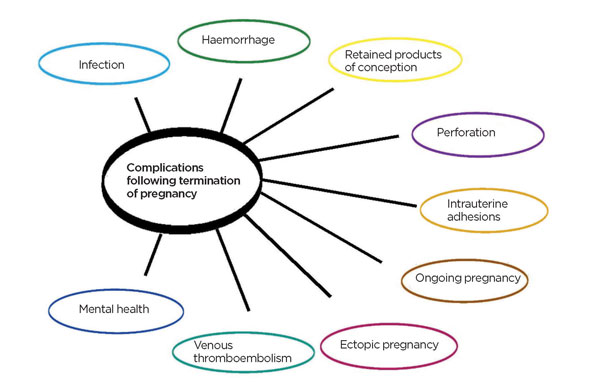
Complications during or after TOP are very similar to those of a miscarriage5 and include: infection; haemorrhage; retained products of conception; uterine perforation and intrauterine adhesions (see box 1).
TOP specific issues
The following considerations are specific to TOP and are important to bear in mind as they can make diagnosis of a complication more challenging.
Confidentiality and privacy
Confidentiality and privacy are important considerations. Women may not be forthcoming with information regarding their procedure which may prevent a comprehensive assessment, leading to delays in diagnosis or to misdiagnosis. It is therefore important to use an empathetic and non-judgmental approach as well as provide assurance that the information they share will remain confidential, as this may encourage women to disclose information about a recent termination and seek support when needed.
No previous scan confirming an intrauterine pregnancy
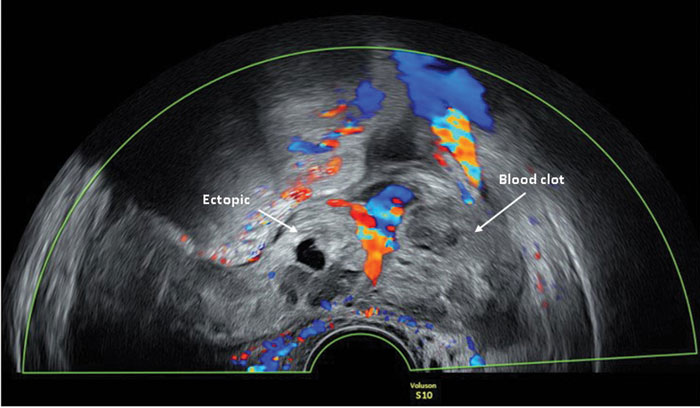
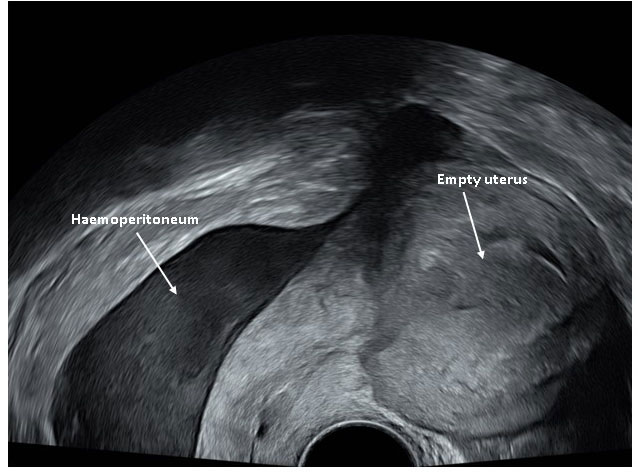
Patients undergoing MTOP may not have had an ultrasound scan confirming an intrauterine pregnancy prior to taking the medication, especially since the COVID-19 pandemic. Ectopic pregnancy therefore always needs to be considered in any patient presenting with abdominal or pelvic pain, bleeding, dizziness, collapse or shoulder tip pain. An urgent ultrasound should be carried out to rule out complications including an ectopic pregnancy. Young women tend to compensate well and may not show a rise in the pulse rate or a fall in blood pressure despite a significant intra-abdominal bleed secondary to a ruptured ectopic pregnancy, (see figures 1A and 1B).
Possibility of ongoing pregnancy
Ongoing pregnancy occurs in less than 1% of patients2 and presentation varies considerably. This diagnosis should be considered in any woman who has prolonged amenorrhoea, persistent pregnancy symptoms, a pelvic mass, and/or a positive pregnancy test following a termination. A new pregnancy must also be considered in women with this presentation who have had unprotected sexual intercourse since the termination.
Spotting and irregular bleeding after starting contraception
Contraception is a critical step after TOP and many providers start contraception immediately following the procedure. Symptoms of spotting and irregular bleeding in relation to retained pregnancy tissue can be mistaken for side effects of contraception and presentation or diagnosis could be delayed.
Range of emotions after TOP
Women may present to primary care (with or without conveying the recent or past history of a TOP) with feelings of sadness, guilt, regret, anxiety, or depression.
Those women with a pre-existing mental health condition are at higher risk and consideration of escalation and urgent management are crucial.
Mental health and wellbeing should be a priority, and all healthcare providers should provide emotional support after TOP and refer women for counselling if required.6
Venous thromboembolism after TOP
Thromboembolic disease is a significant cause of mortality and morbidity in pregnancy and postpartum and accounts for approximately 4% of maternal deaths in the UK.7
A maternity specific venous thromboembolism (VTE) risk assessment should be performed at the time of STOP and prophylaxis should be provided by the care provider.8 If a woman presents following TOP with symptoms suggestive of VTE, she must be referred urgently that day to secondary care for diagnostic imaging and treatment.
Primary care assessment of complications
In primary care, a full history should be taken and physical examination carried out to determine the likely diagnosis and establish if ongoing referral to secondary care is required.
Physical examination should usually include pulse, blood pressure, temperature, respiratory rate, abdominal and pelvic examination.
Important signs to identify during pelvic examination include: evidence of trauma to the vagina or cervix; the quantity of active vaginal bleeding; the presence of offensive discharge or pus; an open cervical os and the presence of cervical excitation. A urinary pregnancy test should be performed.
Any patient who is haemodynamically unstable showing signs of sepsis, shock or active and heavy vaginal bleeding should be referred urgently to the on call gynaecology team and transferred urgently to hospital by ambulance.
Patients who are haemodynamically stable but have not had an ultrasound confirming an intrauterine pregnancy prior to MTOP and present with pain or bleeding, and a positive pregnancy test, should be referred urgently to an early pregnancy unit (EPU) or the emergency department on the same day for assessment, including a scan to rule out ectopic pregnancy.
Haemodynamically stable patients with a confirmed intrauterine pregnancy prior to TOP, presenting with symptoms suggesting retained products of conception, should be referred to the local EPU or TOP care provider for assessment possibly including an ultrasound, ideally within 24-48 hours.
It is important to remember that a negative pregnancy test does not rule out a diagnosis of retained products of conception.
Patients with suspected infection, who are clinically well, should have a high vaginal swab taken and an STI screen, and be started immediately on broad spectrum antibiotics according to local microbiology guidance. There should be a low threshold to refer the patient to an EPU for an ultrasound to rule out retained products of conception as a cause, especially if there is a poor clinical response to antibiotics or there are other symptoms or signs to suggest retained products of conception. If the patient had an intrauterine contraceptive device fitted after TOP, the risks and benefits of removal should be evaluated and discussed with the patient. Differential diagnoses should also be considered and investigations tailored
to rule out the following conditions:
• Urinary tract infection
• Appendicitis
• Ovarian cyst accident
• Pelvic inflammatory disease
Following an uncomplicated TOP, women should expect their next menstrual period in 4-6 weeks, which may be heavier or lighter than normal.
If their periods do not resume, a pregnancy test should be carried out and if positive, the possibility of failed termination, ectopic pregnancy or a new pregnancy should be considered.
If the pregnancy test is negative, intrauterine adhesions should be considered unless the woman is using a form of contraception expected to cause amenorrhoea. The need for, and urgency of, referral will be determined by the factors listed above.
Follow-up
The majority of patients will have follow-up organised by the TOP care provider, and a routine primary care review is not usually required. However, the following factors should be considered in those patients presenting to primary care after TOP.
Maintaining confidentiality
It is important that patients know that they have a right to privacy and that healthcare practitioners are bound by strict confidentiality rules. Similarly, when women are seen in hospital, they may decline permission for discharge summaries or letters to be sent to their GP if they request this.
Contraception
NICE recommends that TOP care providers should discuss and offer all contraceptive options to patients on the day of their TOP.9 However, a proportion of patients will decline this at the time and present to their GP to discuss their options at a later date.
In 2020, 42% of women undergoing TOP had had one or more previous terminations.3 This is therefore a vital part of post-TOP care wherever patients are seen, in order to prevent another unplanned pregnancy.
Options for quick starting contraception after TOP are shown in table 1.10 Women at risk of, or with a confirmed, STI should use a barrier method in addition to a more reliable option until treatment is complete.
Planning a future pregnancy
Before conceiving, women should start folic acid to reduce the risk of neural tube defects in the baby, complete rubella vaccination if not done previously, and optimise lifestyle factors such as maintaining a normal BMI and smoking cessation.
If a woman has a medical condition which may be affected by pregnancy, management of the condition should be optimised prior to conceiving again, with referral to a pre-pregnancy counselling clinic if required.10 Women who wish to conceive again following TOP, should be advised to wait until at least their next menstrual period.10
Conclusion
Although serious complications are uncommon following TOP, early recognition of complications is crucial. Taking a thorough history and carrying out a careful assessment when women present in primary care and referring them to specialist care when appropriate are pivotal in preventing morbidity and mortality, as well as complications in future pregnancies.
REFERENCES
1 Royal College of Obstetricians and Gynaecologists. Best practice in comprehensive abortion care. Best Practice Paper No. 2. RCOG. London. 2015
2 Royal College of Obstetricians and Gynaecologists. The care of women requesting induced abortion (EBC guideline no. 7). ROCG. London. 2011
3 Department of Health. Abortion Statistics, England and Wales: 2020 www.gov.uk/government/statistics/abortion-statistics-for-england-and-wales-2020/abortion-statistics-england-and-wales-2020 [Last accessed 20 Feb 2022]
4 World Health Organization. Unsafe abortion: global and regional estimates of the incidence of unsafe abortion and associated mortality in 2003 (PDF) WHO. 2007
5 Day A, Hollamby S, Girling J. GPs have a key role in the management of miscarriage. Practitioner 2021;265(1846):11-15
6 Mentual M, Mannisto J, Gissler M et al. Intrauterine adhesions following an induced termination of pregnancy: a nationwide cohort study. BJOG 2018;125(11):1424-31
7 Knight M, Bunch K, Tufnell D et al. Lessons learned to inform maternity care from the UK and Ireland Confidential Enquiries into Maternal Deaths and Morbidity 2016–18 Oxford: National Perinatal Epidemiology Unit www.npeu.ox.ac.uk/downloads/files/mbrrace-uk/reports/MBRRACE-UK Maternal Report 2018 - website.pdf
8 Collins A, Memtsa M, Kirk E et al. The risk of venous thromboembolism in early pregnancy loss: review of the literature and current guidelines and the need for guidance - communication from the SSC on women's health Issues for thrombosis and haemostasis. J Thromb Haemost 2022;20(3):767-76
9 National Institute for Health and Care Excellence. NG140. Abortion care. NICE. London. 2019 www.nice.org.uk/guidance/ng140
10 Faculty of Sexual and Reproductive Healthcare of the Royal College of Obstetricians and Gynaecologists. Quick starting contraception. FSRH. London. 2017
11 Faculty of Sexual and Reproductive Healthcare of the Royal College of Obstetricians and Gynaecologists. FSRH Guideline. Contraception after pregnancy. FSRH. London. 2017 (amended 2020) www.fsrh.org/standards-and-guidance/documents/contraception-after-pregnancy-guideline-january-2017
ARTICLE IN PDF
 Download this article in PDF format
EXTERNAL WEBLINKS
For healthcare professionals
NICE
Evidence review of contraception after termination of pregnancy
For patients
Patient information leaflet about complications of termination of pregnancy