SEARCH

Stollery N. Photoguide: Conditions affecting the hair and scalp. Practitioner 2016; 260(1792):30-31
Conditions affecting the hair and scalp
25 Apr 2016
AUTHORS
Dr Nigel Stollery MB BS DPD, GPwSI Dermatology, Kibworth, Leicestershire, UK
Article
Dermatitis artefacta
Dermatitis artefacta is a psychocutaneous condition in which the lesions are self-inflicted. The condition usually manifests during the teenage years or early adult life and is more common in females than males. The lesions tend to develop rapidly in readily accessible areas and are often bizarre shapes, well demarcated, with associated localised scarring. Diagnosis can be a challenge and sufferers usually deny any knowledge of their role in the development of the lesions. Where the condition is suspected, direct confrontation should be avoided and management focused on building the doctor-patient relationship. Patients often have underlying psychological problems and the offer of psychiatric referral may be helpful but is usually refused.
Alopecia mucinosa
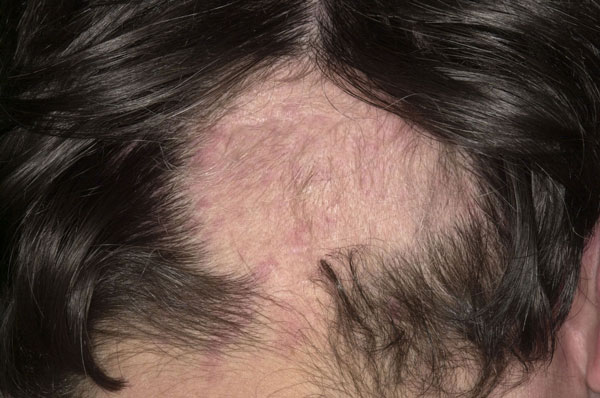
Accurate diagnosis is crucial in alopecia mucinosa as 15-40% of those affected will go on to develop a lymphoma. More rarely the lymphoma will be present at the time of diagnosis. Alopecia mucinosa is also known as follicular mucinosis. Follicular papules and indurated plaques form which cause damage to the hair follicles resulting in alopecia.
The deposition of mucinous material in the follicles and sebaceous units leads to inflammation and degenerative changes. This is visible on microscopic examination of a punch biopsy confirming the diagnosis. Hair follicles anywhere on the body can be involved but the most commonly affected area is the head. Treatment includes topical, intralesional and systemic steroids, oral antibiotics such as minocycline, and PUVA.
Lichen planopilaris
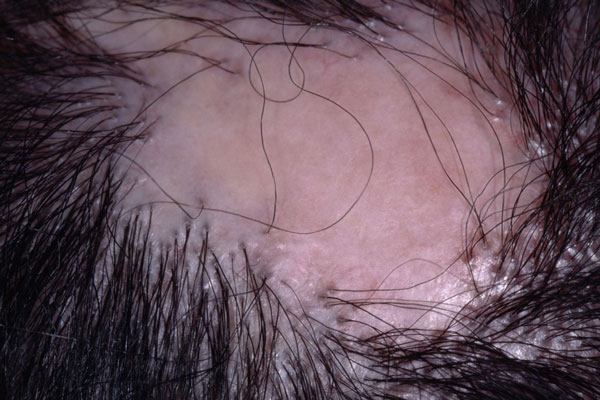
Also called follicular lichen planus, this rare inflammatory condition initially starts with the development of small red papules around the hair follicles. This leads to localised scarring which becomes extensive and causes permanent alopecia. Lichen planopilaris most commonly affects young females and the cause is unknown. Although it is a rare condition it is one of the most common causes of permanent scarring alopecia. Other symptoms may include itching, pain, tenderness, discomfort and burning. As with other forms of lichen planus the nails and buccal mucosa may also be affected. The diagnosis can be confirmed with a punch biopsy which will reveal a lichenoid tissue reaction within the epidermis. Early diagnosis and treatment is the goal to try to prevent permanent scarring. Treatment approaches include steroids, hydroxychloroquine, tetracyclines, mycophenolate, ciclosporin and acitretin.
Discoid lupus erythematosus
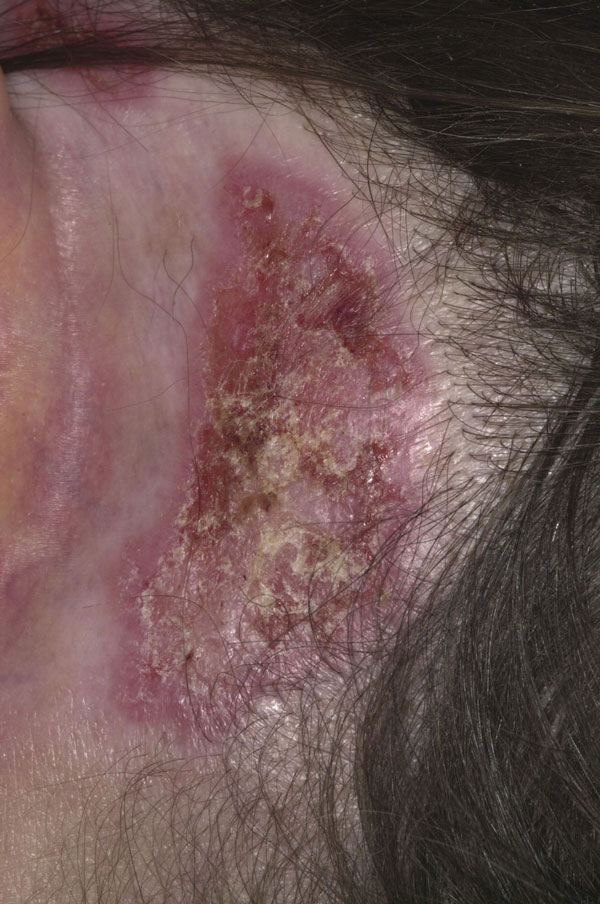
Discoid lupus erythematosus (DLE) is the most common form of cutaneous lupus. It usually affects the 20 to 40 age group, producing chronic scarring, atrophy and a photosensitive dermatosis. It is five times more common in females than males and occurs more frequently in those with darker skin types (Fitzpatrick skin types V and VI). The disease usually manifests after UV exposure. Patients probably have a genetic predisposition however the precise mechanism is unknown. Other factors associated with the development of DLE include exposure to cigarette smoke and hormonal changes. Lesions characteristically start as an erythematous plaque or papule with scaling, progressing to a thickened area in which pigmentary changes may occur, with central hypopigmentation and a hyperpigmented border. As lesions spread outwards they may merge, and develop follicular plugging. Diagnosis is usually made by taking a careful history but can be confirmed by biopsy.
Sebaceous naevus
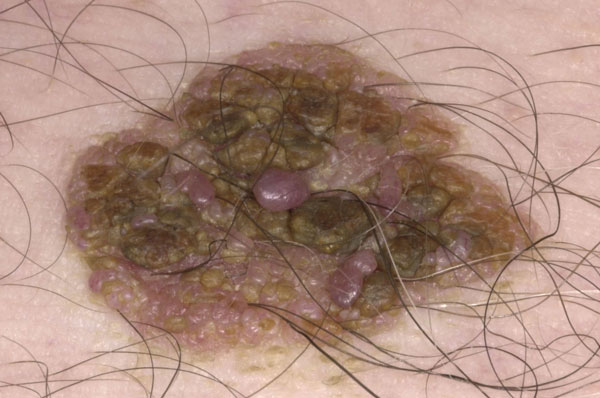
Unlike most other types of naevi, sebaceous naevi have the potential to undergo malignant change. This transformation into basal cell carcinomas occurs in up to 10-15% of cases, usually in adults but has been reported in children as young as five. The naevi are often present at birth or may develop during puberty. Initially the lesions are flat. However, under the influence of hormones during puberty the naevi develop
a velvety appearance and usually increase in size and may reach 10 cm in diameter. Both sexes are equally affected. The risk of malignant change means that prophylactic excision is usually undertaken during puberty. Photodynamic therapy is an alternative approach for very large lesions.
Basal cell carcinoma
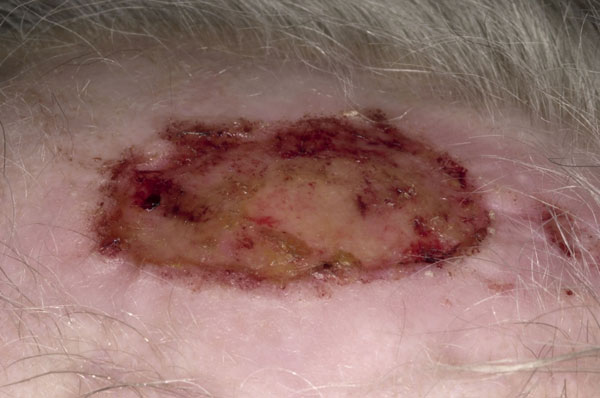
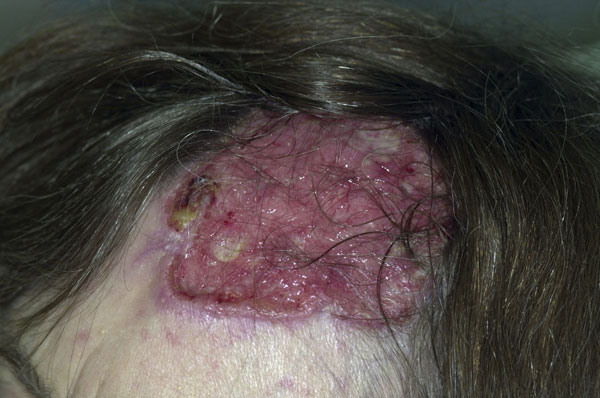
Basal cell carcinomas are the most common type of skin cancer and usually present as small ulcers with pearly rolled edges and telangiectasia. They are most common in sun-exposed areas of the head and neck and in those with Fitzpatrick skin types I or II. Occasionally, as in this case, they may be neglected and can develop into very large ulcerated areas. Once lesions have reached this size metastatic spread, usually extremely rare, may occur and the tumour may penetrate into underlying bone. If this occurs the condition can be fatal. Normally excision is the treatment of choice but where this is not possible or appropriate then radiotherapy can be used as an alternative therapy.
 Download this article in PDF format